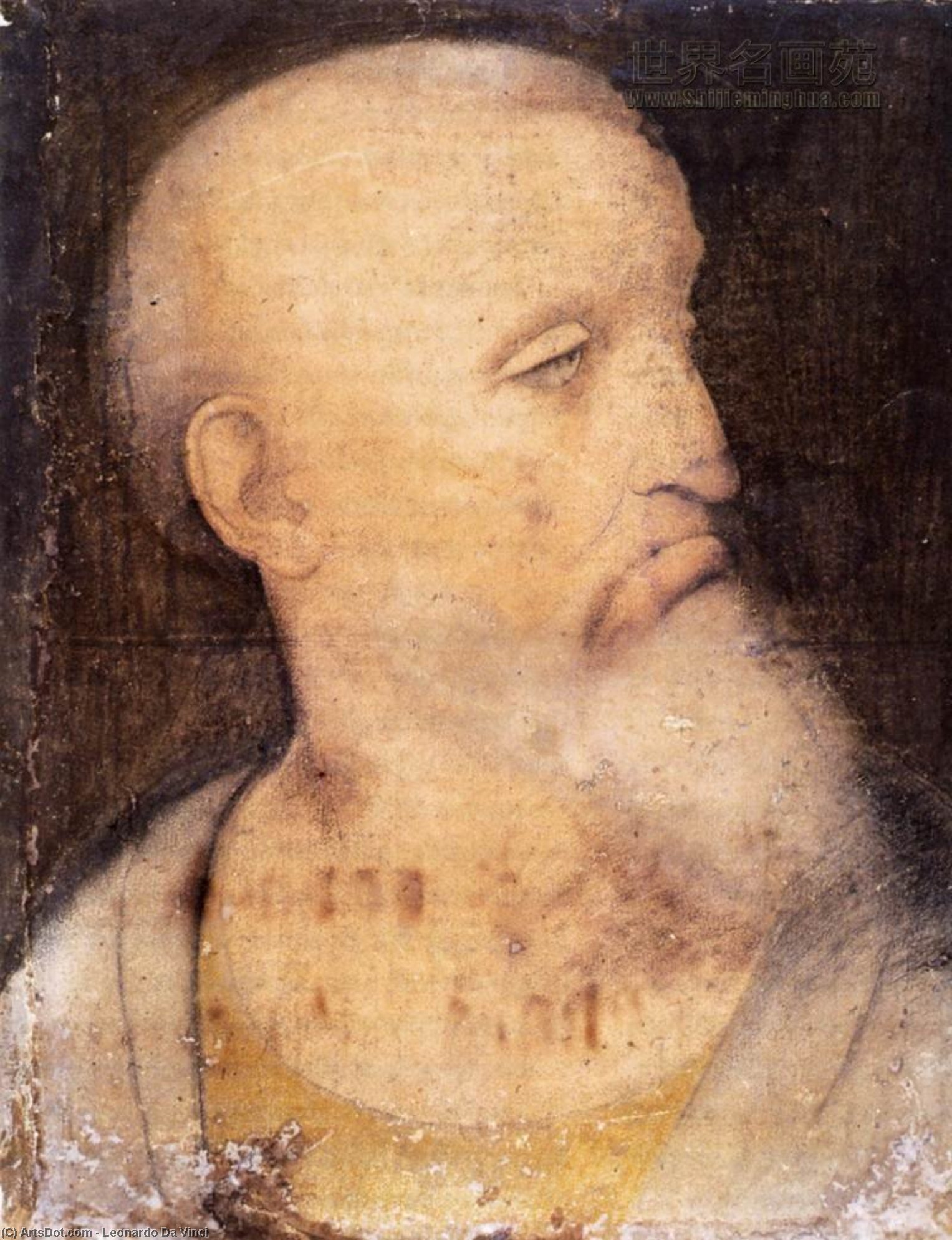
Head of St Andrew by Leonardo da Vinci
Leonardo da Vinci’s
Head of St Andrew stands as a testament to the Renaissance artist's unparalleled mastery of observation and psychological portraiture. Executed in pencil on paper around 1495, this intimate study exemplifies Da Vinci’s meticulous approach to capturing human emotion and form—a characteristic that would become synonymous with his artistic legacy. Currently residing at the
Musées de Strasbourg (Strasbourg, France), it offers a glimpse into Da Vinci’s artistic process and his profound understanding of the human condition.
The Artist: Leonardo da Vinci
Leonardo di ser Piero da Vinci (1452-1519) was arguably the most versatile genius of the High Renaissance—a painter, sculptor, architect, engineer, scientist, anatomist, inventor, and philosopher all rolled into one extraordinary figure. His fame initially rested on his groundbreaking paintings like *Mona Lisa* and *The Last Supper*, yet he achieved renown far beyond the realm of visual art through his voluminous notebooks filled with sketches, diagrams, and scientific observations—a testament to his boundless curiosity and inventive spirit. These notebooks reveal a mind constantly striving to unravel the mysteries of nature and human behavior, shaping him into an artist unlike any other.
The Painting: “Head of St Andrew”
This deceptively simple portrait captures the solemn gaze of Saint Andrew, one of Jesus’s apostles. Da Vinci skillfully employs pencil shading—a technique favored by Renaissance artists—to sculpt a remarkably realistic depiction of the saint's face. The artist meticulously renders the contours of Andrew’s skull and facial muscles, conveying an impression of profound contemplation. Notice the subtle interplay of light and shadow across his forehead and cheekbones, highlighting the texture of skin and enhancing the emotional depth of the image. The muted palette—primarily browns and grays—reflects Da Vinci's preference for tonal harmony and contributes to the painting’s contemplative atmosphere.
Other Works by Leonardo da Vinci
Da Vinci’s artistic output extended far beyond portraiture, encompassing monumental sculptures like *Horse Statue* (unfinished) and architectural designs for churches and palaces. His fascination with anatomy drove him to dissect human cadavers—a controversial practice at the time—resulting in detailed anatomical drawings that revolutionized scientific understanding. Furthermore, Da Vinci conceived innovative inventions ranging from flying machines to armored vehicles, anticipating technological advancements centuries ahead of his era. These diverse pursuits underscore his intellectual brilliance and cemented his place as a true Renaissance humanist.
Da Vinci’s masterpieces are showcased prominently within the
Musées de Strasbourg, offering visitors a chance to immerse themselves in the artistic and intellectual legacy of one of history’s greatest minds. For those eager to delve deeper into Da Vinci's life and work, consider exploring
Leonardo Di Ser Piero Da Vinci & Andrea Del Verrocchio on ArtsDot—a comprehensive resource for uncovering the secrets of his genius.