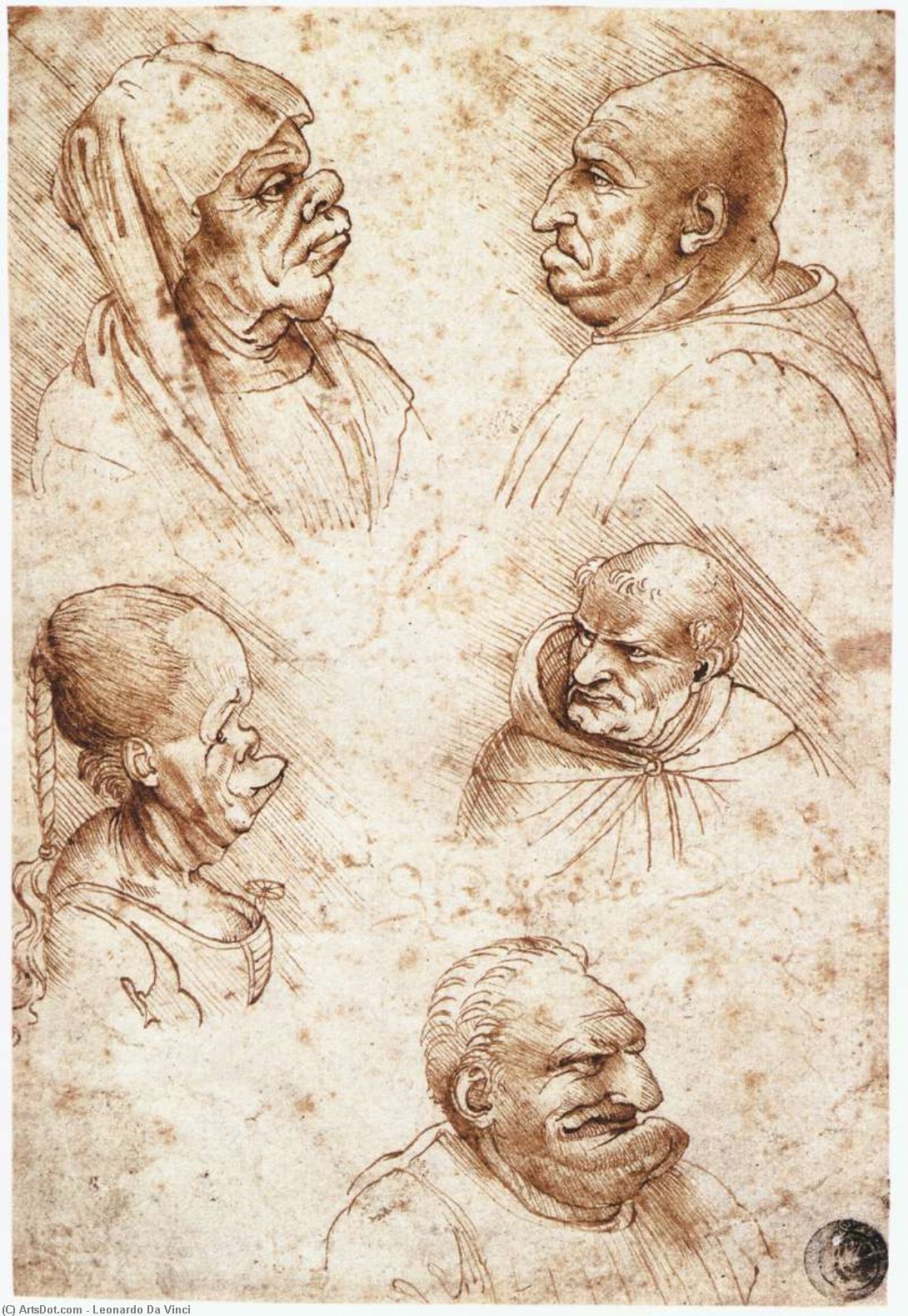
A Study in Grotesque Expression: Leonardo da Vinci’s Five Caricature Heads
Leonardo da Vinci's "Five Caricature Heads," created around 1490, stands as a remarkable testament to the artist’s meticulous observation of human anatomy and his masterful manipulation of artistic style. This unassuming sketch—a preparatory study rather than a finished masterpiece—offers a fascinating glimpse into Da Vinci’s creative process and reveals profound insights into Renaissance conceptions of beauty and deformity. The artwork resides within the British Museum's collection, where it continues to captivate viewers with its unsettling yet intellectually stimulating portrayal of facial features.
- Subject Matter: The composition presents five distinct heads—a warrior in helmet, a man resembling Lorenzo de’ Medici, an elderly gentleman, a woman’s visage open-mouthed, and a portrait of a man adorned with a mustache—each rendered with exceptional detail. These aren't idealized representations; instead, they are caricatures designed to explore the spectrum of human expression.
- Style & Technique: Executed in silverpoint on prepared paper, Da Vinci employed a technique known for its precision and luminosity. Silverpoint drawing involved scratching lines onto metal leaf adhered to paper using a stylus—a method favored by artists seeking unparalleled tonal gradations and subtle shading effects. This meticulous approach underscores Da Vinci’s dedication to anatomical accuracy and his desire to capture the nuances of emotion.
- Historical Context: Produced during Da Vinci's formative years in Florence, “Five Caricature Heads” reflects the humanist spirit of the Renaissance—a period characterized by renewed interest in classical ideals and a fascination with human psychology. The study aligns perfectly with Da Vinci’s broader exploration of human form and emotion, mirroring his anatomical drawings and preparatory sketches for monumental sculptures like David.
- Symbolism & Emotional Impact: Beyond mere visual representation, the heads serve as vehicles for contemplating concepts of ugliness and beauty. Da Vinci deliberately juxtaposes idealized features with grotesque distortions—a deliberate provocation intended to challenge conventional notions of perfection. The unsettling expressions convey a sense of psychological complexity, inviting viewers to consider the darker side of human experience.
- Further Exploration: For deeper understanding, consult WikiArt’s comprehensive database (Five caricature heads) and ArtsDot’s detailed analysis (Head studies-Five caricature heads). Examining Da Vinci's broader oeuvre—particularly his anatomical drawings and explorations of sfumato—provides invaluable context for appreciating the significance of this singular study.