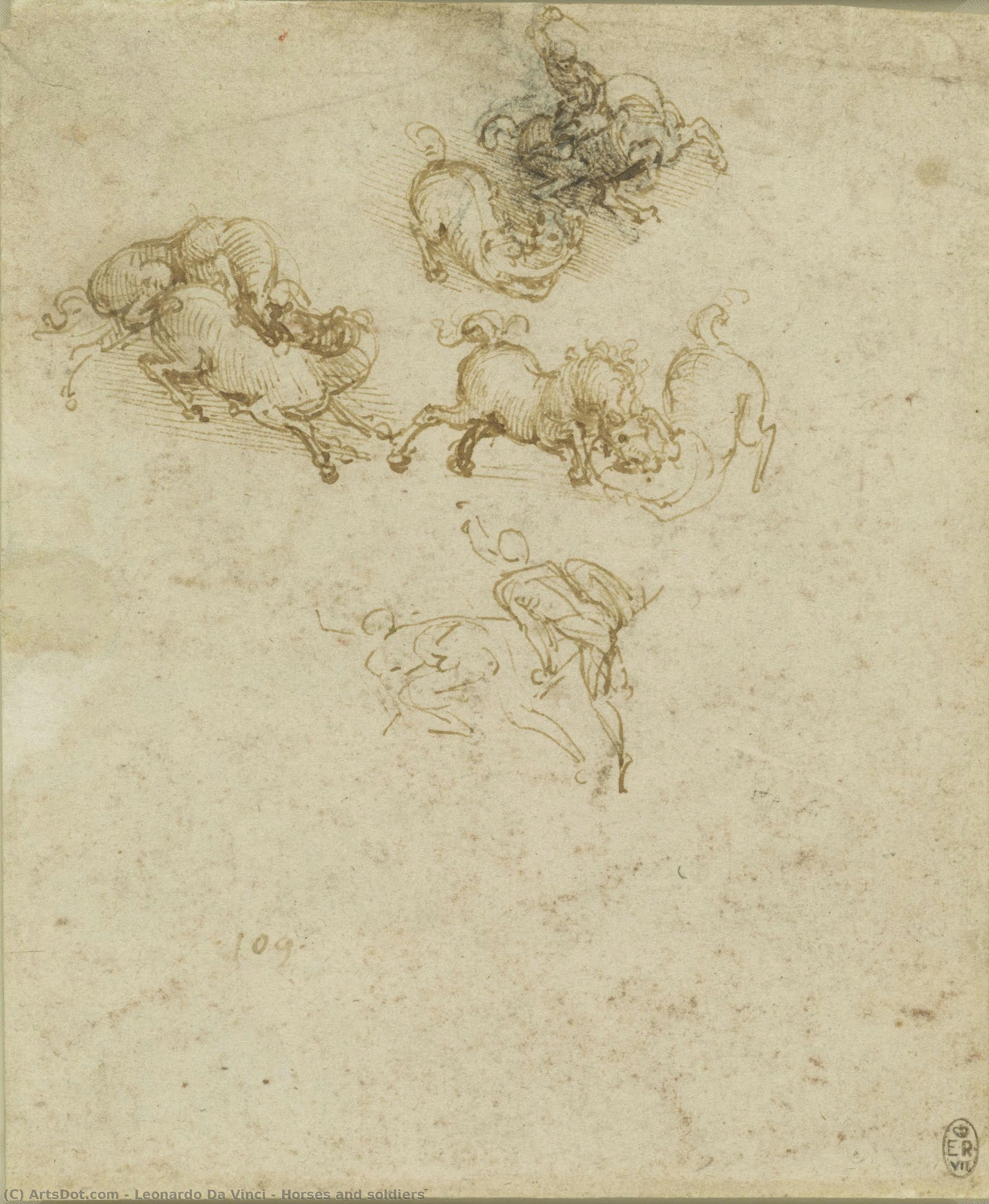
Discover Leonardo da Vinci's 1503 sketch 'Horses and Soldiers,' a dynamic Renaissance study capturing motion and energy with expressive ink lines. Perfect for art collectors and enthusiasts.
Explore Leonardo da Vinci (1452-1519): Renaissance genius behind Mona Lisa & The Last Supper! Discover his sfumato technique, anatomical studies & groundbreaking inventions.
Explore centuries of British history & artistry within the Royal Collection! Discover masterpieces by Leonardo da Vinci, Michelangelo & more across 13 royal residences.
Dynamic Composition of Horses and Soldiers
Immerse yourself in a vivid portrayal of movement and vitality captured through Leonardo da Vinci’s masterful sketch. This lively drawing depicts a scene involving horses and soldiers, likely in the midst of action or preparation for battle. The composition exudes energy, with figures and animals arranged in a loose, diagonal flow that guides the viewer’s eye across the page. The dynamic poses and expressive line work evoke a sense of immediacy, making it feel as though the scene is frozen in a fleeting moment of chaos and vitality. This artwork offers a compelling glimpse into Leonardo’s fascination with motion, anatomy, and the human and animal form in motion.
Masterful Technique and Artistic Style
Executed with swift, fluid lines, this sketch exemplifies Leonardo da Vinci’s exceptional skill in capturing movement through minimal detail. The use of varying line thicknesses creates depth and emphasis, highlighting muscular forms of the horses and the alert postures of the soldiers. The monochromatic ink medium enhances the sketch-like quality, focusing attention on form, gesture, and energy rather than color. This technique reflects Leonardo’s scientific approach to art, emphasizing observation and experimentation—hallmarks of Renaissance artistry. The loose, spontaneous style reveals the artist’s process of studying motion and anatomy, making it a valuable insight into his creative methodology.
Historical Context and Symbolism
Created in 1503, during the height of the Renaissance, this drawing aligns with Leonardo’s broader interest in military engineering, anatomy, and the human condition. The scene may serve as a preparatory study for a larger work or a conceptual exploration of movement and action. The figures, though minimalistic, symbolize the chaos and energy of warfare, capturing the tension and urgency of a cavalry scene. The depiction of horses in dynamic poses reflects Leonardo’s fascination with equine anatomy and the power of these animals in battle. The soldiers’ readiness and alertness evoke themes of bravery, discipline, and the martial spirit of the era.
Emotional Impact and Artistic Significance
This sketch resonates with viewers through its raw energy and immediacy. The sense of motion and spontaneity invites an emotional response—evoking feelings of anticipation, tension, and vitality. For collectors and interior designers, this piece offers a unique opportunity to incorporate a work that embodies the spirit of Renaissance innovation and Leonardo’s genius. Its expressive lines and historical depth make it an inspiring focal point in any space, whether as a high-quality reproduction or a treasured original study. It’s a testament to Leonardo da Vinci’s mastery in capturing the essence of movement and life, making it a timeless addition to any art collection or interior design scheme.