A Renaissance Vision of Grace and Devotion
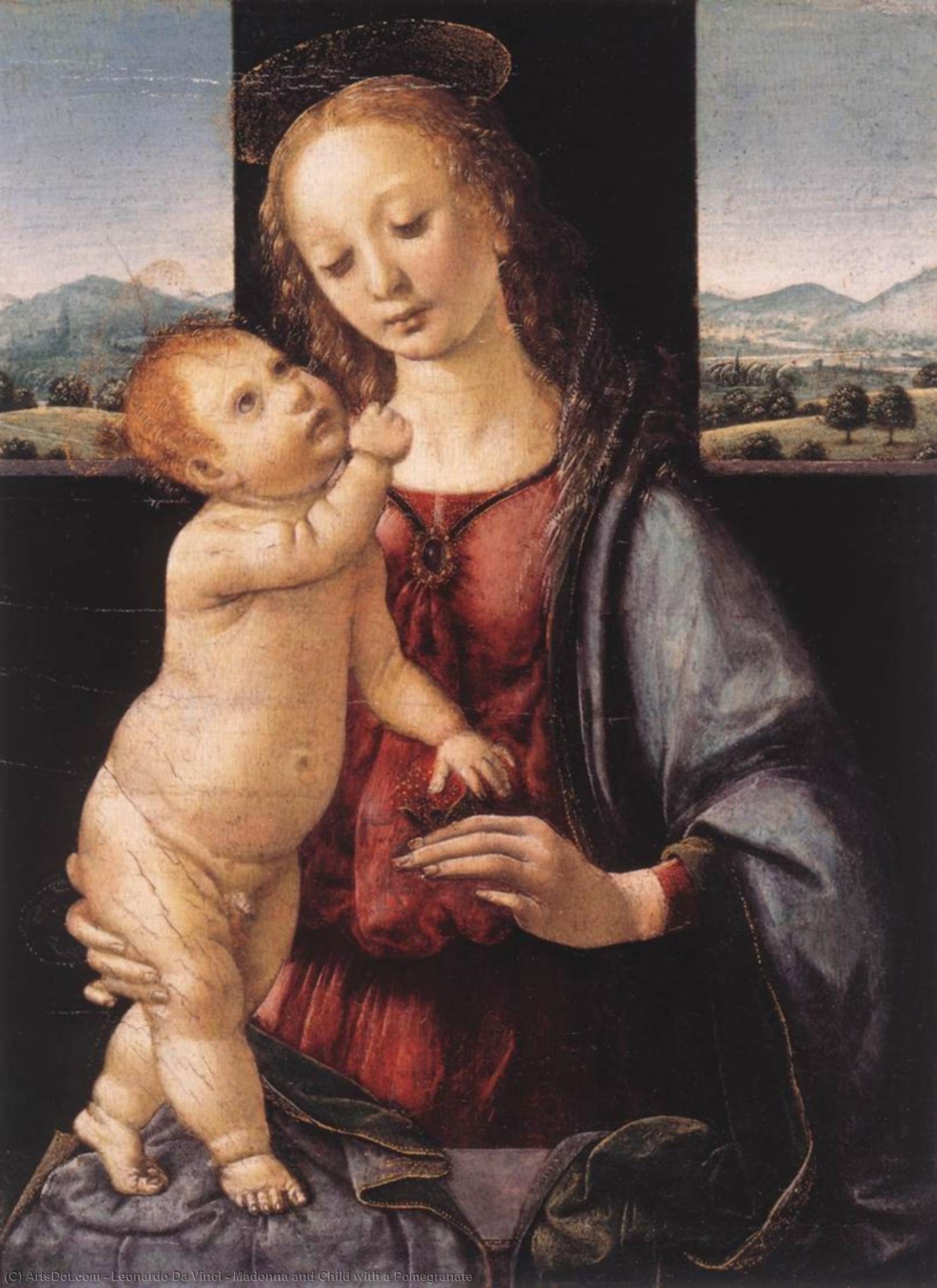
In the quiet intimacy of a small oil on panel masterpiece, we encounter one of the most tender evocations of the divine from the early Florentine Renaissance. Madonna and Child with a Pomegranate, a work deeply associated with the burgeoning genius of Leonardo da Vinci, offers more than just a religious icon; it provides a window into a soul captivated by the intersection of human emotion and celestial mystery. Measuring a delicate 16 x 13 cm, this painting possesses an extraordinary ability to command attention, drawing the viewer into a serene tableau where the boundaries between the earthly and the divine seem to dissolve. The composition is anchored by the Virgin Mary, whose presence radiates a profound, melancholic beauty as she cradles the Christ Child against a backdrop of rugged, distant mountains that hint at the infinite reaches of the natural world.
The technical mastery on display reflects the transformative era of the late 15th century. Through the pioneering use of linear perspective and a sophisticated understanding of light, the artist creates an illusion of depth that transports the observer into a sacred space. The figures are not merely placed upon the panel but seem to inhabit a breathing atmosphere, where the soft transitions of shadow—a precursor to the famed sfumato technique—soften the contours of the faces and drapery. This delicate handling of oil paint allows for a luminous quality, particularly in the way light catches the textures of the Virgin’s garments and the subtle highlights on the infant's skin, making the scene feel remarkably present and alive.
The Language of Symbolism: Life, Death, and Redemption
To gaze upon this artwork is to read a silent poem written in the language of symbols. Central to the narrative is the pomegranate, held within the Virgin’s hand—a fruit that serves as a potent emblem of both fertility and the impending Passion. As the child interacts with the fruit, the deep red seeds act as a visceral foreshadowing of the blood of Christ, linking the promise of new life with the necessity of sacrifice. This duality creates a poignant emotional tension; there is a sweetness in the maternal bond, yet an underlying gravity in the knowledge of the future crucifixion. For the discerning collector or designer, this layer of meaning adds a profound intellectual depth to the piece, making it a subject of endless contemplation.
Beyond the central figures, the landscape itself speaks of eternal truths. The majestic mountains rising in the background serve as a testament to the enduring strength of faith and the grandeur of God's creation. Every element, from the subtle arrangement of the secondary figures to the way the light falls upon the balustrade, is orchestrated to evoke a sense of tranquility and divine transcendence. Whether displayed in a curated gallery setting or as a focal point in a sophisticated interior, this reproduction brings with it an aura of historical prestige and spiritual serenity, inviting anyone who views it to pause and reflect on the timeless beauty of the Renaissance spirit.