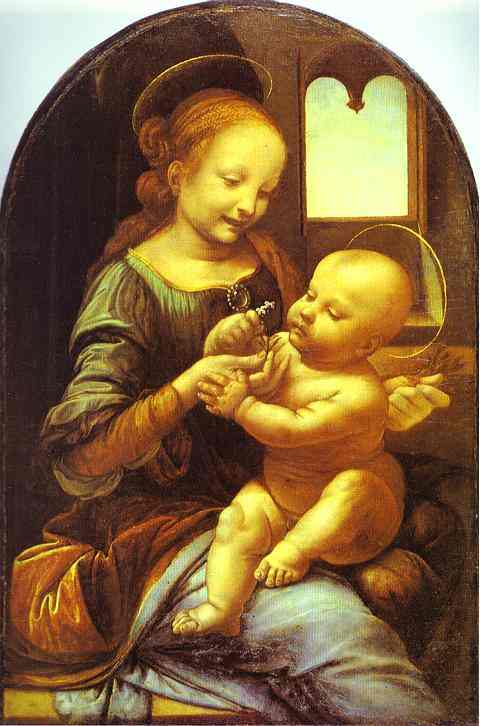
The Madonna Benois: A Renaissance Masterpiece Revisited
Leonardo da Vinci’s
Madonna Benois stands as a testament to the artist's early genius and embodies the spirit of the Florentine Renaissance. Created in 1478, this painting resides within the hallowed halls of the
Hermitage Museum in St. Petersburg, Russia—a beacon for art historians and admirers alike. Its enduring appeal stems from a masterful blend of realism, symbolism, and innovative technique, cementing its place as one of Da Vinci’s most celebrated works.
The painting depicts Mary cradling the infant Jesus, accompanied by two figures positioned in the background – a subtle nod to the theological complexities of the era. This composition aligns perfectly with the prevailing stylistic trends of the Early Renaissance, prioritizing humanism and striving for an unprecedented level of visual accuracy. Da Vinci’s meticulous attention to detail is evident throughout, from the delicate rendering of Mary's drapery to the expressive faces of her companions.
- Technique: Leonardo employed oil paint on canvas—a relatively new medium at the time—demonstrating his willingness to experiment and push artistic boundaries.
- Composition: The central figures are arranged in a harmonious embrace, conveying profound maternal love and devotion. The background elements contribute dynamism and depth, creating a balanced visual experience.
- Light & Shadow (Chiaroscuro): Da Vinci skillfully utilized chiaroscuro—the dramatic interplay of light and dark—to sculpt the forms of his subjects and imbue them with emotional resonance.
Historically, The Madonna Benois represents Da Vinci’s departure from Verrocchio's workshop and marks a pivotal moment in his artistic development—a declaration of independence fueled by burgeoning confidence and ambition. It foreshadowed the monumental achievements that would define his illustrious career.
Beyond its aesthetic qualities, The Madonna Benois is laden with symbolism. The flowering sprig—a crucifix—held by Mary symbolizes the impending Crucifixion and underscores the spiritual significance of the scene. Da Vinci’s masterful portrayal captures not only visual beauty but also profound theological ideas.
Today, handmade oil painting reproductions of this iconic artwork are available at ArtsDot. These faithful recreations allow art enthusiasts to experience the grandeur and subtlety of Da Vinci’s original vision—bringing a timeless masterpiece into contemporary homes.