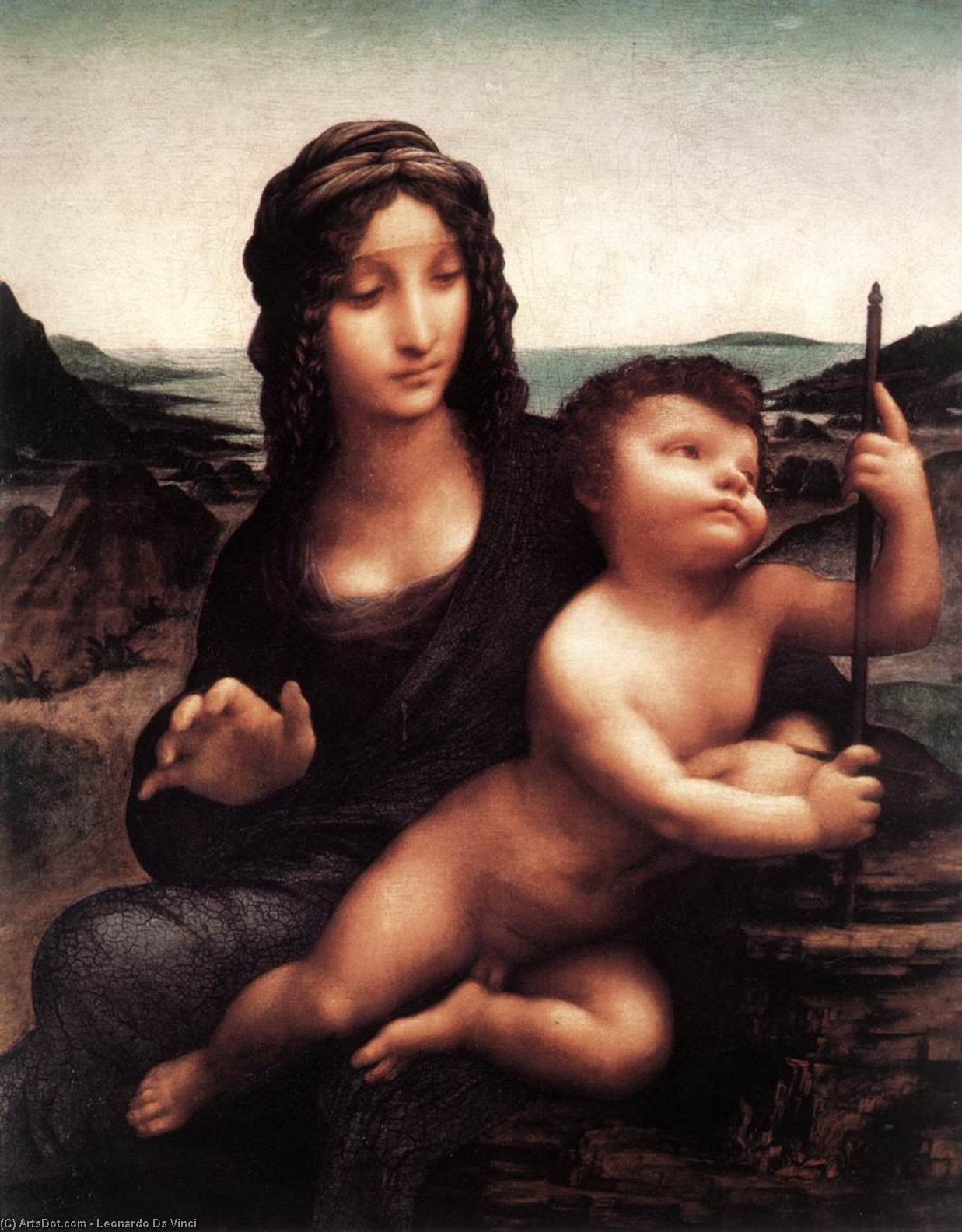
A Silent Narrative: Unveiling Leonardo’s Madonna with the Yarnwinder
Leonardo da Vinci's Madonna with the Yarnwinder isn’t merely a portrait of the Virgin Mary and infant Jesus; it’s a profound meditation on motherhood, sacrifice, and the quiet dignity of domesticity – a remarkably intimate scene rendered with the artist’s signature mastery. Completed around 1501, this oil-on-panel painting, measuring just 48 x 36 centimeters, belies its small scale with an astonishing depth of emotion and symbolic resonance. It's a work that invites prolonged contemplation, revealing layers of meaning woven into every brushstroke and carefully considered detail.
The scene unfolds within a subtly rendered landscape – not a grand vista, but a softly defined backdrop suggesting both serenity and the looming presence of mortality. Mary, depicted in a simple yet elegant blue gown, holds her son close, his gaze fixed on a niddy-noddy, a device used to collect spun yarn. This seemingly mundane object is the painting’s central symbol, immediately drawing the viewer's attention. It represents not just domesticity and maternal care – essential aspects of Mary’s role – but also foreshadows the cross upon which her son will be crucified. The placement of the infant Jesus’ foot on the basket of yarn subtly hints at this future sacrifice, creating a poignant juxtaposition of innocence and impending suffering.
The Dance of Light and Shadow: Da Vinci's Techniques
Da Vinci’s genius is immediately apparent in his application of technique. The painting exemplifies his revolutionary use of *sfumato*, a hazy, almost atmospheric effect achieved through the delicate layering of translucent glazes. This softens the edges of the figures and background, creating an ethereal quality that draws the eye inward, fostering a sense of intimacy and immediacy. Furthermore, he masterfully employs *chiaroscuro* – the dramatic contrast between light and dark – to sculpt the forms of Mary and Jesus, giving them remarkable volume and presence despite their diminutive size. The subtle gradations of tone not only define their features but also imbue the scene with a sense of three-dimensionality, making them feel remarkably real.
Symbolism Woven into the Fabric of the Scene
Beyond the central symbolism of the yarnwinder, the painting is rich in visual cues. Mary’s blue dress, a color traditionally associated with purity and devotion, reinforces her role as the Queen of Heaven. The crown upon her head further emphasizes this divine status. The infant Jesus, dressed simply in a tunic, embodies innocence and vulnerability – a stark contrast to the weight of his future destiny. Even the two swords visible in the background, partially obscured by the landscape, are potent symbols, alluding to the suffering that awaits Christ. The inclusion of these elements elevates the painting beyond a simple depiction of motherhood; it’s a carefully constructed allegory about faith, sacrifice, and the cyclical nature of life and death.
A Legacy Preserved: Reproductions and Artistic Influence
The Madonna with the Yarnwinder has held a significant place in art history, influencing generations of artists. Its innovative composition and profound symbolism can be seen echoed in works such as Filippo di Tommaso Lippi’s *Madonna with Child, saints and angels, known as (Madonna Trivulzio)*, demonstrating Da Vinci's lasting impact on the genre. Today, ArtsDot.com offers meticulously crafted oil painting reproductions of this masterpiece, allowing art enthusiasts to experience its beauty and complexity in their own homes. These reproductions are created by skilled artisans who painstakingly replicate Da Vinci’s techniques, ensuring that every detail – from the subtle *sfumato* to the delicate rendering of fabric – is faithfully reproduced. For those seeking a tangible connection to this iconic work of art, or desiring to incorporate its timeless themes into their interior design, ArtsDot.com's reproduction provides an exceptional opportunity.
To learn more about this captivating painting and explore related resources, visit ArtsDot.com or delve into the details on Wikipedia: Wikipedia.