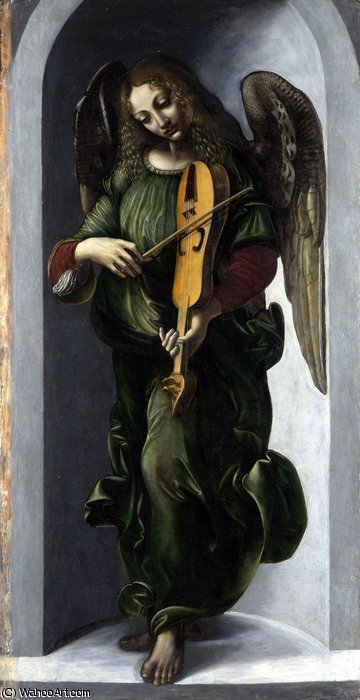
A Moment of Divine Grace: Unveiling Da Vinci’s Annunciation
Leonardo da Vinci's Panels for an Ancona, specifically the left panel depicting the Annunciation, stands as a cornerstone of Renaissance art – a testament to the artist’s unparalleled ability to capture not just likeness but also profound emotion and spiritual depth. Completed in 1472 during his formative years in Florence, this exquisite work offers a glimpse into Da Vinci's burgeoning genius, showcasing his meticulous observation of anatomy, his innovative approach to perspective, and his nascent mastery of the sfumato technique that would later define his iconic masterpieces. Currently residing within the Uffizi Gallery in Florence, it continues to captivate viewers with its serene beauty and intimate portrayal of a pivotal biblical moment.

Composition and the Language of Space
The panel’s composition is remarkably balanced, centering on the youthful Archangel Gabriel presenting Mary with the news of her impending motherhood. The architectural setting – a shallow, arched niche reminiscent of a Byzantine icon screen – immediately establishes a sense of sacred space, drawing the viewer into the scene. Da Vinci skillfully employs linear perspective to create an illusion of depth, guiding our gaze from the intricate details of Gabriel’s robes and wings towards Mary's face, filled with surprise and contemplation. The positioning of the figures within the niche is deliberate; it feels less like a painted surface and more like a stage upon which this momentous event unfolds.
- Verticality: The angel’s posture powerfully emphasizes his role as messenger, while Mary's seated position conveys humility and receptivity.
- Sfumato: Notice the subtle blurring of edges around Gabriel’s face and hands – a hallmark of Da Vinci’s technique that lends an ethereal quality to the scene.
- Architectural Framing: The niche itself acts as a visual container, intensifying the focus on the central figures and reinforcing the painting's spiritual significance.
A Renaissance Master at Work: Technique and Symbolism
This panel reveals Da Vinci’s early experimentation with sfumato – a technique he would later perfect in works like the *Mona Lisa*. The subtle gradations of tone create an atmospheric haze, softening outlines and lending a sense of mystery to the scene. The earthy color palette—greens, browns, creams, punctuated by touches of red and gold—evokes a feeling of serenity and reverence. Beyond its technical brilliance, the Annunciation is rich in symbolism. The lily, held by Gabriel, represents purity and virginity, while Mary’s modest gesture signifies her acceptance of God's will. The painting isn’t merely a depiction of an event; it’s a meditation on faith, grace, and the divine plan.
Leonardo’s Legacy: A Timeless Masterpiece
Panels for an Ancona exemplifies Leonardo da Vinci's extraordinary talent and his pivotal role in shaping the High Renaissance. His meticulous attention to detail, combined with his innovative use of perspective and sfumato, created a work that continues to resonate with viewers centuries later. At ArtsDot, we are proud to offer meticulously crafted reproductions of this iconic masterpiece, allowing you to bring its beauty and profound symbolism into your home or office. Explore our collection of Leonardo da Vinci reproductions today – each one a faithful representation of a true artistic genius.