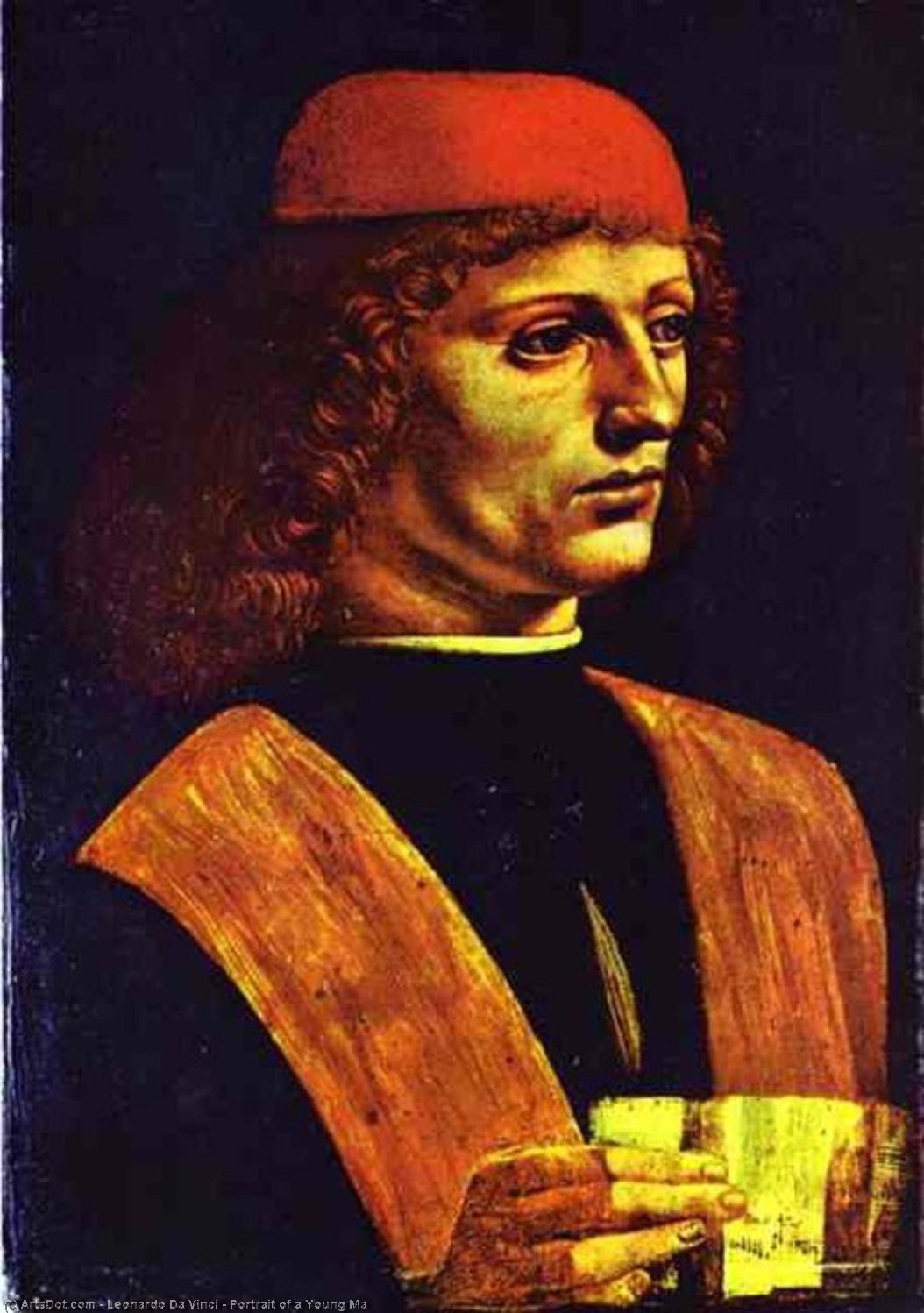
Subject and Composition: A Glimpse into Renaissance Portraiture
The
Portrait of a Young Man, attributed to the renowned artist
Leonardo da Vinci, presents an intimate study of a young man from the Italian Renaissance. The subject is believed by some to be Franchino Gaffurio, a prominent musician and maestro di cappella of the Milanese Cathedral, though this remains debated. He is depicted in a three-quarter pose, his gaze directed slightly away from the viewer, creating an air of thoughtful introspection. In his hand, he holds a piece of paper adorned with musical notes, subtly hinting at his profession and artistic inclinations. The composition is notable for its detailed rendering of the young man's face and hands – hallmarks of Da Vinci’s meticulous style. However, art historians suggest that elements like the red hat, tunic, and hair were likely added by another painter, indicating a possible collaborative effort or later modifications to the original work.
Artistic Technique and Style
This captivating portrait is an oil on wood painting, a technique favored during the Renaissance for its richness of color and ability to capture fine details. Da Vinci’s mastery of sfumato – a subtle blending of colors without harsh lines – is evident in the soft transitions of light and shadow across the young man's face, creating a sense of depth and realism. The unfinished state of the painting, particularly noticeable in the hands and lower part of the chest which are drawn but not fully painted, offers valuable insight into Da Vinci’s artistic process and his approach to layering and building up an image. This work shares stylistic similarities with Da Vinci's earlier portrait,
Ginevra De' Benci, both showcasing a focus on detailed facial features and hands. The inclusion of the musical score in this particular portrait distinguishes it from other works and adds an intriguing layer of symbolism.
Historical Context and Symbolism
Created around 1485, the
Portrait of a Young Man reflects the artistic and cultural climate of the High Renaissance in Milan. During this period, portraiture became increasingly popular among wealthy patrons as a means of commemorating themselves or their loved ones. The painting’s setting within the Biblioteca Ambrosiana in Milan underscores its historical significance and its place within a collection of important artworks. The musical score held by the young man is not merely decorative; it symbolizes his profession and potentially represents the harmony and intellectual pursuits valued during the Renaissance. The red hat, while possibly added later, could signify status or membership in a particular guild or organization.
Emotional Impact and Legacy
Despite its unfinished aspects and subsequent restorations, the
Portrait of a Young Man evokes a sense of quiet dignity and intellectual curiosity. The young man’s gaze, directed beyond the viewer, invites contemplation and suggests an inner world of thoughts and emotions. The painting stands as a testament to Da Vinci's unparalleled ability to capture human likeness and convey psychological depth. It remains a cherished masterpiece, admired for its artistic merit and historical importance, continuing to inspire art enthusiasts and scholars alike.
Further Exploration