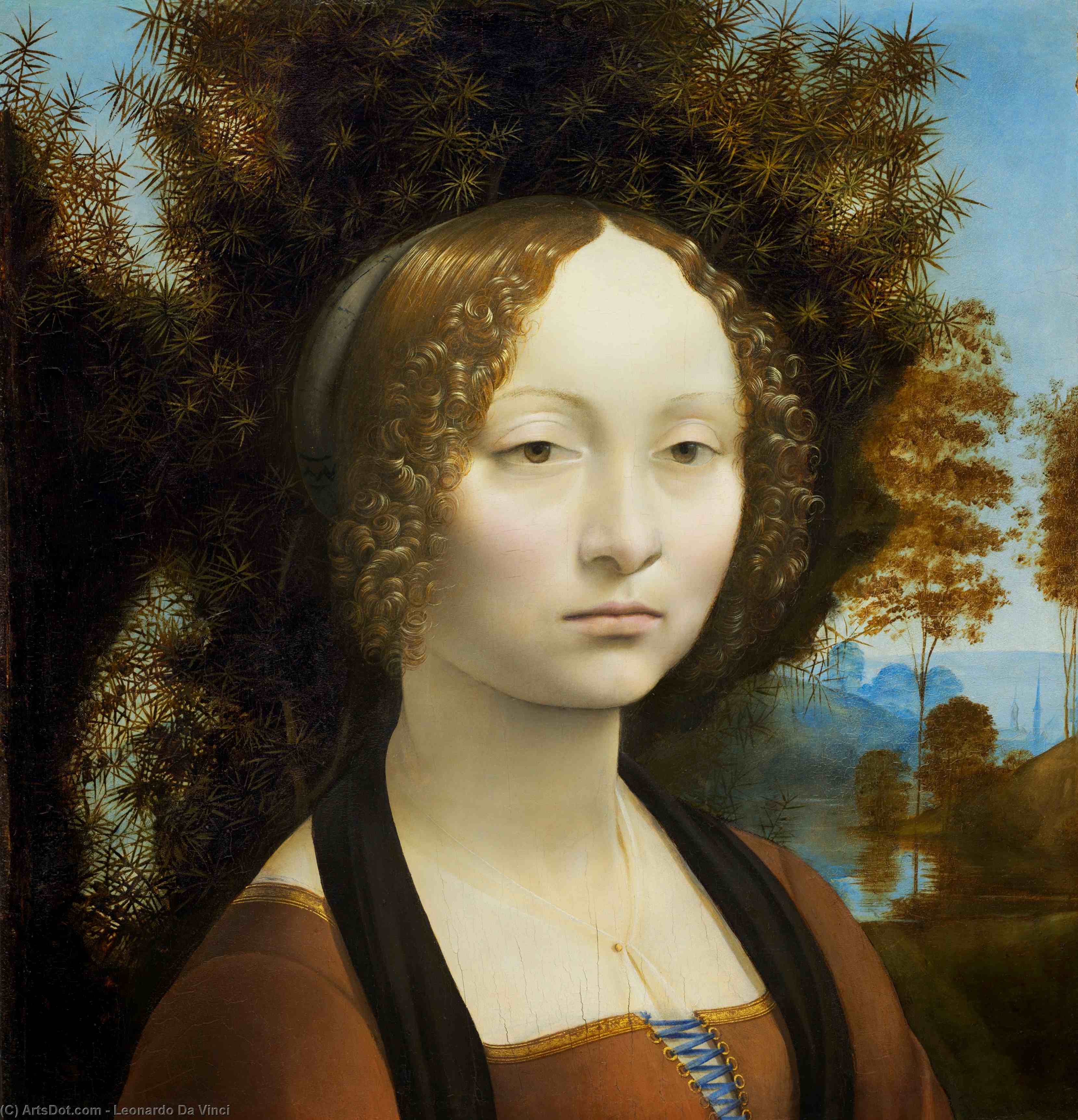
A Renaissance Portrait of Refinement: Ginevra Benci
Painted in 1476 by the unparalleled Leonardo da Vinci, this captivating portrait offers a rare glimpse into the world of Florentine aristocracy and the burgeoning artistic innovations of the Early Renaissance. Ginevra de' Benci, the subject, was celebrated not merely for her beauty but also for her intellect – a poet and engaging conversationalist admired within contemporary circles. This painting transcends a simple likeness; it’s a testament to Leonardo’s mastery and an exploration of idealised feminine virtue.
Artistic Style & Technique: The Dawn of Renaissance Realism
The *Portrait of Ginevra Benci* exemplifies the shift towards realism that defined the High Renaissance. Leonardo's groundbreaking use of
sfumato – a technique involving subtle, almost imperceptible gradations of light and shadow – lends an ethereal quality to Ginevra’s features, softening lines and creating a sense of depth previously unseen in portraiture. The meticulous attention to detail, particularly in the rendering of her skin and hair, showcases Leonardo's dedication to anatomical accuracy and observation. He employed oil paints on panel, allowing for layering and blending that contributed to this remarkable realism.
Historical Context & Commission
The painting’s origins are steeped in speculation. It is believed to have been commissioned either to commemorate Ginevra's betrothal or as a celebration of the prevalent Renaissance custom of platonic love – refined, intellectual connections between men and women. Ginevra belonged to a prominent Florentine family, and her portrait reflects the status and sophistication of that social sphere. The fact that it is one of only a handful of Leonardo’s paintings remaining today—and the sole example in the Americas—adds significantly to its historical importance.
Symbolism & Hidden Meanings
Beyond the exquisite depiction of Ginevra herself, the painting is rich with symbolism. The reverse side features a wreath composed of laurel, palm, and juniper branches, accompanied by the inscription “Virtutem Forma Decorat” (“Beauty Adorns Virtue”). The juniper specifically held significance as a symbol of female chastity and virtue, while also being a playful reference to Ginevra’s name ("ginepro" is Italian for juniper). Infrared analysis has even revealed traces of another motto associated with Bernardo Bembo, a Venetian diplomat believed to have been romantically linked to Ginevra, suggesting his possible involvement in the commission.
Emotional Impact & Lasting Legacy
Ginevra’s reserved expression and direct gaze convey a sense of dignity, intelligence, and quiet contemplation. She is not presented as overtly flirtatious or emotional; instead, she embodies the ideals of modesty and refinement expected of women in her era. The painting evokes a feeling of timeless beauty and invites viewers to ponder the inner life of its subject.
Key Features
- Artist: Leonardo da Vinci
- Year: 1476
- Medium: Oil on panel
- Dimensions: 42 x 37 cm
- Location: National Gallery of Art, Washington D.C.
This masterpiece continues to inspire and captivate art enthusiasts worldwide, serving as a powerful reminder of Leonardo da Vinci’s genius and the enduring allure of Renaissance portraiture. Its subtle beauty and historical significance make it an exceptional addition to any collection or interior space.