The Visionary Lines of a Renaissance Master
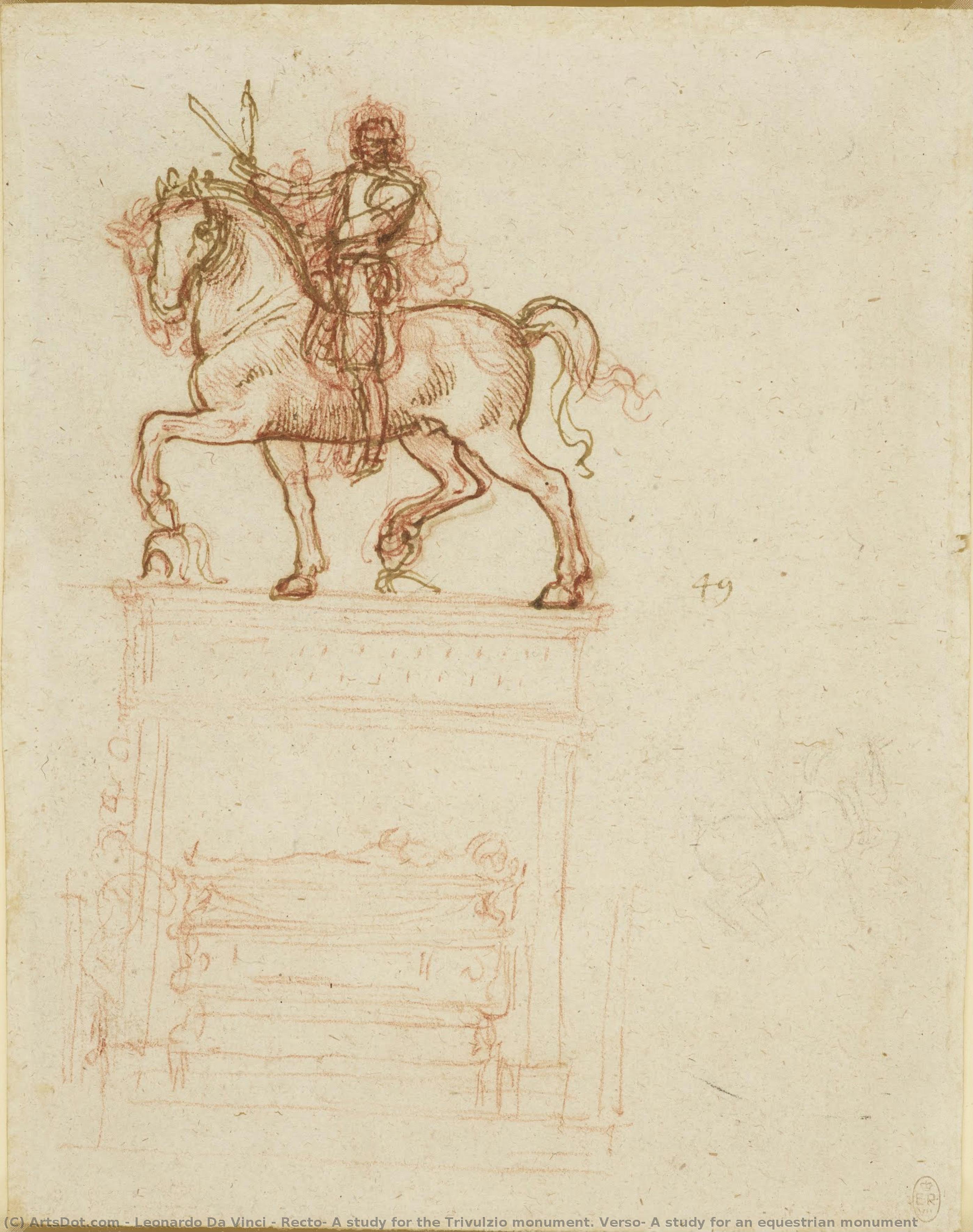
To gaze upon Leonardo da Vinci’s "Recto: A study for the Trivulzio monument. Verso: A study for an equestrian monument" is to witness the very moment where thought transforms into form. This exquisite drawing, dating from approximately 1517, serves as a profound window into the mind of the ultimate Renaissance polymath. In these delicate strokes of black and red chalk, we do not merely see a sketch; we encounter the restless intellect of a man who sought to capture the kinetic energy of life itself. The work captures a fleeting moment of preparation, where the weight of bronze and the grace of a rearing horse are conjured through nothing more than the subtle pressure of a hand against paper.
The composition is a masterclass in anatomical precision and atmospheric depth. On the recto, Leonardo explores the architectural grandeur required for the Trivulzio monument, hinting at a sarcophagus and a base that would have anchored such a massive feat of engineering. The verso continues this rhythmic exploration, presenting a study for an equestrian figure that feels both monumental and ethereal. The rider, clad in the armor of a bygone era, sits atop a horse that seems to pulse with potential movement. Through the use of heavy pen lines and vaporous chalk, Leonardo creates a sense of "sfumato" even within a drawing, allowing the edges of the figures to bleed softly into the surrounding space, much like the mysterious shadows found in his more famous paintings.
A Legacy of Ambition and Engineering
The historical context of this piece is as captivating as its visual execution. Created during the twilight of Leonardo’s life, these studies reflect a period of immense transition. Having once labored for years on an abandoned project for Ludovico Sforza in Milan, Leonardo turned his attention toward new patrons, including the military commander Gian Giacomo Trivulzio. This drawing represents the intersection of art and military engineering; it is a blueprint for glory. The sketches are not merely aesthetic exercises but are deeply rooted in the practical challenges of sculpture—calculating weight, balance, and the structural integrity required to support a massive bronze equestrian figure atop a marble framework.
For the discerning collector or interior designer, this work offers more than just historical significance; it provides a profound emotional resonance. There is a certain melancholy in these unfinished studies—a reminder of the grand visions that often remain trapped in the realm of paper and ink. Yet, there is also an overwhelming sense of inspiration. The way the light seems to catch the ridges of the horse's musculature and the sharp, decisive lines of the rider’s lance evokes a feeling of strength and unyielding purpose. It is a piece that commands attention through its quiet intensity, making it an ideal centerpiece for a space dedicated to contemplation, intellect, and the timeless beauty of classical mastery.
Integrating a high-quality reproduction of this masterpiece into a curated collection allows one to bring the spirit of the High Renaissance into a modern setting. Whether placed in a study lined with leather-bound books or as a focal point in a contemporary gallery-style living room, the drawing acts as a bridge between centuries. It invites viewers to pause and reflect on the boundless curiosity of Da Vinci, reminding us that even the most monumental achievements begin with a single, visionary stroke.