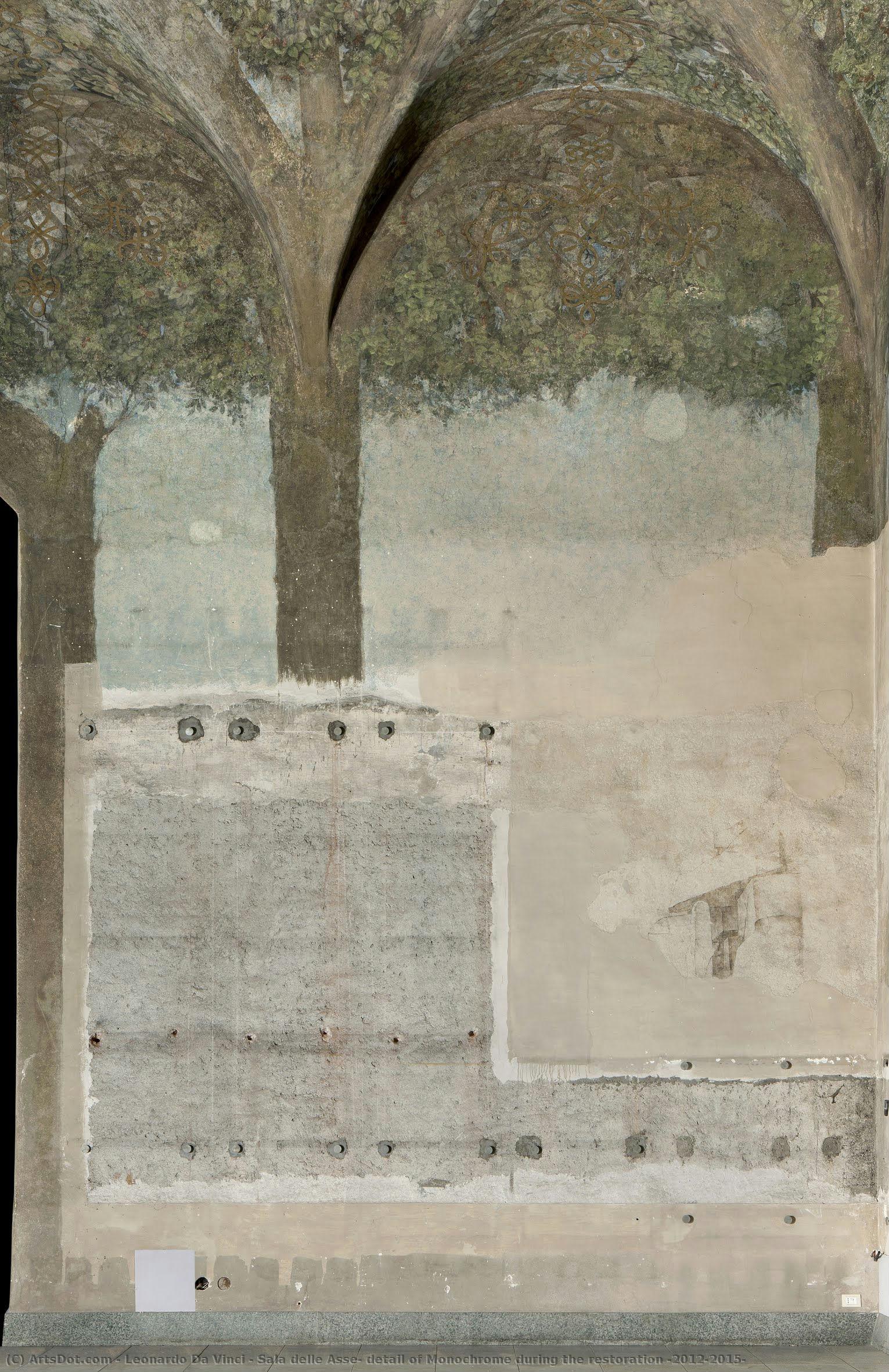
A Monument to Renaissance Vision: Leonardo da Vinci’s Sala delle Asse
The Sala delle Asse—Room of Wooden Boards—stands as a poignant reminder of artistic ambition thwarted by circumstance. Located within the formidable Castello Sforzesco in Milan, this monumental fresco by Leonardo da Vinci represents more than just decorative artistry; it embodies Ludovico Maria Sforza’s reign and speaks to themes of power, resilience, and the enduring influence of nature on human endeavor.
- Historical Context: Commissioned in 1498 during the zenith of the Florentine Renaissance under Lorenzo de' Medici—a period characterized by patronage of the arts and humanist ideals—the Sala delle Asse was intended to solidify Ludovico Sforza’s position as ruler of Milan. Leonardo’s decision to relocate amidst political upheaval underscored the fragility of artistic endeavors within turbulent times.
- The Monochrome Composition: The surviving fragment, meticulously documented in a letter penned by Gualtiero da Bascapè, showcases Leonardo's masterful illusionistic technique—the monochrome. This preparatory drawing depicts an astonishing feat of perspective and imagination: a colossal mulberry tree whose roots aggressively penetrate the bedrock beneath the castle’s north-east wall. The upward thrust of these roots culminates in a dense tangle of branches reaching towards the vaulted ceiling, creating a breathtaking panorama of interwoven foliage and gilded cords.
- Architectural Integration & Symbolism: Notably, the monochrome extends onto part of the adjoining north-west wall, revealing an architectural structure resembling a bridge—a deliberate nod to Leonardo’s fascination with engineering and his desire to elevate the visual experience beyond mere decoration. The inclusion of a fireplace within Ludovico Sforza's day reinforces the tree’s symbolic significance as “sapientissima omnium arborum”—the wisest tree among all—celebrating Ludovico’s astute governance and Milan’s burgeoning silk industry, fueled by mulberry cultivation.
Leonardo’s Technique: Charcoal on Plaster – A Masterful Illusion
Leonardo employed charcoal or chalk on plaster to achieve the monochrome's dramatic tonal range and textural depth. This painstaking process demanded meticulous observation of natural forms—particularly tree roots—and a profound understanding of linear perspective. The resulting image captures not only the visual splendor but also the intellectual rigor that defined Leonardo’s artistic approach.
Emotional Resonance: Strength, Resilience & Natural Majesty
The Sala delle Asse's monochrome transcends mere aesthetic beauty; it conveys an overwhelming sense of power and determination. The depiction of roots battling stone embodies resilience—a testament to Ludovico Sforza’s unwavering resolve during a period marked by conflict with France. Simultaneously, the grandeur of the mulberry tree evokes awe at the majesty of nature and its capacity to inspire human creativity.
A Legacy Preserved: Restoration Efforts & Ongoing Appreciation
Recent restoration work has carefully stabilized the original surface, ensuring that future generations can marvel at Leonardo’s unparalleled vision. The Sala delle Asse continues to captivate art historians and collectors alike—a tangible embodiment of the Renaissance spirit and a beacon of artistic innovation.