A Study in Motion: Leonardo da Vinci’s Obsession with Equestrian Monumentality
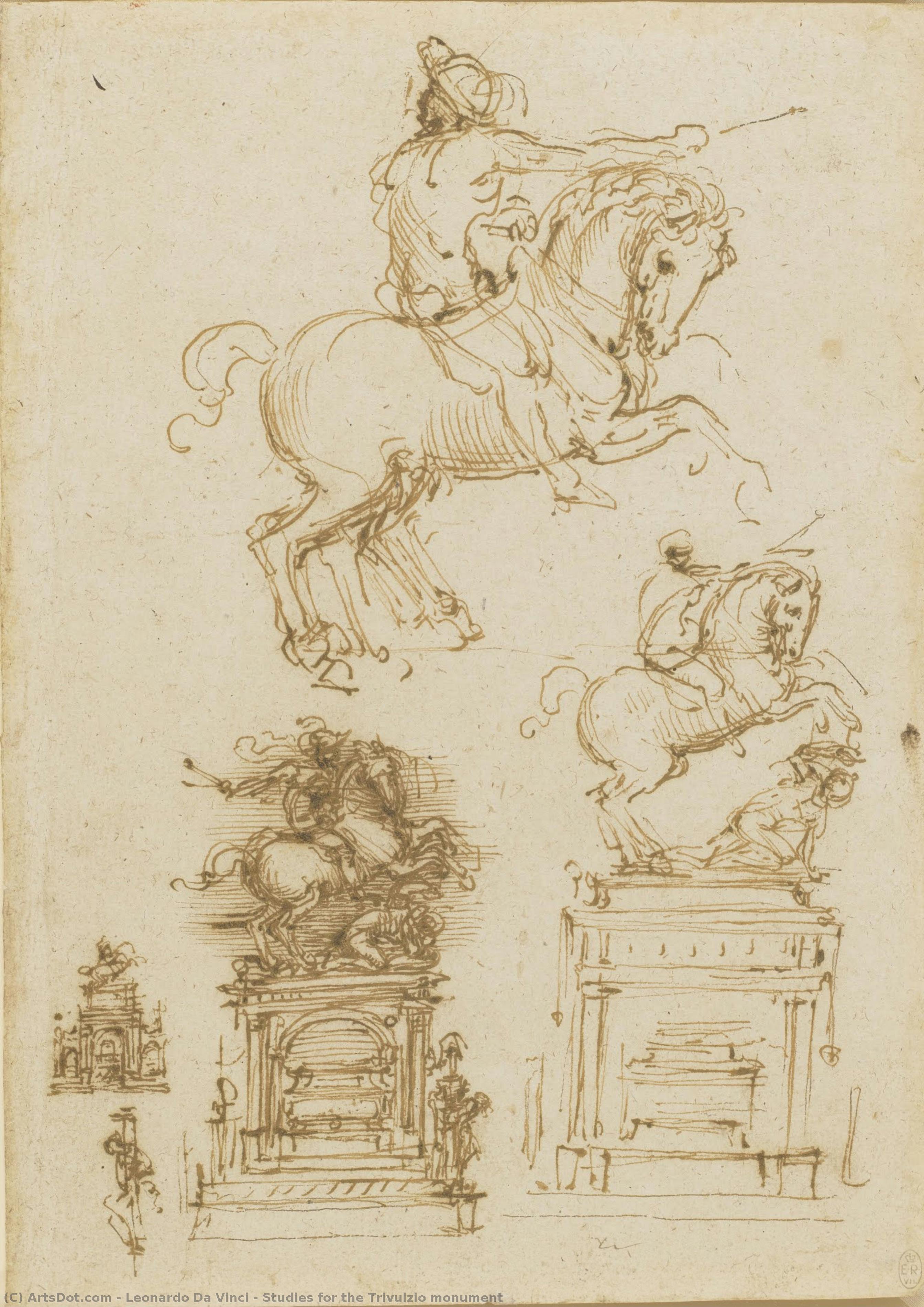
Leonardo da Vinci's "Studies for the Trivulzio Monument," created in 1508, represents more than just a preparatory sketch; it embodies the very essence of Renaissance artistic ambition and Leonardo’s relentless pursuit of perfection. Commissioned by Ludovico Sforza to honor his son Cesare—a testament to dynastic pride and military prowess—the monument was intended to depict Cesare Borgia astride a horse, symbolizing power and dominance. However, Da Vinci didn't merely aim for accurate representation; he sought to capture the dynamism of movement and the psychological complexity inherent in portraying a noble figure.
- Subject Matter: The drawing focuses on a rearing horse—a motif frequently revisited by Leonardo throughout his artistic career, notably in earlier studies conceived for the Sforza family. This particular horse is positioned beneath the watchful gaze of a fallen foe, subtly referencing the artist’s fascination with battlefield imagery and conveying a narrative of triumph over adversity.
- Style & Technique: Da Vinci's meticulous approach is evident in every detail—from the expressive musculature of the horse to the careful rendering of drapery folds. The drawing utilizes charcoal on paper, allowing for tonal variations that capture the subtle nuances of light and shadow, a hallmark of Leonardo’s masterful technique.
- Historical Context: Produced during the height of the Florentine Renaissance, “Studies for the Trivulzio Monument” reflects the humanist ideals prevalent at the time—a belief in human potential and an admiration for classical art and philosophy. Da Vinci's work stands alongside other monumental commissions undertaken by Sforza’s court, demonstrating the artistic fervor of the era.
Symbolism: The horse itself symbolizes nobility, strength, and virility—qualities deemed essential to portraying a ruler. Furthermore, the fallen foe serves as a visual reminder of Cesare Borgia's military victories and reinforces the monument’s overarching message of power and authority. Leonardo’s deliberate inclusion of captives tethered to columns adds another layer of symbolism, representing subjugation and highlighting the artist’s keen understanding of human psychology.
Emotional Impact: Viewing this study evokes a profound sense of contemplation—a glimpse into Da Vinci's creative process and an appreciation for his unwavering dedication to capturing not just form but also feeling. The drawing invites viewers to consider the psychological state of Cesare Borgia, conveying both confidence and vulnerability. It’s a testament to Leonardo’s ability to transform observation into art, resulting in a piece that transcends mere depiction and speaks directly to the viewer's intellect and emotions.
- Interior Design Considerations: Reproductions of “Studies for the Trivulzio Monument” can bring a touch of Renaissance grandeur into contemporary spaces. Their rich tonal range and expressive lines lend themselves beautifully to large-scale prints or canvases, creating an atmosphere of sophistication and artistic contemplation.