Leonardo da Vinci’s Embryological Studies: A Window into Renaissance Anatomy and the Soul
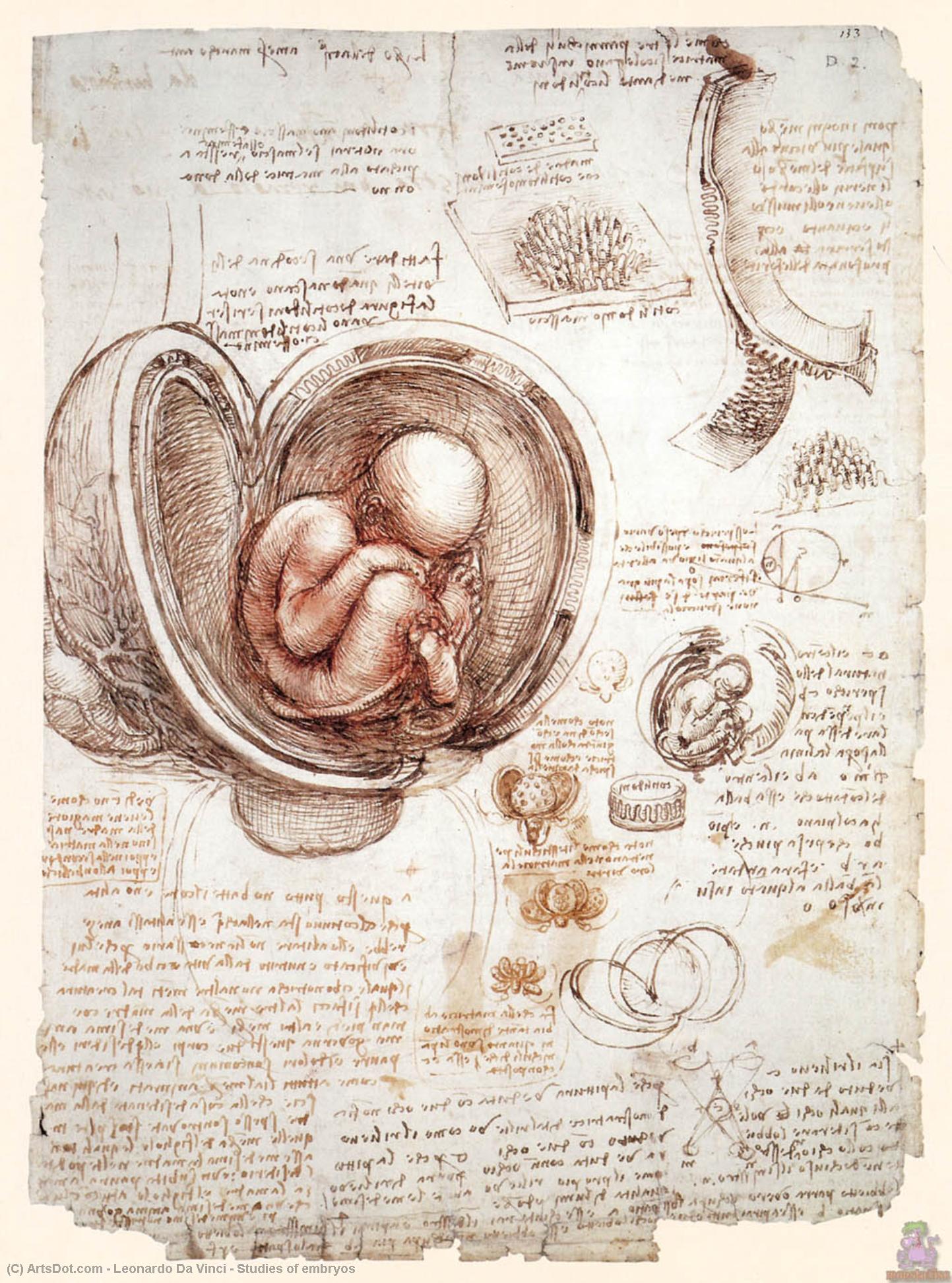
Leonardo da Vinci's "Studies of Embryos," housed within the Royal Library in Windsor, isn’t merely a scientific illustration; it’s a profoundly intimate meditation on life’s genesis. Completed around 1509, this remarkable wash-on-paper work transcends the boundaries of art and science, offering an unparalleled glimpse into the mind of a true Renaissance polymath – a man obsessed with understanding not just how things *looked*, but how they *became*. The painting's unassuming size—305 x 220 cm—belies the monumental significance contained within its delicate lines and subtle washes. It’s a testament to Leonardo’s relentless pursuit of knowledge, driven by an almost spiritual curiosity about the miraculous process of human development.
The composition itself is deceptively simple yet remarkably complex. At its heart lies a central image: a fetal form nestled within a shell-like container – a deliberate choice that immediately evokes notions of protection, vulnerability, and nascent potential. Surrounding this focal point are numerous smaller drawings, meticulously arranged, depicting various stages of embryonic development. These aren’t static representations; they're dynamic sequences illustrating the astonishing transformations occurring within the womb. Notice how Leonardo doesn’t shy away from anatomical detail – the delicate bones, the burgeoning organs, the subtle shifts in form – yet he renders them with a remarkable sensitivity and reverence, suggesting an almost loving regard for this fragile life.
The Anatomical Precision of a Visionary
What truly distinguishes these studies is Leonardo’s unparalleled anatomical understanding. He wasn't simply copying existing knowledge; he was actively engaged in observation and experimentation. The painting reflects his deep engagement with the field, informed by his own clandestine dissections – a practice considered highly controversial at the time. Crucially, these weren’t sterile academic exercises. Leonardo’s meticulous annotations, visible alongside the drawings, reveal a mind grappling with profound questions about the mechanics of life and death. The work is deeply rooted in the anatomical knowledge of the era, yet it surpasses it through Leonardo's unique perspective.
The influence of Marcantonio della Torre, an anatomist who died in Pisa in 1511, is particularly evident. Leonardo had studied the works of Della Torre and incorporated his findings into these drawings, demonstrating a collaborative spirit within the scientific community of the time. However, Leonardo’s own observations went far beyond mere transcription; he challenged established theories and proposed innovative interpretations based on his direct investigations. The meticulous detail—the careful shading, the precise rendering of musculature—is indicative of a man driven by an almost obsessive need for accuracy, reflecting the core principles of Renaissance humanism.
Symbolism and the Human Condition
Beyond its scientific value, “Studies of Embryos” is rich in symbolic meaning. The shell itself represents protection, nurturing, and the cyclical nature of life – a potent metaphor for the womb as the cradle of humanity. The careful arrangement of the smaller drawings around the central figure can be interpreted as a visual representation of time’s passage, charting the journey from conception to birth. Leonardo wasn't simply documenting biological processes; he was exploring fundamental questions about human existence—our origins, our potential, and our ultimate destiny.
Interestingly, the painting’s creation coincided with a period of intense intellectual ferment in Europe. The Renaissance witnessed a renewed interest in classical learning, coupled with a burgeoning spirit of scientific inquiry. Leonardo's work embodies this synthesis – a harmonious blend of art and science that sought to understand the world through observation, reason, and imagination. His relentless pursuit of knowledge, his willingness to challenge established dogma, and his profound sensitivity to the beauty and complexity of life continue to inspire artists and scientists alike.
A Legacy of Innovation
Leonardo da Vinci’s “Studies of Embryos” stands as a pivotal work in the history of art and science. It represents a radical departure from traditional artistic conventions, demonstrating a commitment to anatomical accuracy and scientific observation that was unprecedented at the time. His meticulous drawings laid the groundwork for future studies in embryology, profoundly influencing generations of scientists and artists. The painting’s enduring appeal lies not only in its technical brilliance but also in its profound exploration of the human condition—a testament to Leonardo's genius as a visionary artist and a relentless seeker of knowledge.