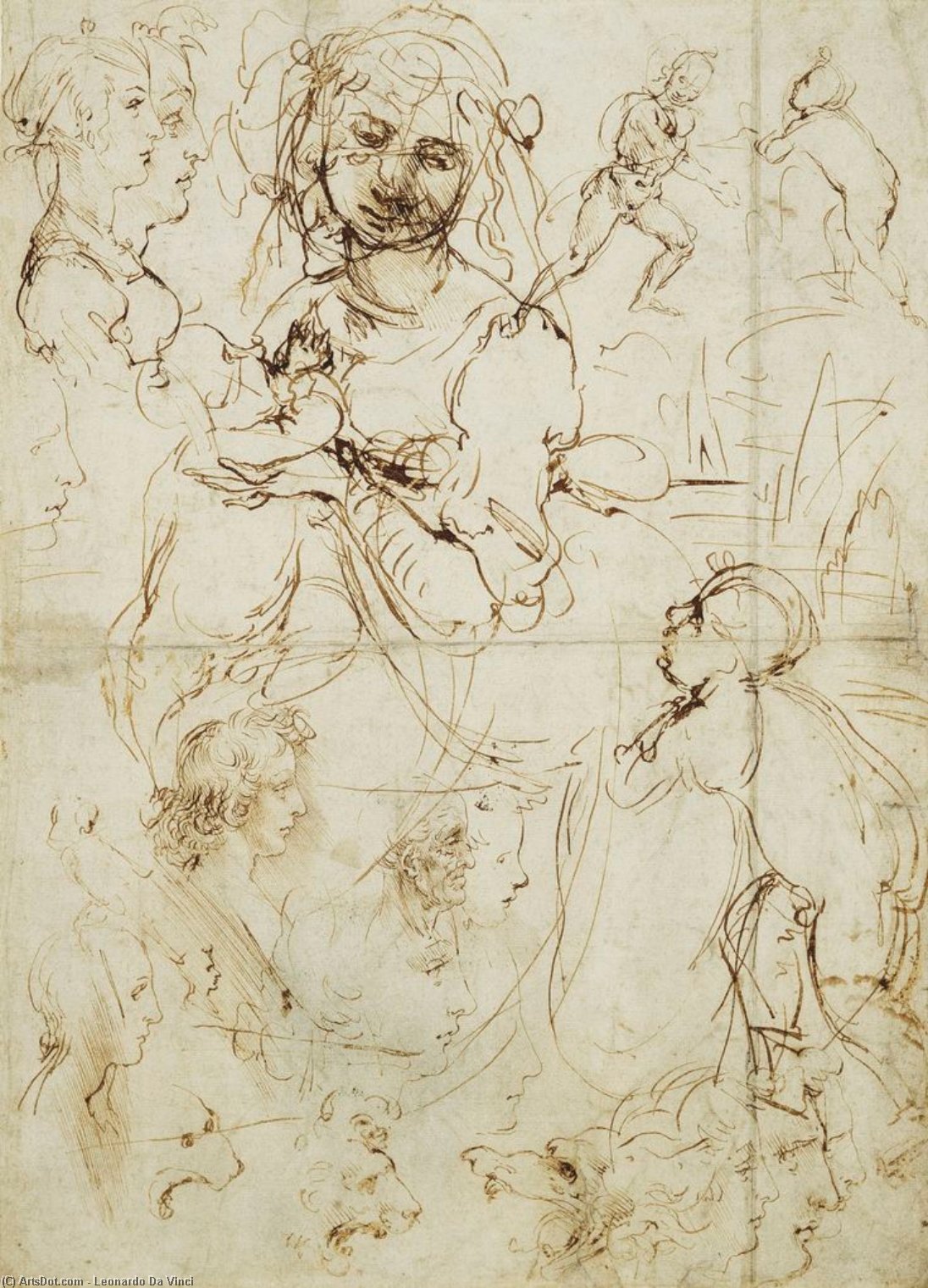
Discover Leonardo da Vinci's 'Study for the Madonna with Fruitbasket'! This exquisite ink drawing offers a glimpse into his Renaissance genius, housed at the Louvre. Explore its historical context and artistic significance.
Explore Leonardo da Vinci (1452-1519): Renaissance genius behind Mona Lisa & The Last Supper! Discover his sfumato technique, anatomical studies & groundbreaking inventions.
Explore the Louvre Museum in Paris! Home to iconic masterpieces like the Mona Lisa & Venus de Milo, journey through art history from ancient Egypt to Renaissance icons. Plan your visit today!
Study for the Madonna with the Fruitbasket: A Glimpse into Leonardo’s Genius
The “Study for the Madonna with the Fruitbasket,” created by Leonardo da Vinci in 1478, is more than just a preparatory sketch; it's a profound window into the mind of one of history’s greatest artists. Housed within the hallowed halls of the Musée du Louvre in Paris, this unassuming ink drawing reveals the meticulous process and nascent brilliance that would ultimately define Leonardo’s revolutionary approach to art. It’s a deceptively simple work – a woman nursing a child, bathed in the soft light of an imagined interior space – yet it embodies the core tenets of his developing style: a profound understanding of human anatomy, a masterful manipulation of perspective, and a nascent exploration of emotion through gesture and expression. The drawing itself is executed with remarkable precision using ink on paper, showcasing Leonardo’s early mastery of line and shadow, laying the groundwork for the luminous realism he would later achieve in works like the *Mona Lisa*.
An Early Renaissance Masterpiece: Composition and Symbolism
This particular study offers a fascinating insight into Leonardo's compositional choices. Notice how he deliberately positions the figures – the woman, presumably Mary, and the infant Jesus – within a shallow space, creating an intimate and almost claustrophobic atmosphere. The baby is placed prominently on the left side of the composition, drawing immediate attention to his vulnerability and innocence. Conversely, Mary occupies most of the right side, suggesting her role as protector and nurturer. The two figures are framed by a subtle background, hinting at other individuals – perhaps attendants or family members – adding depth and context to the scene without overwhelming the central focus. The inclusion of a fruit basket, overflowing with ripe produce, is laden with symbolism. Fruit has long been associated with fertility, abundance, and the promise of new life—a potent visual metaphor for Mary’s role as the mother of God. The careful rendering of each piece of fruit speaks to Leonardo's keen observational skills and his desire to capture the beauty and detail of the natural world.
Historical Context: The Louvre and Renaissance Florence
To fully appreciate this study, it’s crucial to understand its historical context. The Musée du Louvre, originally a royal palace built in the late 12th century, underwent a dramatic transformation during the French Revolution, becoming a public museum dedicated to showcasing art from around the world. This evolution mirrors the broader shift occurring within Renaissance Florence, where artistic patronage moved from the Church and wealthy families to a more open and accessible system. Leonardo’s early career was shaped by this changing landscape, as he honed his skills in the workshops of masters like Andrea del Verrocchio and sought commissions from influential patrons such as Ludovico Sforza, Duke of Milan. The *Study for the Madonna with the Fruitbasket* reflects this period of experimentation and innovation, a time when Leonardo was actively exploring new techniques and pushing the boundaries of artistic representation.
Leonardo’s Legacy: A Foundation for Innovation
The “Study for the Madonna with the Fruitbasket” is not merely a preliminary sketch; it's a testament to Leonardo’s extraordinary talent and his pioneering approach to art. It demonstrates his early command of perspective, his ability to capture subtle nuances of emotion, and his meticulous attention to detail—qualities that would become hallmarks of his later masterpieces. Alongside this study, consider his other works – the *Virgin of the Rocks*, the *Annunciations* – each revealing a progression in his artistic vision. Leonardo’s relentless pursuit of knowledge extended beyond painting; he was an inventor, scientist, and anatomist, constantly seeking to understand the world around him and translate that understanding into his art. His legacy continues to inspire artists and scholars today, solidifying his position as one of the most influential figures in Western art history. For those interested in experiencing this remarkable work firsthand, ArtsDot offers meticulously crafted oil painting reproductions, allowing you to bring a piece of Leonardo’s genius into your own home or office.