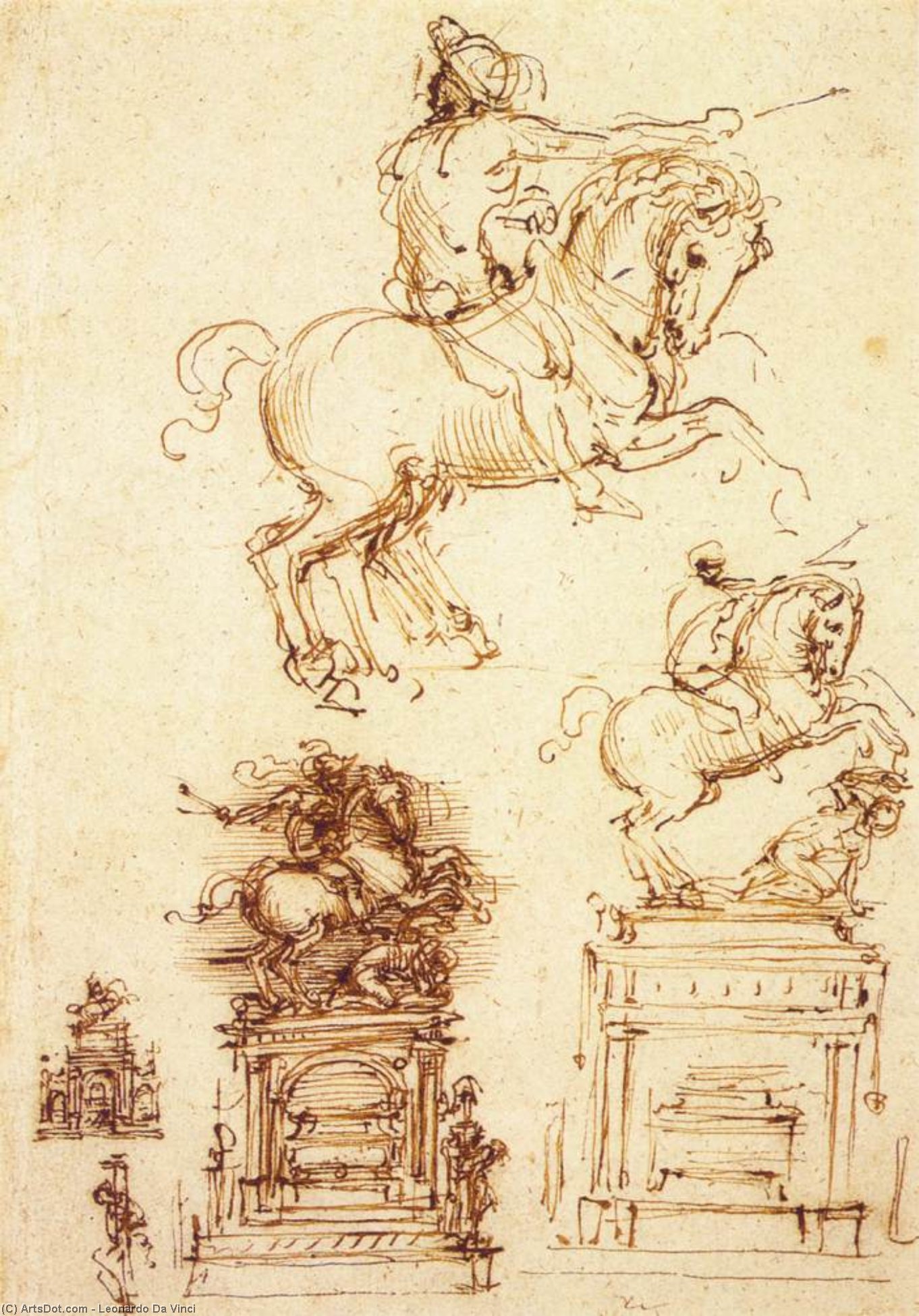
Study for the Trivulzio Equestrian Monument
Leonardo da Vinci’s “Study for the Trivulzio Equestrian Monument” stands as a testament to artistic ambition and intellectual curiosity—a singular achievement born from the crucible of Renaissance Florence. Created around 1508, this monochrome drawing offers an unparalleled glimpse into Da Vinci's meticulous process of conceptualizing one of the most monumental commissions of his era: a colossal bronze statue honoring Gian Giacomo Trivulzio, Milan’s formidable military leader. More than just a preparatory sketch, it embodies Da Vinci’s revolutionary approach to art and sculpture, reflecting his profound understanding of anatomy, perspective, and the interplay between form and function.
The drawing itself is deceptively simple in its execution—a graphite study on paper—yet brimming with complexity. It depicts a horse rearing majestically, supported by a fallen warrior, capturing a dynamic pose that foreshadows Da Vinci’s later explorations of movement and equilibrium. This recurring motif – the rearing horse – isn't merely an aesthetic choice; it speaks to Da Vinci’s fascination with animal anatomy and his desire to represent the force of nature in sculptural form. The artist painstakingly rendered musculature, bone structure, and subtle shifts in posture, demonstrating a level of anatomical accuracy that surpassed contemporary standards.
- Artist: Leonardo da Vinci
- Date: c. 1508-10
- Medium: Graphite on Paper
- Dimensions: 280 x 198 cm
- Location: Royal Library (Windsor, United Kingdom)
The Trivulzio Monument study is inextricably linked to Da Vinci’s broader artistic endeavors. Abandoned due to financial constraints and logistical challenges, it serves as a poignant reminder of his visionary aspirations. However, its significance extends beyond the failed commission itself. It shares stylistic affinities with Da Vinci's earlier designs for Ludovico Sforza’s equestrian statue—a project similarly beset by difficulties—and anticipates the grandeur of his final envisioned monument to Henry VIII.
Furthermore, this drawing exemplifies Da Vinci’s humanist conviction that art should strive for both beauty and truth. The artist's meticulous observation of the natural world—evident in the detailed depiction of the horse’s musculature and skeletal structure—reflects a commitment to scientific inquiry alongside artistic expression. It is a captivating piece that invites contemplation on the relationship between art, science, and human understanding.
The Study for the Trivulzio Equestrian Monument remains an invaluable resource for scholars studying Da Vinci's creative process and his enduring influence on Renaissance sculpture. Its understated elegance belies its profound intellectual depth—a testament to Leonardo’s genius as both artist and thinker.