Explore Leonardo da Vinci (1452-1519): Renaissance genius behind Mona Lisa & The Last Supper! Discover his sfumato technique, anatomical studies & groundbreaking inventions.
A Moment Frozen in Time: Leonardo da Vinci’s Studies for a Nativity
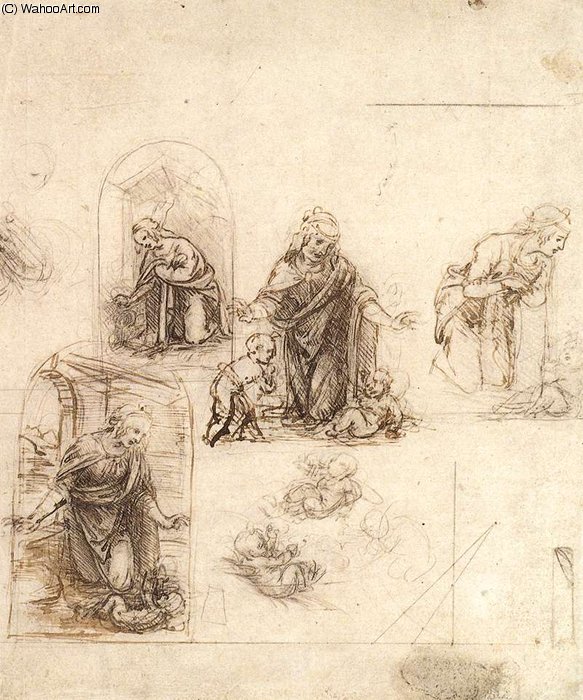
Leonardo da Vinci's "Studies for a Nativity," housed within the Web Gallery of Art, transcends mere depiction; it embodies the very essence of Renaissance artistic inquiry. This unassuming sketch—a preparatory drawing executed around 1495-1496—offers an unparalleled glimpse into the mind of one of history’s greatest innovators and artists. It's not simply a visual representation of biblical iconography but rather a testament to Da Vinci’s meticulous observation of nature and his relentless pursuit of anatomical accuracy, foreshadowing techniques that would revolutionize painting centuries later.
The Anatomy Beneath the Surface
Da Vinci’s fascination with human anatomy extended far beyond artistic considerations. He dissected cadavers—a controversial practice at the time—to gain a profound understanding of musculature and skeletal structure. This knowledge is palpable in these studies, where he painstakingly rendered the contours of the human torso, capturing subtle nuances of muscle placement that would become hallmarks of his monumental works like “The Last Supper.” The drawing isn’t merely about portraying the figure; it's about reconstructing its inner workings—a demonstration of Da Vinci’s belief that art should illuminate scientific truth.
Sfumato: Mastering Atmospheric Perspective
Da Vinci perfected the technique known as sfumato, meaning "smoked" or "blurred," which he famously employed in “Mona Lisa.” This revolutionary approach involved layering translucent glazes to soften edges and create an illusion of depth and atmosphere—a masterful manipulation of light and shadow that renders forms incredibly realistic. While visible in this preparatory sketch, the sfumato technique is less pronounced than in his finished masterpieces. However, it’s evident in the delicate gradations of tone across the woman's drapery and skin, hinting at Da Vinci’s intention to achieve a similar luminous effect in his final composition—the Virgin of the Rocks.
Symbolism Rooted in Faith
The subject matter itself – Mary holding Jesus – speaks volumes about Renaissance spirituality. The pose of Mary, kneeling humbly before Christ, reflects the piety and devotion prevalent during the period. Her hand raised in benediction symbolizes grace and divine blessing, conveying a profound message of faith and humility. The inclusion of two dogs—a common motif in Renaissance art—represents loyalty and guardianship, mirroring the protective role of God over humanity. Furthermore, the bird perched atop the Virgin’s head is often interpreted as symbolizing the Holy Spirit, signifying divine inspiration and spiritual enlightenment.
Emotional Resonance: A Window into Da Vinci's Vision
“Studies for a Nativity” isn’t merely an academic exercise; it possesses a palpable emotional resonance. The drawing captures a moment of serene contemplation—a quiet intimacy between mother and child—that speaks to the universal themes of love, compassion, and faith. It exemplifies Da Vinci’s ability to distill complex ideas into simple yet powerfully evocative imagery. Viewing this sketch allows us to appreciate not only Da Vinci's artistic prowess but also his humanist worldview—his unwavering belief in the beauty and dignity of human existence.