The Anatomical Marvel: Decoding Leonardo’s Obsession with the Heart
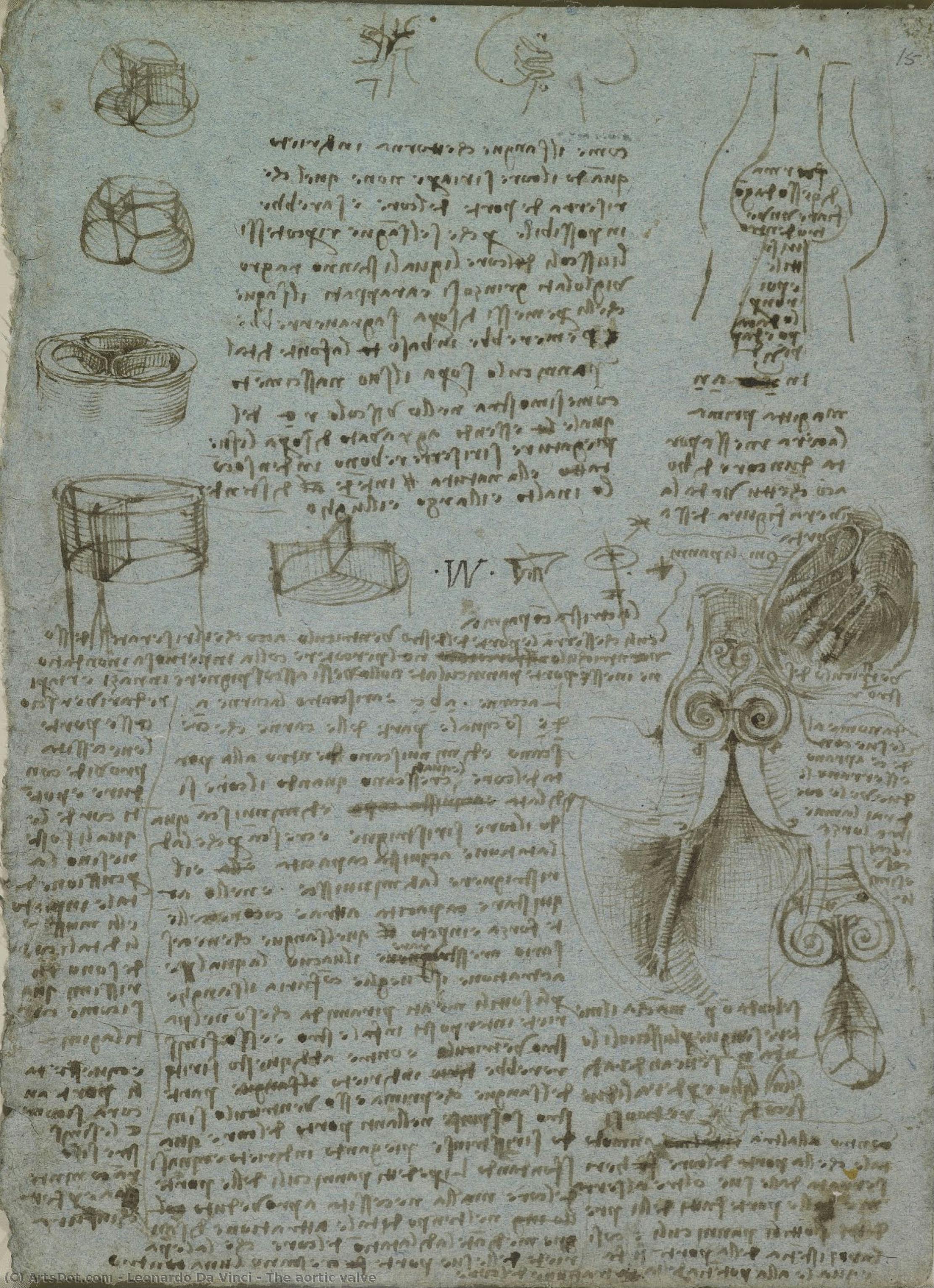
Leonardo da Vinci's "The aortic valve," more than just a depiction of anatomical detail; it embodies the very spirit of Renaissance humanism—a relentless pursuit of understanding the natural world through observation and experimentation. Captured on aged parchment, this sheet from Da Vinci’s notebooks reveals not merely an artist’s meticulous rendering but also a scientist wrestling with fundamental questions about life itself. The artwork isn't simply beautiful; it’s profoundly significant as a testament to Da Vinci’s unparalleled intellectual curiosity and his unwavering belief in the power of disegno – drawing – as a tool for unlocking hidden truths.
- Subject Matter: At its core, the piece focuses on the aortic valve, one of the four valves regulating blood flow through the heart. Da Vinci painstakingly documented its structure—the leaflets, chordae tendinae, and papillary muscles—with astonishing accuracy, surpassing the anatomical knowledge of his contemporaries.
- Style & Technique: The drawing exemplifies Da Vinci’s signature style – characterized by sfumato (subtle shading), precise lines, and meticulous hatching to convey volume and texture. His use of mirror writing adds a layer of intellectual complexity, reflecting his methodical approach to recording observations.
- Historical Context: Created in 1512 during Da Vinci’s formative years, the drawing reflects the burgeoning humanist movement that championed reason and empirical observation alongside classical learning. It stands as a cornerstone of Renaissance anatomical illustration, influencing subsequent artists and scientists for centuries.
A Sculptor's Insight: Experimentation in Wax and Gypsum
Da Vinci’s genius extended beyond artistic representation; he approached scientific inquiry with the same dedication he applied to sculpting. The accompanying drawings illustrate a remarkable experiment—the creation of a glass model designed to visualize blood flow around the aortic valve. By pouring molten wax into the cavity surrounding the valve and subsequently casting gypsum molds, Da Vinci transformed his sculptural skills into a powerful tool for understanding physiological mechanics. This innovative technique underscores Da Vinci’s belief that observation combined with ingenuity could illuminate complex natural phenomena.
Decoding Turbulent Vortices: The Pursuit of Scientific Accuracy
The central diagram meticulously depicts turbulent vortices generated by water flowing past the valve model. Da Vinci's astute observations—documented in detailed sketches—correctly deduced that these swirling currents play a crucial role in closing the valve during diastole (relaxation). This demonstration exemplifies Da Vinci’s commitment to validating hypotheses through experimentation and underscores his profound grasp of fluid dynamics, anticipating discoveries made centuries later.
Symbolism Beyond Anatomy: The Embodiment of Renaissance Ideal
Beyond its scientific precision, “The aortic valve” speaks to the broader humanist ideals of the Renaissance—a fascination with the human form as a microcosm of the universe and an unwavering belief in the capacity for reason to illuminate the mysteries of existence. Da Vinci’s depiction captures not just anatomical detail but also the spirit of intellectual exploration, reflecting his conviction that understanding nature was essential to comprehending humanity's place within it. It remains a timeless symbol of artistic brilliance intertwined with scientific inquiry—a masterpiece that continues to inspire awe and wonder.