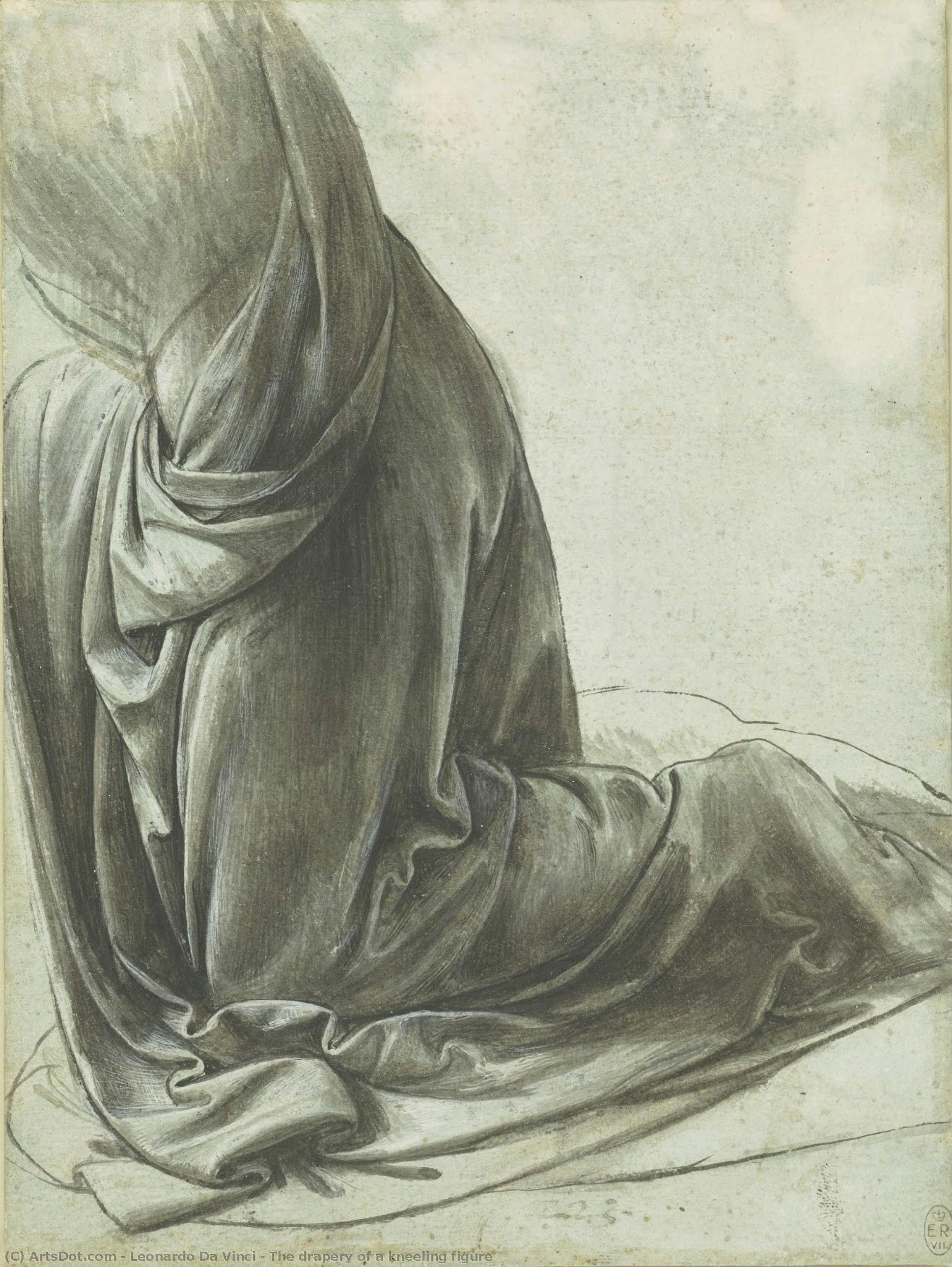
The Drapery of a Kneeling Figure: A Study in Renaissance Mastery
Leonardo da Vinci’s ‘Drape of a Kneeling Figure’ is not merely a sketch; it's a profound study revealing the artist's meticulous observation and innovative approach to depicting fabric and form. Created around 1491, this work offers a captivating glimpse into Leonardo’s process as he prepared for larger compositions, specifically the angel drapery in the second version of the Virgin of the Rocks housed at the National Gallery in London. The drawing exemplifies his dedication to understanding how light interacts with different textures and materials – a cornerstone of Renaissance artistic ideals.
Subject & Technique: An Exploration of Drapery
The artwork focuses entirely on the draped back and lower body of a figure kneeling in contemplation or perhaps mourning. Leonardo’s technique is remarkable; he likely arranged cloth soaked in dilute plaster over a small model, allowing it to dry before studying its folds at leisure. This innovative method allowed him to analyze the complex interplay of light and shadow across the fabric with unparalleled accuracy. The pale blue ground of the paper serves as a mid-tone canvas, enabling Leonardo to explore a wide range of tonal variations using both black ink and white lead paint applied skillfully with a brush. The primary technique employed is dry point with graphite, utilizing layered shading through hatching and cross-hatching to simulate the weight and volume of the material. This creates an illusion of three-dimensionality that is truly astonishing for a preparatory study.
Historical Context & Leonardo's Process
This drawing emerges from a pivotal period in Leonardo’s career, during his first Milanese period (1482-1499) while serving Ludovico Sforza. It directly relates to the second version of the Virgin of the Rocks, commissioned for San Francesco Grande in Milan. The initial version of this painting, now in the Louvre, presented challenges with the angel’s drapery. Leonardo's study demonstrates his deliberate effort to refine and improve upon earlier designs. It highlights his scientific approach to art – a hallmark of the High Renaissance – where observation and experimentation were integral to achieving realism and beauty. The meticulous detail suggests that this wasn't just a quick sketch, but a carefully considered exploration of form and texture.
Symbolism & Emotional Impact
Beyond its technical brilliance, ‘The Drapery of a Kneeling Figure’ carries symbolic weight. The draped figure evokes vulnerability, introspection, or even mourning. The shroud-like fabric adds an element of solemnity, prompting contemplation on themes of mortality and human fragility. While the subject is seemingly simple – just drapery – Leonardo imbues it with a profound sense of quiet mystery. The lighting, appearing to emanate from above and slightly in front, casts subtle shadows that enhance the three-dimensionality and further amplify the emotional resonance of the piece. It’s a testament to Leonardo's ability to convey complex emotions through seemingly simple forms.
A Renaissance Masterpiece for Your Collection
‘The Drapery of a Kneeling Figure’ represents a rare opportunity to own a reproduction of a work that embodies the genius of Leonardo da Vinci. Its exquisite detail, innovative technique, and profound symbolism make it an ideal addition to any art collection or interior space seeking a touch of Renaissance elegance and intellectual depth. This piece is not just a beautiful artwork; it's a window into the mind of one of history’s greatest polymaths.