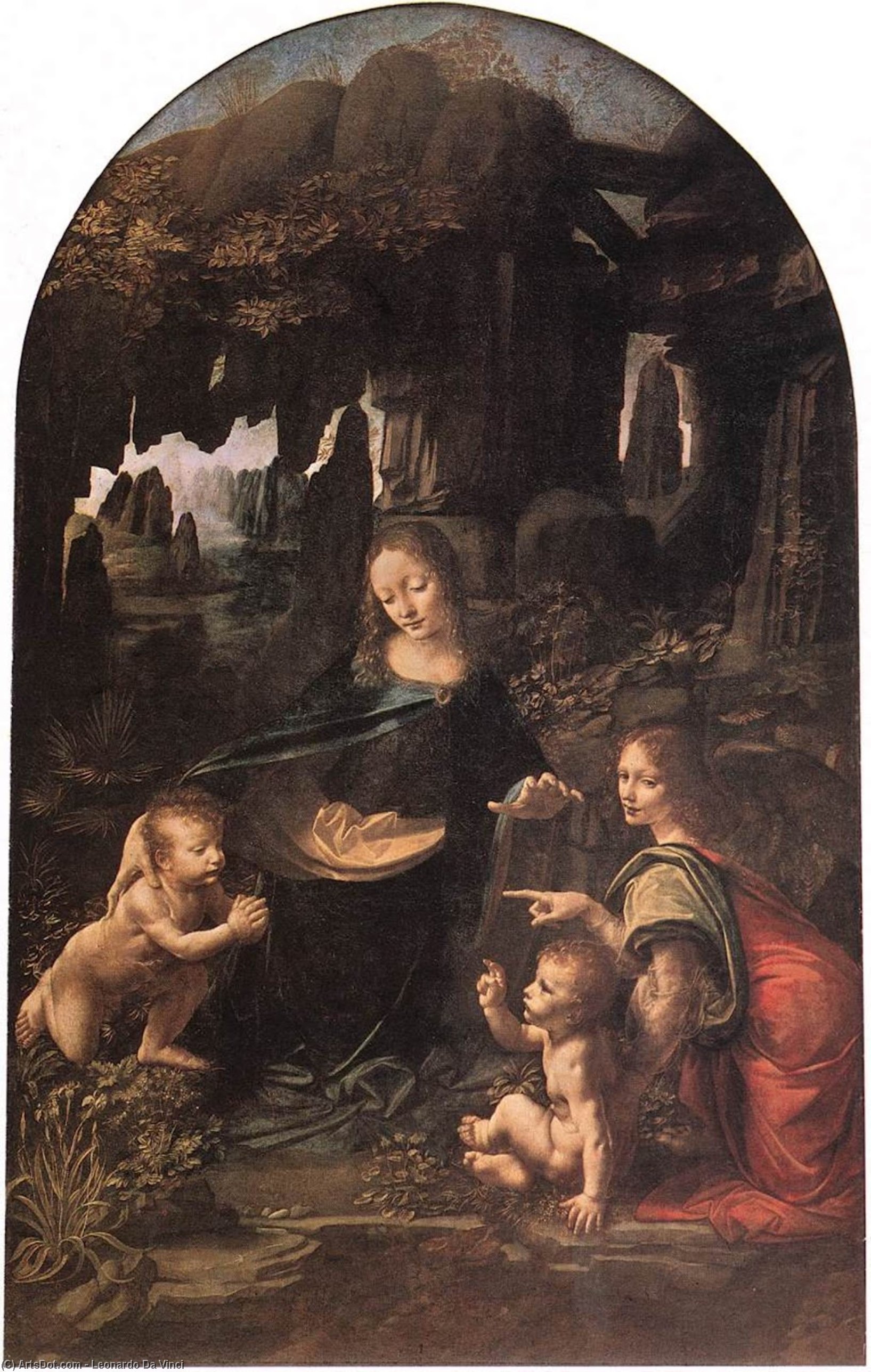
Experience the ethereal sfumato and divine serenity of Leonardo da Vinci's Renaissance masterpiece The Virgin of the Rocks, a profound meditation on faith and nature that invites you to bring this timeless beauty home.
Explore Leonardo da Vinci (1452-1519): Renaissance genius behind Mona Lisa & The Last Supper! Discover his sfumato technique, anatomical studies & groundbreaking inventions.
A Celestial Encounter Amidst the Earthly Stones
In the shadowed, primordial depths of a rocky grotto, Leonardo da Vinci invites us into a moment of profound spiritual intimacy. The Virgin of the Rocks is far more than a mere religious depiction; it is a window into a sacred realm where the boundaries between the human and the divine begin to dissolve. As the eye wanders through the damp, mysterious landscape, it encounters the Virgin Mary, seated with a grace that anchors the entire composition. Beside her, the young Saint John the Baptist gazates with innocent reverence, while an ethereal angel stands watch, bearing the symbols of a future passion. This carefully orchestrated arrangement creates a sense of quietude, drawing the viewer into a silent conversation held within the heart of nature itself.
The Alchemy of Sfumato and Light
What truly distinguishes this masterpiece is Leonardo’s revolutionary application of sfumato, a technique that allows forms to emerge from the darkness as if through a delicate veil of smoke. There are no harsh outlines here; instead, the artist employs subtle gradations of tone, achieved through countless translucent glazes of pigment, to soften the contours of faces and limbs. This mastery of light and shadow—the interplay of chiaroscuro—imbues the figures with an otherworldly luminescence. The way the hazy atmosphere envelops the jagged rocks and blends seamlessly into the heavy drapery creates a palpable sense of depth, making the scene feel less like a flat image and more like a breathing, three-dimensional space that invites the soul to linger.
Symbolism and the Renaissance Spirit
Beyond its breathtaking beauty, the painting serves as a complex tapestry of theological meaning. The rugged, rocky landscape is far more than a dramatic backdrop; it symbolizes the stability and permanence of faith amidst the fleeting nature of human existence. Every element, from the soft glow on the infant Christ’s skin to the watchful eyes of the angel, speaks to themes of purity, compassion, and divine providence. Created during Leonardo's influential Milanese period, this work reflects the intellectual ferment of the Renaissance, where scientific observation met spiritual devotion. For the discerning collector or interior designer, bringing a high-quality reproduction of such a piece into a space offers more than mere decoration; it introduces an element of contemplative peace and historical weight that can transform the very atmosphere of a room.