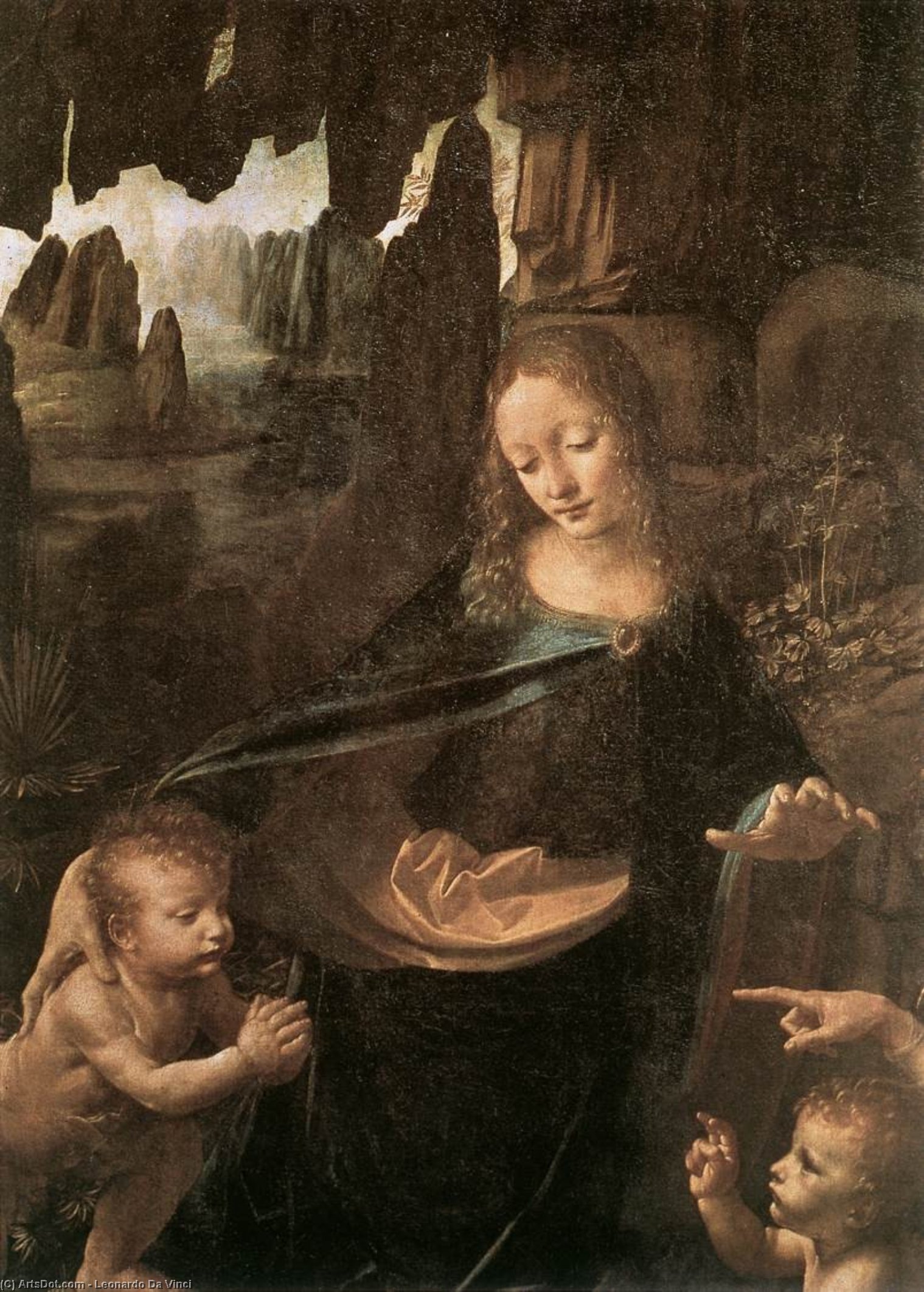
A Silent Symphony of Light and Shadow
In the hallowed halls of the Louvre, there exists a window into a world where the boundaries between the earthly and the divine dissolve into a soft, luminous mist. Leonardo da Vinci’s Virgin of the Rocks is not merely a painting; it is an immersive experience, a masterclass in the delicate dance of light and shadow that captures the very breath of the Renaissance. As one gazes upon this profound composition, the eye is immediately drawn into a sacred grove, where the Virgin Mary sits cradling the Christ child, surrounded by a celestial assembly of angels and infants. The scene is set against a backdrop of primordial, jagged mountains and crystalline waters, creating an atmosphere that feels both ancient and eternally present. It is a work that invites the viewer to step away from the chaos of the modern world and enter a state of quiet, spiritual contemplation.
The true magic of this masterpiece lies in Leonardo’s revolutionary use of sfumato. Eschewing the harsh, biting outlines that defined much of the preceding era, Da Vinci employed a technique of layering translucent glazes to create transitions so subtle they appear as smoke. This "smoky" effect allows the flesh of the holy figures to glow from within, while the rocky crevices of the grotto recede into mysterious, velvety depths. For the discerning collector or interior designer, this technique offers an unparalleled sense of depth and texture. A high-quality reproduction of this work brings a sophisticated, atmospheric weight to any space, acting as a focal point that commands attention through subtlety rather than noise, lending an air of timeless elegance and intellectual depth to a curated room.
Symbolism and the Renaissance Spirit
Beyond its breathtaking aesthetic, every element within the frame serves a higher symbolic purpose. The rugged, geological landscape is far from accidental; the towering rocks represent stability and the enduring nature of divine providence, anchoring the holy figures within a world that is both wild and ordered. The interplay of water and stone speaks to the fundamental elements of life, mirroring the spiritual nourishment provided by the figures depicted. Leonardo’s anatomical precision—the way a hand rests tenderly on a shoulder or how an infant gazes with innocent curiosity—imbues the painting with a profound humanism. This is the essence of the High Renaissance: the marriage of scientific observation with deep, emotional truth.
To possess a reproduction of such a legendary work is to invite a piece of history into one's personal sanctuary. It serves as a reminder of an era when art was a bridge between the seen and the unseen. Whether placed in a sunlit library or a moody, contemporary study, the Virgin of the Rocks provides a sense of narrative richness and historical continuity. It is an investment in beauty that transcends trends, offering a permanent source of inspiration for those who appreciate the profound intersection of technical mastery and soulful storytelling.