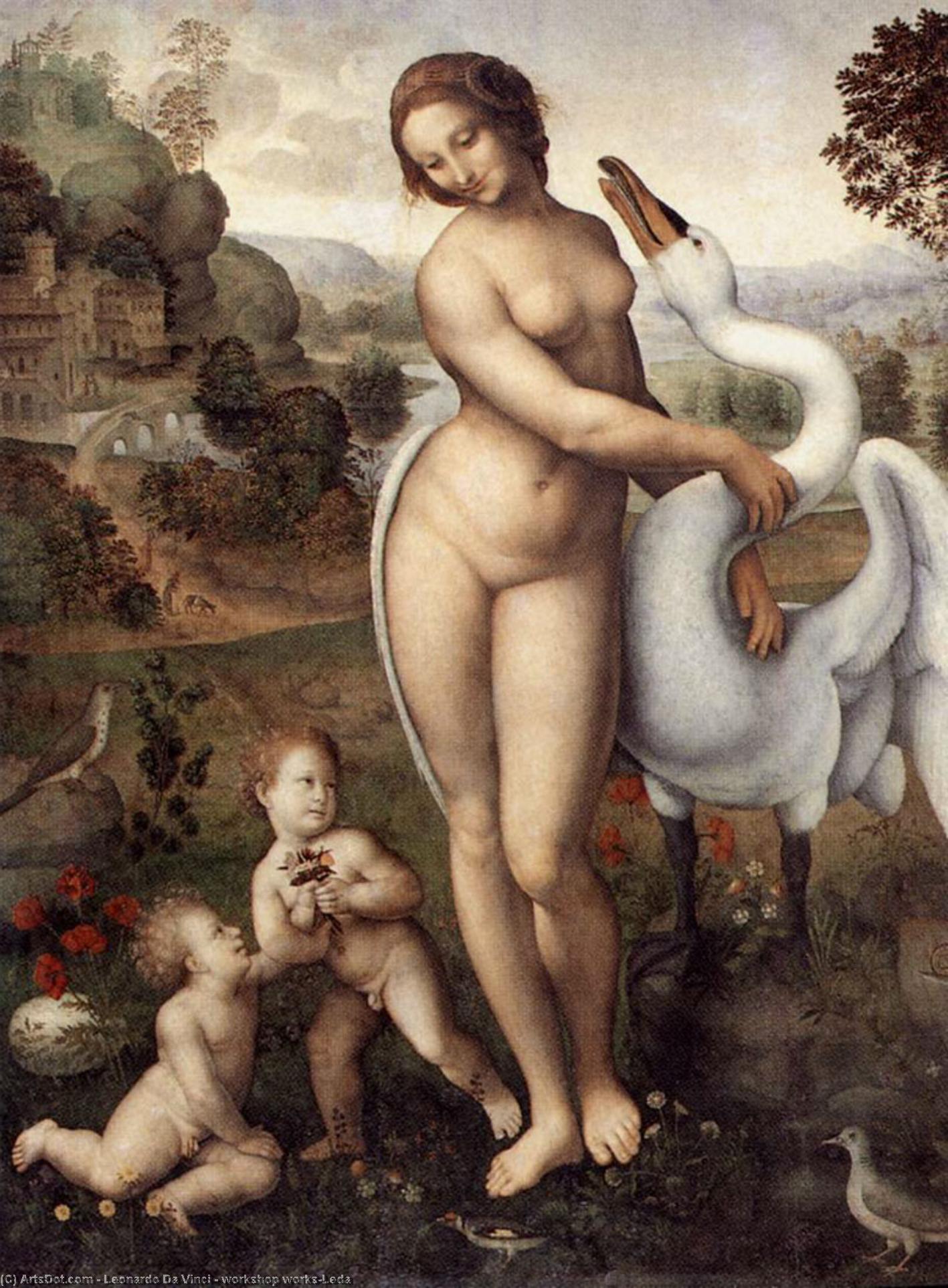
A Mythical Encounter Captured in Delicate Brushstrokes: Exploring Leonardo da Vinci’s “Leda and the Swan”
The enigmatic allure of Leonardo da Vinci's "Leda and the Swan," conceived between 1503 and 1510, transcends mere visual representation; it embodies a profound meditation on mythology, beauty, and the complexities of desire. Though tragically lost to history as an original painting—only surviving in numerous preparatory drawings—these sketches offer invaluable insight into Da Vinci’s artistic process and reveal the genesis of one of his most celebrated compositions. The artwork depicts Leda, Queen of Sparta, seduced by Zeus disguised as a swan, resulting in the birth of Helen of Troy and Clytemnestra – figures pivotal to Homer's Iliad and Odyssey—a narrative steeped in classical symbolism and fraught with emotional tension.
- Subject Matter: The scene portrays Leda reclining on a couch, attended by her handmaidens, as Zeus descends from the heavens in swan form, attempting to seduce her. Two swans flank Leda, symbolizing purity and grace, while a duck appears at the foot of the couch, representing fertility and abundance.
- Style: Da Vinci’s approach aligns perfectly with High Renaissance ideals—characterized by anatomical precision, idealized beauty, and masterful use of sfumato (smoky shading)—techniques that elevate the depiction beyond mere realism. The artist meticulously renders Leda's form with subtle gradations of light and shadow, creating an ethereal atmosphere that captures the vulnerability and allure of the subject.
Technique and Materials: A Testament to Da Vinci’s Innovation
Da Vinci employed a groundbreaking technique—sfumato—to achieve unparalleled depth and luminosity. This method involved layering thin glazes of pigment over each other, gradually blending colors into soft transitions that mimic the natural diffusion of light. The drawings reveal meticulous attention to detail, demonstrating Da Vinci's mastery of charcoal and graphite, alongside subtle washes of color to define contours and enhance tonal variations. These preparatory sketches underscore his commitment to exploring compositional possibilities before committing to a final painting—a characteristic approach that distinguishes him from many of his contemporaries.
Symbolism: Echoes of Classical Mythology and Renaissance Ideals
The artwork is laden with symbolic significance, reflecting the humanist values prevalent during the Renaissance. The swan motif represents Zeus’s divine power and grace, juxtaposed against Leda's earthly vulnerability—a deliberate contrast that underscores the tension between mythology and human experience. Furthermore, the presence of swans and ducks symbolizes fertility and renewal, mirroring the biblical allusion to Genesis – a testament to Da Vinci’s erudition and his ability to infuse his art with layers of meaning.
Emotional Impact: Capturing Transient Beauty and Psychological Depth
“Leda and the Swan” transcends its narrative subject matter to evoke profound emotional resonance. Da Vinci skillfully captures Leda's contemplative gaze, conveying a sense of serene vulnerability amidst the unfolding drama. The sfumato technique contributes significantly to this effect, creating an atmosphere of dreamy stillness that invites contemplation. It’s precisely this ability to portray psychological complexity—to convey unspoken emotions and subtle nuances of expression—that cements “Leda and the Swan”'s place as a cornerstone of Renaissance art and continues to inspire admiration centuries later.