The Drama of Sacrifice: Contemplating Martyrdom of St Peter
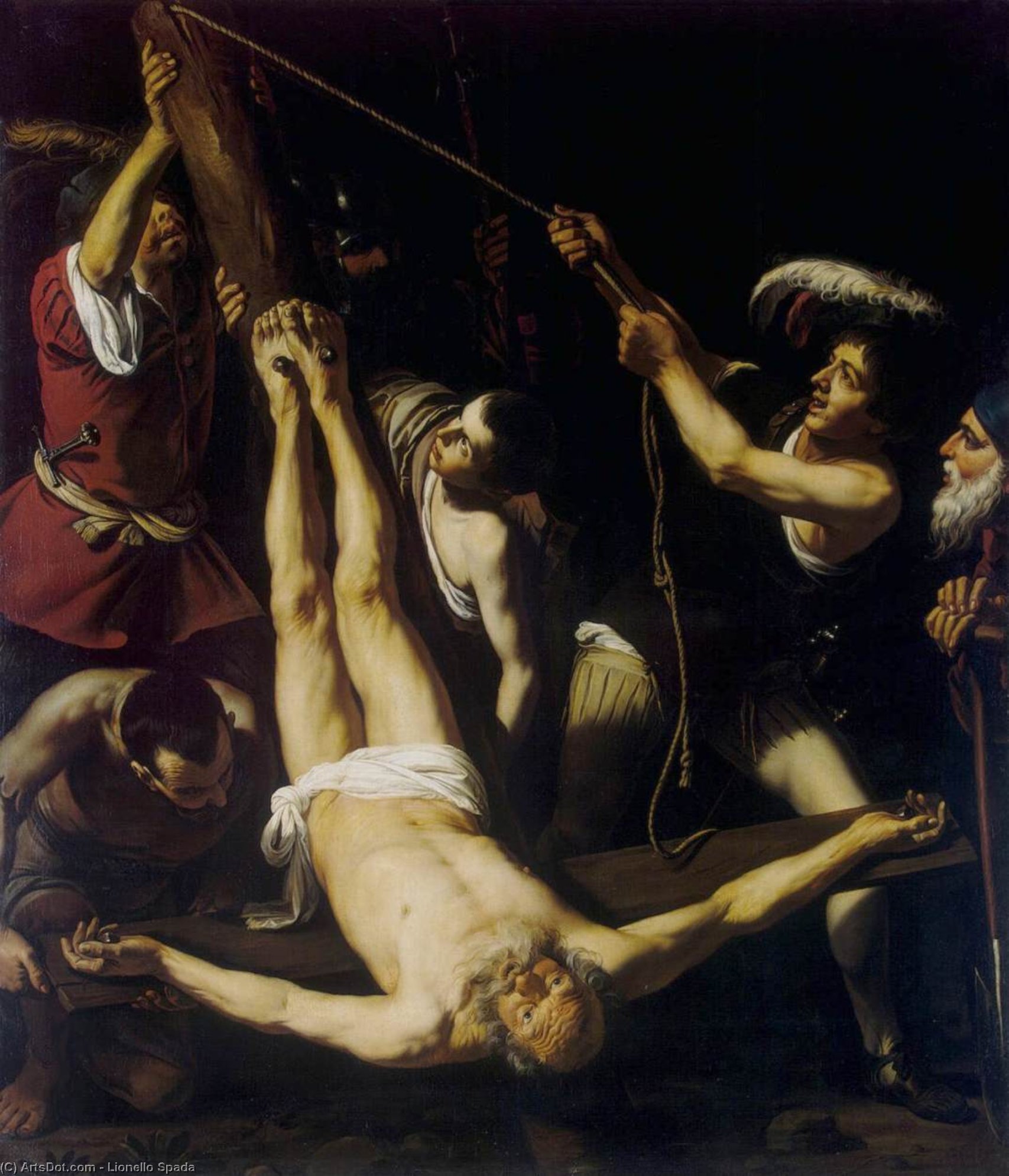
To stand before this depiction of the Martyrdom of St Peter is to be enveloped by a palpable wave of dramatic tension. The scene, rendered with an almost visceral realism, pulls the viewer directly into the crucible of early Christian persecution. It is not merely a historical recounting; it is a profound meditation on faith tested by the ultimate sacrifice. The composition centers around Saint Peter, whose figure embodies both suffering and unwavering spiritual fortitude. His restrained posture, hands bound behind him upon what appears to be a rough wooden surface, speaks volumes without uttering a single word—a silent testament to conviction against overwhelming physical force.
Baroque Intensity and Tenebrist Light
Technically, the painting resonates deeply with the dramatic fervor of the Baroque period. One is immediately struck by the masterful handling of light and shadow; the contrast, or tenebrism, is employed not just for aesthetic effect, but as a narrative tool. Brilliant shafts of illumination carve out the central figures from the surrounding gloom, spotlighting moments of intense emotional exchange. This dramatic chiaroscuro forces the eye to linger on the faces—the solemnity etched upon Peter’s features contrasting sharply with the urgent, almost brutal energy displayed by the surrounding Roman soldiers. The palette itself, dominated by somber earth tones, anchors the piece in a mood of profound gravity, punctuated only by those vital points of light that draw us toward the core spiritual struggle.
Symbolism and the Weight of History
The symbolism woven into this canvas is rich with theological weight. Saint Peter himself stands as an archetype—the rock upon which the early Church was built. His martyrdom serves as a timeless reminder that true belief often demands the greatest personal cost. The surrounding figures, arrayed in their period attire, represent the temporal power of the empire confronting the eternal promise of the spirit. This interplay between earthly authority and divine grace is what gives the work its enduring resonance. For the collector or decorator, this piece offers more than mere decoration; it offers a focal point for contemplation—a visual anchor for discussions on resilience, conviction, and the enduring nature of human spirit.
A Masterpiece for Contemplative Spaces
Considering its scale and inherent drama, this artwork possesses an undeniable presence. Whether placed in a grand hall, a library dedicated to history, or a private chapel setting, it commands attention with quiet authority. The visible signs of age—the patina on the canvas and the wear upon the paint—only deepen its allure, suggesting centuries of stories witnessed beneath its surface. Acquiring a high-quality reproduction allows one to bring this powerful narrative drama into a modern interior, allowing the emotional impact of Baroque mastery to infuse any space with depth and historical gravitas.