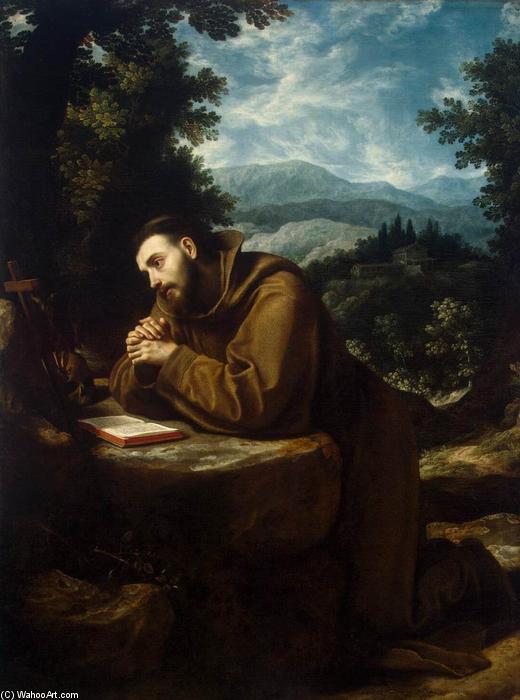
Experience the profound spiritual drama of Lodovico Cardi's St Francis, a masterpiece blending Mannerist grace with Baroque light that invites you to bring this moment of divine devotion into your own collection.
Discover Lodovico Cardi (Cigoli), a late Mannerist/Baroque painter known for expressive figures & dramatic scenes like 'St. Francis'. Explore his Roman works & legacy!
Explore the Hermitage Museum in St. Petersburg! Discover masterpieces from Renaissance to modern times within stunning historic palaces – a cultural journey awaits.
A Moment of Reverence: Exploring Ludovico Cardi’s “St Francis”
Lodovico Cardi, universally recognized as Cigoli, stands as a pivotal figure in the transition from Mannerism to Baroque art—a movement characterized by dynamism and theatricality—in Rome during the late sixteenth century. While biographical details remain somewhat elusive, overshadowed by his prolific output of approximately 150 paintings, Cigoli’s enduring legacy resides in his masterful depictions of biblical narratives and religious iconography, cementing his place amongst the most influential artists of his time. His work embodies a profound understanding of human emotion and spiritual contemplation, qualities that continue to resonate with audiences today.
The Painting's Subject Matter: Saint Francis Embracing Humility
“St Francis,” housed within The Hermitage Museum in St. Petersburg, Russia, portrays Saint Francis of Assisi kneeling upon a rocky outcrop—a deliberate choice reflecting the saint’s ascetic lifestyle and connection to the natural world. Cigoli meticulously captures a pivotal moment from Franciscan legend: the reception of the stigmata – the wounds mirroring Christ's crucifixion – symbolizing divine grace and unwavering devotion. The figure is positioned with one hand raised in benediction, conveying prayerful supplication, while the other holds a book—likely representing scripture or liturgical texts—emphasizing Francis’s commitment to spiritual contemplation and theological understanding.
Stylistic Influences: Mannerism Meets Baroque Drama
Cigoli's artistic style demonstrates a complex interplay between Mannerist formalism and Baroque theatricality. Drawing heavily from Federico Barocci’s teachings in Urbino, Cigoli inherited the Mannerist penchant for stylized poses and elongated figures—a characteristic that lends “St Francis” an air of dignified solemnity. However, unlike the static compositions favored by Mannerists, Cigoli skillfully employs dramatic lighting and perspective to create a palpable sense of depth and movement. The artist’s masterful manipulation of chiaroscuro – the interplay between light and shadow – enhances the emotional impact of the scene, drawing viewers into Francis's inner world and fostering contemplation on themes of humility and divine compassion.
Technique: Oil Paint on Canvas - A Legacy of Detail
Executed in oil paint on canvas—a technique prevalent during Cigoli’s era—the painting showcases remarkable attention to detail. Cigoli meticulously rendered the textures of St Francis's robes, conveying a sense of materiality and realism that distinguishes his work from earlier artistic styles. Furthermore, he painstakingly depicted the surrounding landscape—characterized by rugged rocks and sparse foliage—creating an immersive environment that reinforces the saint’s solitude and spiritual quest. The artist’s meticulous brushwork contributes significantly to the painting’s overall aesthetic quality and underscores Cigoli's commitment to achieving visual accuracy alongside expressive artistry.
Historical Context: Rome Under Papal Patronage
“St Francis” emerged during a period of intense artistic innovation in Rome—a city under the patronage of Pope Paul V—who actively commissioned artists to adorn churches and palaces with monumental artworks reflecting Catholic piety. Cigoli’s painting exemplifies the Baroque aesthetic's ambition to inspire awe and convey spiritual fervor, aligning perfectly with the papal agenda of bolstering religious devotion amidst the turbulent political landscape of the time. Its placement within The Hermitage underscores its enduring significance as a masterpiece of Baroque art—a testament to Cigoli’s artistic genius and his contribution to shaping the visual culture of seventeenth-century Rome.
Symbolism: Faith, Humility, and Divine Grace
Beyond its formal qualities, “St Francis” is laden with symbolic meaning. The stigmata represent Christ's suffering and sacrifice—a profound reminder of divine compassion and redemption—while St Francis’s posture embodies humility and reverence before God. The book symbolizes scripture and theological contemplation—affirming the saint’s unwavering faith and intellectual engagement with religious doctrine. Cigoli’s masterful depiction captures not merely a biblical narrative but also an embodiment of core Christian virtues, inviting viewers to contemplate themes of spiritual transformation and moral integrity.