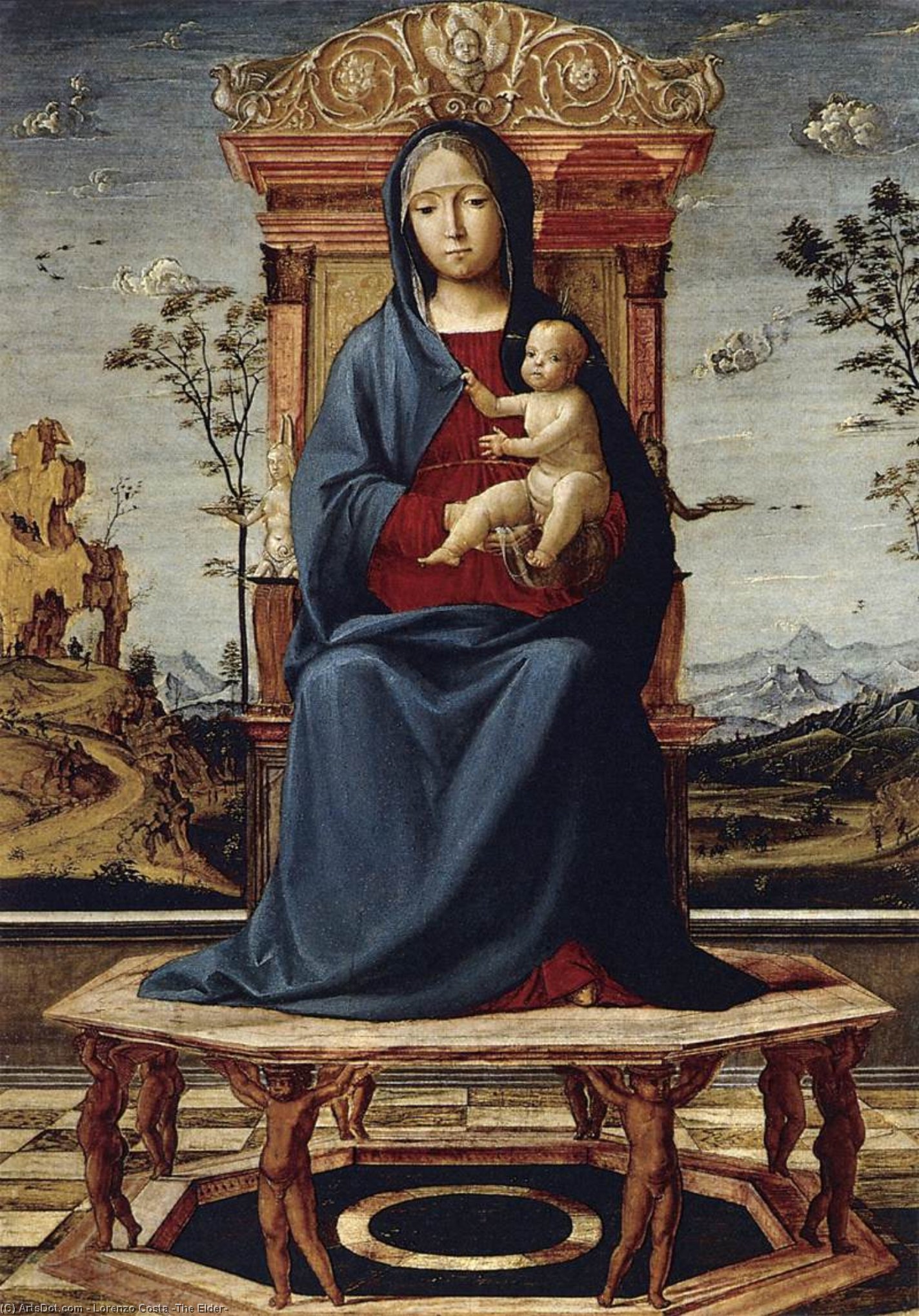
Lorenzo Costa (1460-1535) was a pivotal Italian Renaissance painter of the Ferrara & Bologna schools. Known for soft, atmospheric style, mythological allegories, and religious works. Court painter to Isabella d'Este.
Explore European art history at the Thyssen-Bornemisza Museum! Discover masterpieces spanning eight centuries, from Botticelli to Van Gogh, in a stunning Madrid setting.
A Serene Vision of Divine Grace
Gazing upon this depiction of the Virgin and Child Enthroned, one is immediately enveloped in an atmosphere of profound tranquility. The composition centers on the tender bond between mother and child, rendered with a delicate grace that speaks to the highest ideals of Renaissance piety. The Virgin Mary, seated regally yet intimately, cradles her divine offspring before her. Her attire, dominated by rich blues, evokes both heavenly majesty and earthly depth. It is a moment suspended in time—a quiet communion observed by the viewer across the centuries.
Mastery of the Early Renaissance Hand
Painted around 1495, this work stands as a beautiful testament to the flourishing artistic spirit of the late Quattrocento. Attributed to Lorenzo Costa (the Elder), the piece showcases the painter's sophisticated handling of form and emotion, drawing upon the meticulous detail absorbed from masters like Francesco Francia. While the subject matter is deeply sacred, Costa imbues it with a humanist elegance characteristic of the era. The technique suggests a careful layering of paint, allowing the soft transitions—a subtle echo of sfumato—to give the figures an almost breathing realism, making the divine seem palpably present within the domesticity of the scene.
Symbolism Woven into the Landscape
The background elements are not mere decoration; they are carefully placed symbols enriching the narrative. Observe the natural details: the presence of a tree in the upper left corner anchors the composition to the earthly realm, while the two visible birds—one near the top and another toward the bottom right—often symbolize the soul or the passage of time in Renaissance iconography. These elements frame the central figures, suggesting that this sacred moment unfolds within a divinely ordered, yet natural, cosmos. The throne itself speaks to Mary's elevated status, while the gentle interaction between mother and child speaks volumes about nurturing grace.
An Heirloom for the Modern Sanctuary
For the discerning collector or designer seeking an object of profound beauty and historical weight, this reproduction offers more than just decoration; it offers a piece of devotional art history. The dimensions of 50 x 37 cm allow it to function beautifully as a focal point in a drawing-room, a chapel niche, or a sophisticated study. Owning this image is to invite the quiet contemplation and enduring artistry of the Italian Renaissance into your contemporary life, allowing you to connect with the spiritual depth that captivated patrons for centuries.