The Last Supper: A Florentine Masterpiece of Emotion and Perspective
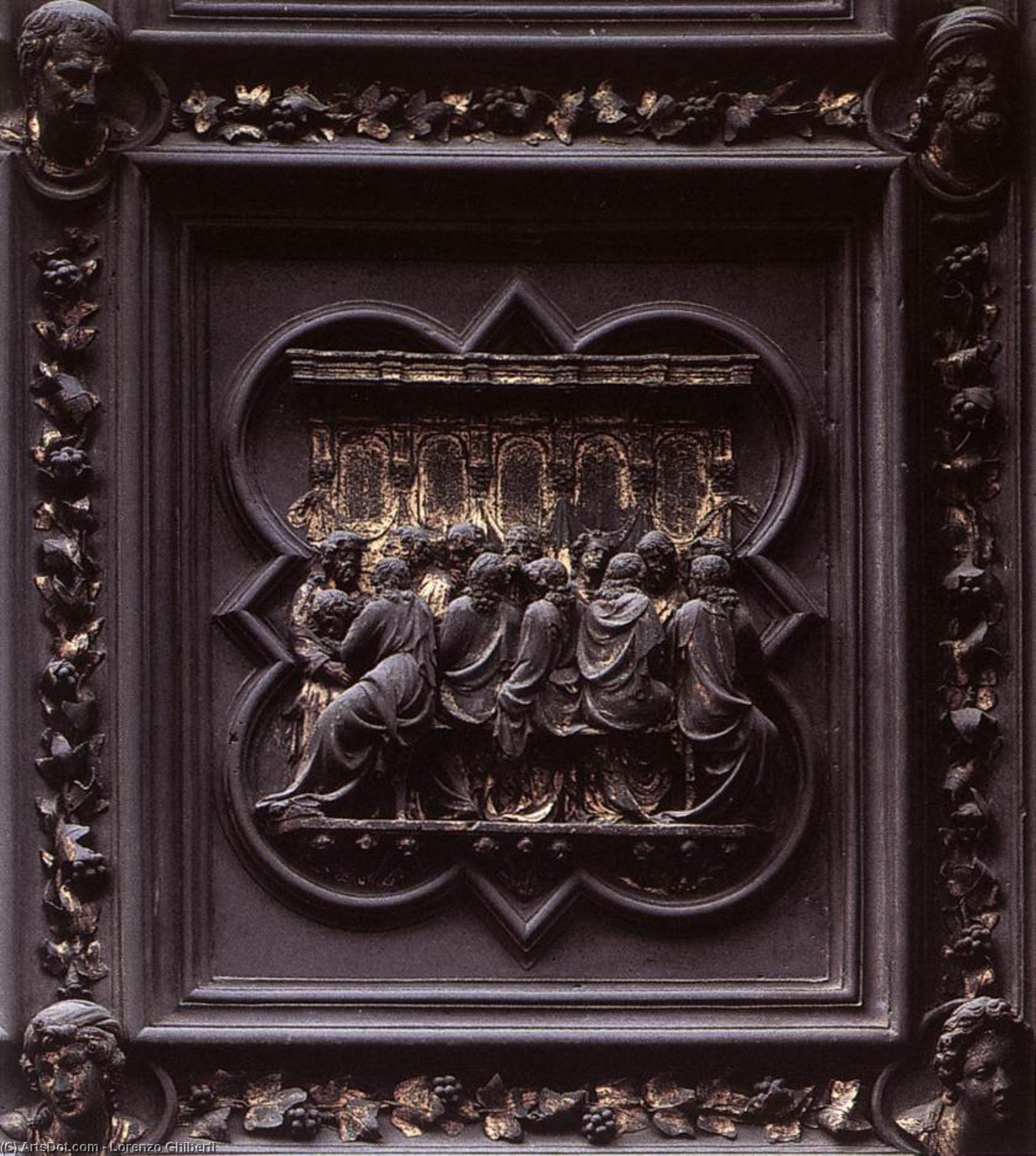
Lorenzo Ghiberti’s “Last Supper,” painted between 1403 and 1424 for the north doors of the Florence Baptistery, isn't merely a depiction of a biblical event; it’s a profound exploration of human emotion, a revolutionary leap in artistic perspective, and a testament to the burgeoning spirit of the Early Renaissance. Far from a static representation, Ghiberti captures the very moment of revelation – Jesus announcing his impending betrayal – imbuing the scene with an intensity rarely seen in religious art of its time. The painting’s enduring power lies not just in its technical brilliance but also in its ability to evoke a visceral response from the viewer, drawing us into the drama unfolding within the confines of the Florentine Baptistery.
Ghiberti's mastery is immediately evident in his innovative use of linear perspective. Unlike earlier depictions which often presented the scene as a flattened tableau, Ghiberti employs a sophisticated system to create an illusion of depth and space. The vanishing point, subtly placed within Jesus’s figure, draws our eye directly to him, while the receding lines of the table and the figures themselves converge towards that central focus. This technique, groundbreaking for its time, was not only visually compelling but also demonstrated Ghiberti's deep understanding of mathematical principles – a hallmark of Renaissance humanism. The careful attention to detail in rendering each apostle’s face, their gestures, and their clothing further enhances this sense of realism and immediacy.
The Symbolism of Gesture and Expression
Beyond the technical innovations, “The Last Supper” is rich with symbolic meaning. Ghiberti doesn't simply record the event; he captures the emotional responses of each apostle to Jesus’s shocking announcement. The expressions range from disbelief and confusion to anger, denial, and sorrow – a carefully orchestrated tableau of human reaction. Judas Iscariot, often depicted as isolated and shadowed, is rendered with a subtle but unmistakable air of treachery, his face partially obscured by darkness. Conversely, figures like Peter, consumed by anguish, and John, radiating concern, powerfully convey the weight of the impending tragedy. Ghiberti’s ability to translate complex theological concepts into tangible emotional states elevates the painting beyond a historical record and transforms it into a universal meditation on betrayal, faith, and human nature.
A Renaissance Vision: Bronze Doors and Artistic Legacy
“The Last Supper” was conceived as part of a larger commission for two pairs of bronze doors that adorned the Florence Baptistery. These doors, known as the “Gates of Paradise,” represented the pinnacle of Ghiberti’s career and established him as one of the leading sculptors of his generation. The bronze panels were designed to depict scenes from the Old Testament, offering a visual narrative of salvation and redemption. The choice of bronze itself was significant; it symbolized durability, permanence, and divine authority – qualities highly valued by the Florentine elite. Ghiberti’s work on these doors profoundly influenced subsequent generations of artists, shaping the course of Renaissance sculpture and solidifying Florence's reputation as a center of artistic innovation.
A Timeless Masterpiece: Reproduction and Artistic Inspiration
Today, “The Last Supper” remains one of the most celebrated works of art in history. Its influence can be seen in countless paintings, sculptures, and other artworks across centuries. Reproductions, such as this meticulously crafted hand-painted version, offer a remarkable opportunity to experience the power and beauty of Ghiberti’s masterpiece firsthand. The careful attention to detail, the masterful use of perspective, and the profound emotional depth of the scene are all faithfully recreated, allowing viewers to connect with this iconic work on a deeply personal level. Whether displayed in a grand salon or a smaller study, a reproduction of “The Last Supper” serves as a constant reminder of the enduring legacy of Lorenzo Ghiberti and the transformative power of Renaissance art.