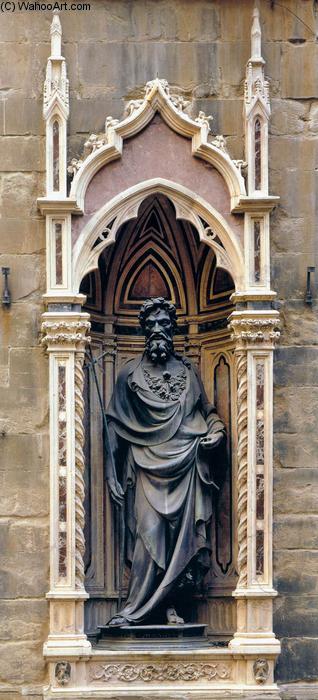
Lorenzo Ghiberti’s ‘St John the Baptist’ (1412) – a stunning bronze sculpture showcasing Renaissance artistry & Gothic influence. Explore its detailed analysis, technique & historical significance.
Lorenzo Ghiberti (1378-1455): Renaissance sculptor celebrated for the 'Gates of Paradise' on Florence’s Baptistery. Master bronze casting, humanist artistry & innovative perspective.
Discover Orsanmichele: Florence's unique church & former grain market housing stunning Renaissance sculptures by Donatello & Ghiberti—a testament to Florentine art, faith & guild history.
St John the Baptist: A Renaissance Vision in Bronze
Lorenzo Ghiberti’s “St John the Baptist,” completed in 1412 during Florence's golden age, stands as an unparalleled testament to Renaissance artistic innovation and a masterful embodiment of Gothic grandeur. More than just a sculpture; it is a carefully crafted narrative frozen in bronze, reflecting humanist ideals and spiritual contemplation—a piece that continues to resonate with viewers centuries later.
The Sculpture’s Form and Composition
The statue depicts Saint John the Baptist in a pose characteristic of Renaissance artistic conventions – contemplative, serene, yet imbued with palpable emotion. Ghiberti skillfully captures the figure's vulnerability as he leans against a pillar, gazing upwards towards heaven with an expression of profound introspection. The sculpture’s drapery flows gracefully around him, creating dynamic movement that contrasts beautifully with the stillness of his gaze. Its placement within a monumental Gothic archway—a symbol of faith and divine majesty—amplifies its impact, establishing it as a focal point within the architectural space. The towering arches flanking the statue contribute to an overwhelming sense of scale and grandeur, emphasizing the artist’s ambition to convey both spiritual depth and visual splendor.
Technique and Material Mastery
Ghiberti's unparalleled skill in bronze casting is evident throughout “St John the Baptist.” He employed a technique known as lost wax casting—a painstaking process involving creating a wax model, encasing it in clay, melting away the wax to leave behind a mold, pouring molten bronze into the mold, and finally removing the hardened metal sculpture. This method allowed for exceptional detail and precision, resulting in a surface finish that is remarkably smooth and luminous – a hallmark of Renaissance craftsmanship. The choice of bronze itself was deliberate; it symbolized purity and resilience—qualities deemed essential to representing Saint John’s spiritual stature. Furthermore, Ghiberti skillfully utilized subtle shading techniques to sculpt the statue's flesh tones, creating an illusion of realism that captivated audiences during its time.
Historical Context and Symbolism
“St John the Baptist” emerged from Florence during a period marked by fervent artistic patronage and intellectual ferment—the High Renaissance. The sculpture reflects humanist ideals championed by thinkers like Pico della Mirandola, who emphasized human dignity and potential for spiritual enlightenment. Saint John’s iconography – his baptism of Jesus Christ – embodies Christian symbolism relating to purification and redemption. The statue's upward gaze symbolizes aspiration towards divine grace, while the pillar represents steadfast faith and endurance. Moreover, Ghiberti’s incorporation of Gothic architectural elements—the archway and flanking towers—underscores the sculpture’s connection to medieval religious traditions, demonstrating a harmonious blend of stylistic influences.
Emotional Resonance and Artistic Legacy
“St John the Baptist” transcends mere visual representation; it evokes profound emotional responses in viewers. The statue's serene countenance conveys tranquility and contemplation, inviting reflection on themes of faith, humility, and spiritual yearning. Its luminous bronze surface captures light beautifully, creating an ethereal glow that enhances its symbolic significance. Ghiberti’s masterpiece continues to inspire artists and collectors alike—a timeless embodiment of Renaissance artistry and a poignant reminder of humanity's quest for beauty and transcendence. It remains one of the most celebrated sculptures of the period, securing Ghiberti's place as a cornerstone of Florentine artistic heritage.