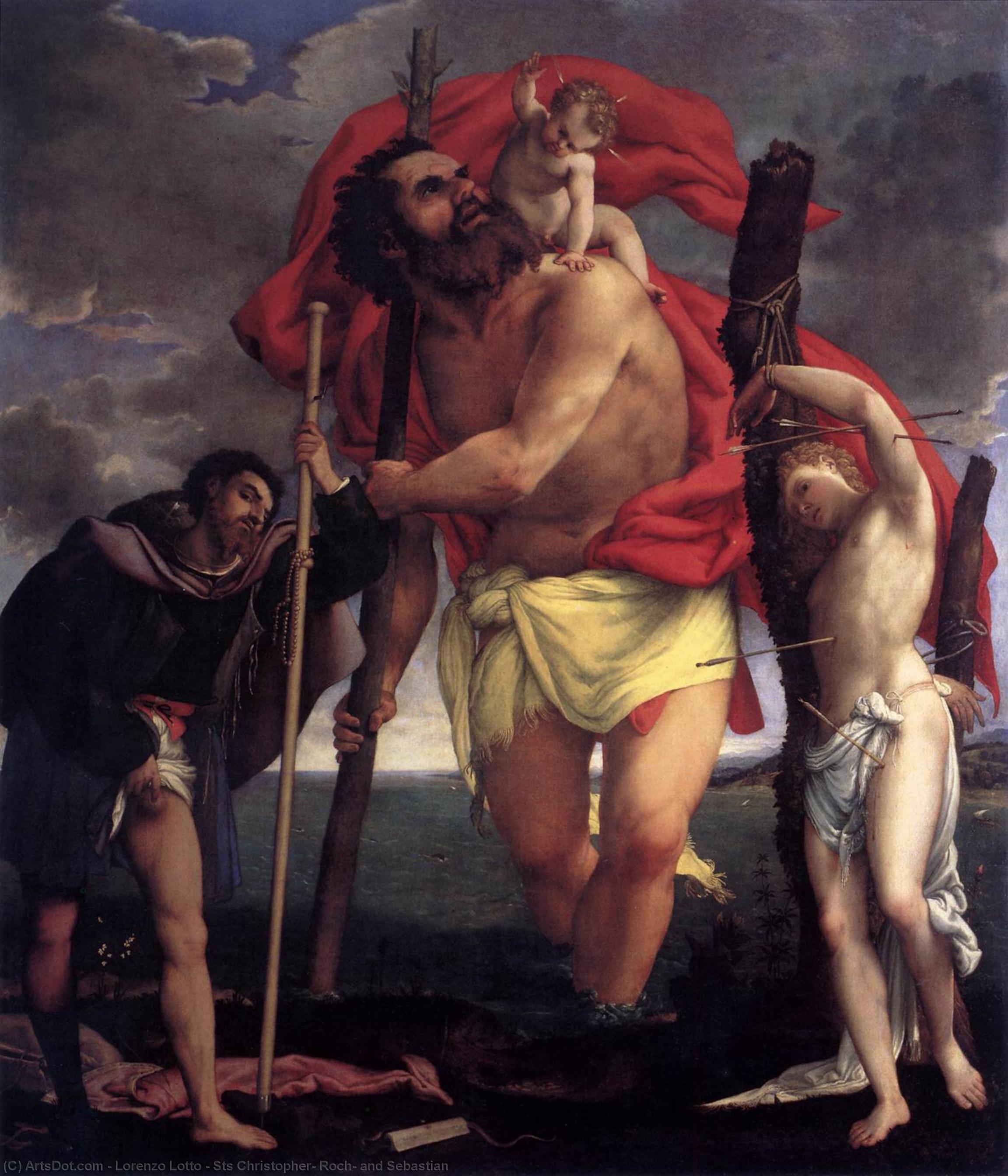
Sts Christopher, Roch, and Sebastian by Lorenzo Lotto is a captivating religious painting from 1535 featuring three saints. Lotto’s distinctive style blends Renaissance grace with Mannerist innovation, capturing a powerful narrative through meticulous composition and symbolism. The artwork exemplifies Venetian artistic excellence.
Sts Christopher, Roch, and Sebastian: A Venetian Masterpiece Reflecting Faith and Mortality
Lorenzo Lotto’s “Sts Christopher, Roch, and Sebastian,” painted circa 1532-1534, stands as a testament to the artistic fervor of the High Renaissance while simultaneously grappling with profound theological themes. Executed in Loreto Basilica, Italy, this monumental altarpiece exemplifies Lotto's signature blend of realism and Mannerist stylistic flourishes—a masterful combination that continues to captivate viewers centuries later.
Subject Matter & Composition: The painting depicts three saints – St Christopher, Roch, and Sebastian – arranged in a dramatic tableau. St Christopher cradles the infant Jesus with unwavering tenderness, symbolizing divine protection and compassion. Roch, depicted as a penitent monk clutching his crucifix, embodies humility and devotion to God’s suffering servant. Sebastian, pierced by arrows representing martyrdom, underscores the sacrifice required for spiritual righteousness.
Style & Technique: Lotto employed meticulous observation of human anatomy combined with expressive brushstrokes characteristic of Mannerism. The figures are rendered with remarkable detail—particularly St Christopher's face—revealing a nuanced understanding of musculature and emotion. Lotto’s use of chiaroscuro – dramatic contrasts between light and dark – enhances the emotional intensity of the scene, guiding the viewer’s gaze across the composition.
Historical Context: Painted during a period marked by religious upheaval and artistic innovation, “Sts Christopher, Roch, and Sebastian” reflects the anxieties surrounding plague outbreaks prevalent in Italy at the time. The inclusion of a paper scroll bearing an eye and Lotto's signature—a deliberate motif—references biblical imagery symbolizing divine providence and vigilance against evil. This symbolic gesture underscores the saints’ role as guardians against spiritual corruption.
Symbolism & Emotional Impact: Beyond its depiction of religious figures, the painting communicates a deeper message about human mortality and redemption. The serpent coiled around the scroll serves as a potent reminder of temptation and sin, countered by God's omnipresent gaze—a visual representation of faith’s triumph over darkness. Lotto’s masterful execution evokes contemplation on themes of piety, sacrifice, and divine grace, leaving an indelible impression on those who encounter its grandeur.
Further Research: For more information about Lorenzo Lotto and his artistic legacy, explore resources like Wikipedia (Christopher Ferguson) and the Web Gallery of Art (Sts Christopher, Roch, and Sebastian by LOTTO, Lorenzo).