A Masterpiece of Virtue and Vulnerability
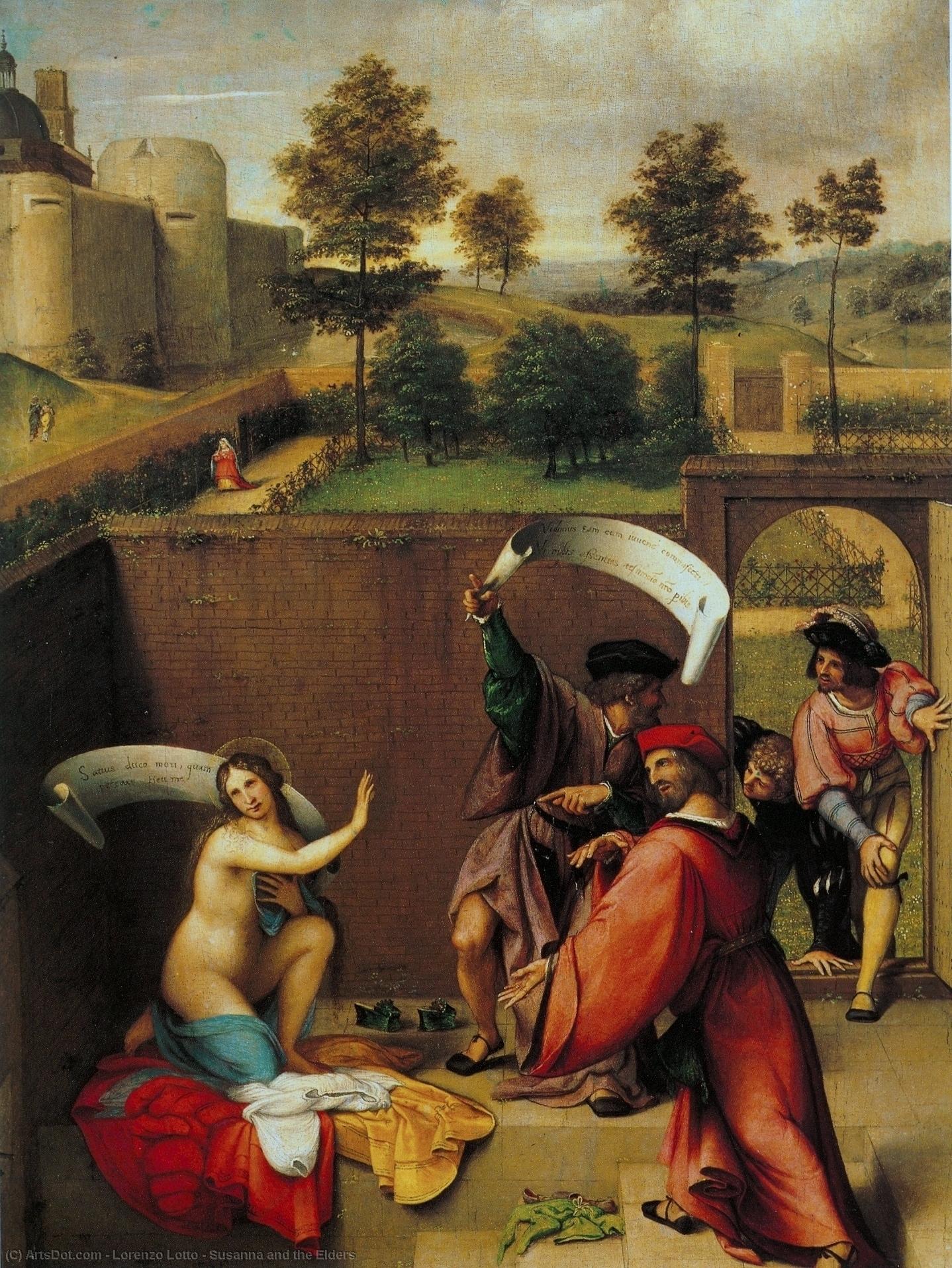
In the quiet, sun-drenched corners of the Italian Renaissance, few works capture the tension between innocence and accusation as poignantly as Lorenzo Lotto’s Susanna and the Elders. Painted around 1517 during the artist's influential period in Bergamo, this masterpiece transcends a simple biblical retelling to become a profound psychological drama. The scene depicts the harrowing moment from the Book of Daniel where the virtuous Susanna is cornered by two powerful elders who attempt to blackmail her into infidelity. Through Lotto’s lens, we do not merely witness a historical event; we feel the weight of the gaze, the suffocating pressure of injustice, and the luminous strength of a soul clinging to its integrity.
Lotto, a true wanderer of the Venetian school, brings an inimitable intimacy to this composition. Unlike the grand, sweeping narratives of his contemporary Titian, Lotto focuses on the subtle, often nervous energy of his subjects. In Susanna and the Elders, he utilizes a dynamic pyramidal arrangement that centers our attention on Susanna herself. Her posture—a delicate balance of defiance and vulnerability—serves as the emotional anchor of the piece. As she stands within the sanctuary of a walled garden, the lush greenery and textured brickwork create a sense of a private world being invaded by the predatory presence of the elders.
Technique and the Radiance of Light
The technical brilliance of this work lies in Lotto’s masterful command of oil on panel, a medium he used to achieve an almost tactile realism. One cannot help but be mesmeraged by the way light interacts with the various textures within the frame. Influenced by the innovations of Leonardo da Vinci, Lotto employs transparent shadows and a soft, ethereal luminosity that breathes life into the scene. This light does more than illuminate; it sanctifies. It catches the vibrant reds and yellows of Susanna’s attire, making her appear as a beacon of purity against the muted, earthy tones of the landscape.
For the discerning collector or interior designer, the painting offers a sophisticated palette that bridges the gap between classical grandeur and modern warmth. The interplay of deep greens, rich browns, and sudden bursts of primary color allows the artwork to integrate seamlessly into diverse environments, from stately traditional libraries to contemporary spaces seeking a touch of historical soul. Every fold in the fabric and every leaf in the background is rendered with a precision that rewards prolonged contemplation, making a high-quality reproduction an enduring centerpiece for any curated collection.
Symbolism and Eternal Resonance
Beyond its aesthetic splendor, the painting is a dense tapestry of symbolic meaning. The walled garden, a common motif in Renaissance art, represents the hortus conclusus or enclosed garden, symbolizing Susanna’s chastity and protected innocence. However, this sanctuary is breached by the elders, whose very presence introduces the corruption of the outside world. The scrolls held by the men serve as a chilling visual metaphor for the power of false testimony and the weight of defamatory words, reminding the viewer of the fragility of truth in the face of systemic malice.
To possess a reproduction of this work is to invite a conversation about justice, faith, and the human spirit into one's home. It is an artwork that does not merely decorate a wall but enriches the atmosphere with its narrative depth and emotional complexity. Whether you are drawn to the historical significance of the Venetian Renaissance or the evocative power of Lotto’s unique psychological portraiture, Susanna and the Elders remains a timeless testament to the enduring struggle for righteousness in an uncertain world.