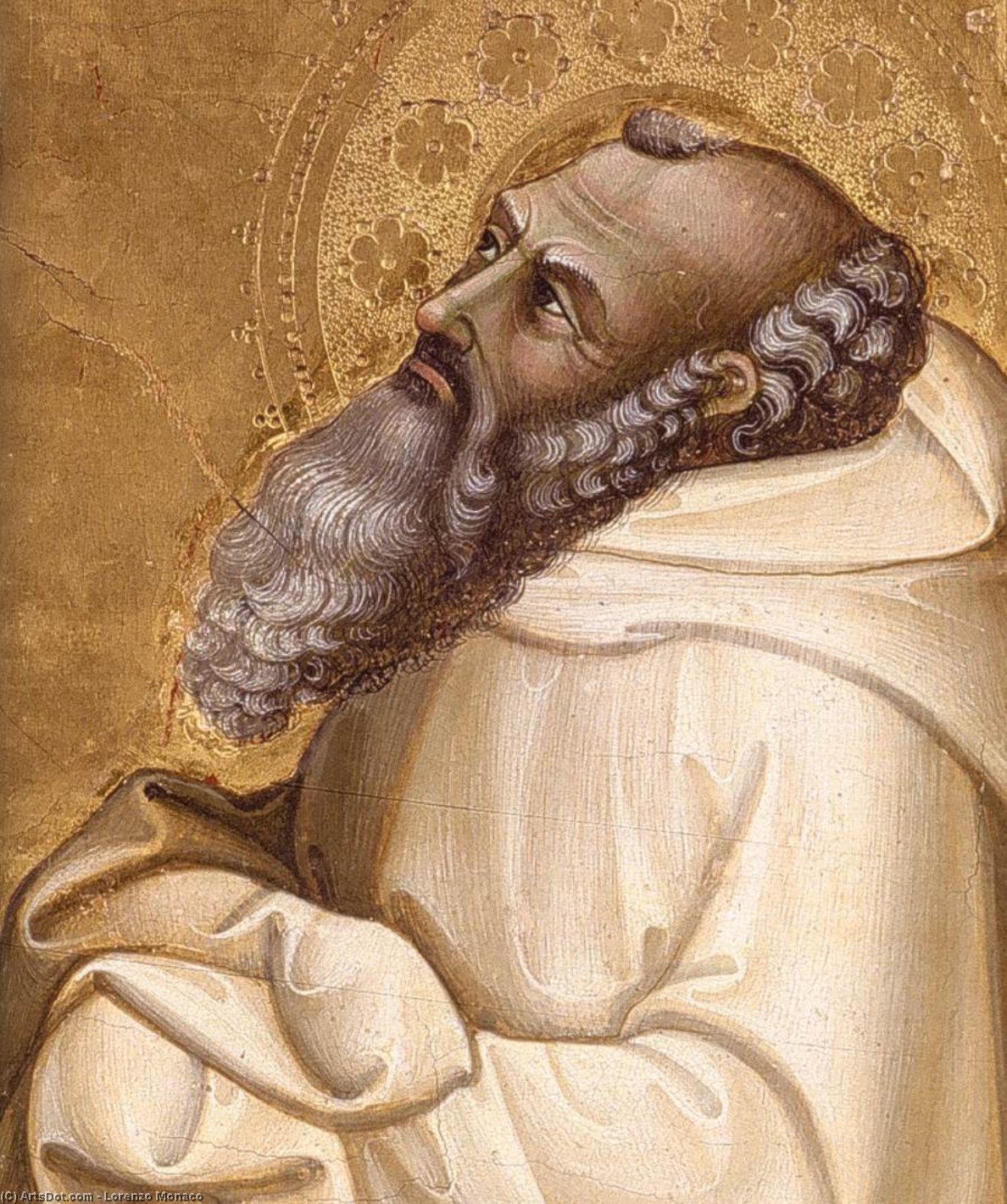
Lorenzo Monaco: A Monk's Vision of Renaissance Spirituality
Lorenzo Monaco (c.1370 – c.1425) stands as a singular figure in the burgeoning Florentine Renaissance, representing a crucial bridge between the contemplative traditions of the Gothic era and the revolutionary innovations that would reshape European art. Though biographical details remain elusive—scholars debate his birthplace and early life—his artistic output reveals an unwavering devotion to monastic principles interwoven with a remarkable mastery of technique and profound emotional resonance.
Apprenticed in Florence under masters like Giotto, Spinello Aretino, and Agnolo Gaddi, Monaco absorbed the legacy of Gothic narrative clarity and expressive emotion. However, his decision to join the Camaldolese order in 1390 fundamentally altered his artistic trajectory. This commitment wasn’t merely a personal choice; it instilled within him an ethos that permeated every facet of his creative endeavors.
His monastic life profoundly influenced the character of his work, prioritizing spiritual contemplation and conveying a sense of solemn reverence—qualities conspicuously absent in the increasingly naturalistic styles emerging elsewhere. Monaco's artistic output is marked by an exceptional sensitivity to light and shadow, meticulously crafted to heighten emotional impact and imbue scenes with palpable atmosphere.
The Style: Gothic Echoes and Renaissance Innovation
Monaco’s early paintings retain vestiges of the Gothic tradition—particularly in their elongated figures and expressive drapery—reflecting Giotto's influence. Yet, he swiftly embraced innovations championed by artists like Fra Angelico and Masaccio, incorporating techniques that would become hallmarks of the Quattrocento. Notably, he skillfully utilized *sfumato*, a subtle blending of tones to create soft contours and atmospheric perspective—a groundbreaking approach that challenged prevailing artistic conventions.
His distinctive style is characterized by taut linearism, conveying an unwavering focus on form and precision. Simultaneously, Monaco infused his compositions with emotional depth through nuanced gestures and facial expressions, capturing the psychological complexities inherent in religious iconography. This masterful blend of stylistic elements distinguishes him as a pivotal figure in shaping the artistic landscape of Florence.
Notable Works: Expressions of Faith
Among Monaco’s most celebrated creations are “Christ on the Cross” (1405), a poignant depiction of suffering and sacrifice executed with meticulous detail—a testament to his unwavering devotion. The painting's dramatic lighting, achieved through masterful chiaroscuro, emphasizes textural nuances and amplifies the emotional intensity of the scene.
"The Pietà," housed in Santa Maria degli Angeli, exemplifies Monaco’s ability to convey profound spiritual contemplation. Its serene composition and idealized depiction of Mary cradling Jesus embody the humanist ideals that were gaining traction during this period—a harmonious fusion of Gothic grace and Renaissance sophistication.
Symbolism and Emotional Impact
Monaco's artistic vision transcends mere representation; it seeks to communicate universal themes of faith, humility, and compassion. The use of gold leaf—a deliberate stylistic choice—symbolizes divine illumination and elevates the spiritual significance of his paintings. Furthermore, Monaco’s meticulous attention to detail—from the folds in drapery to the subtle expressions on faces—creates an immersive experience for the viewer, fostering contemplation and eliciting emotional resonance.
Lorenzo Monaco's legacy endures as a beacon of artistic integrity and spiritual devotion—a reminder that beauty can arise from profound contemplation and unwavering faith. His paintings continue to inspire admiration and offer invaluable insights into the formative years of the Renaissance.