A Divine Encounter in Gold and Grace
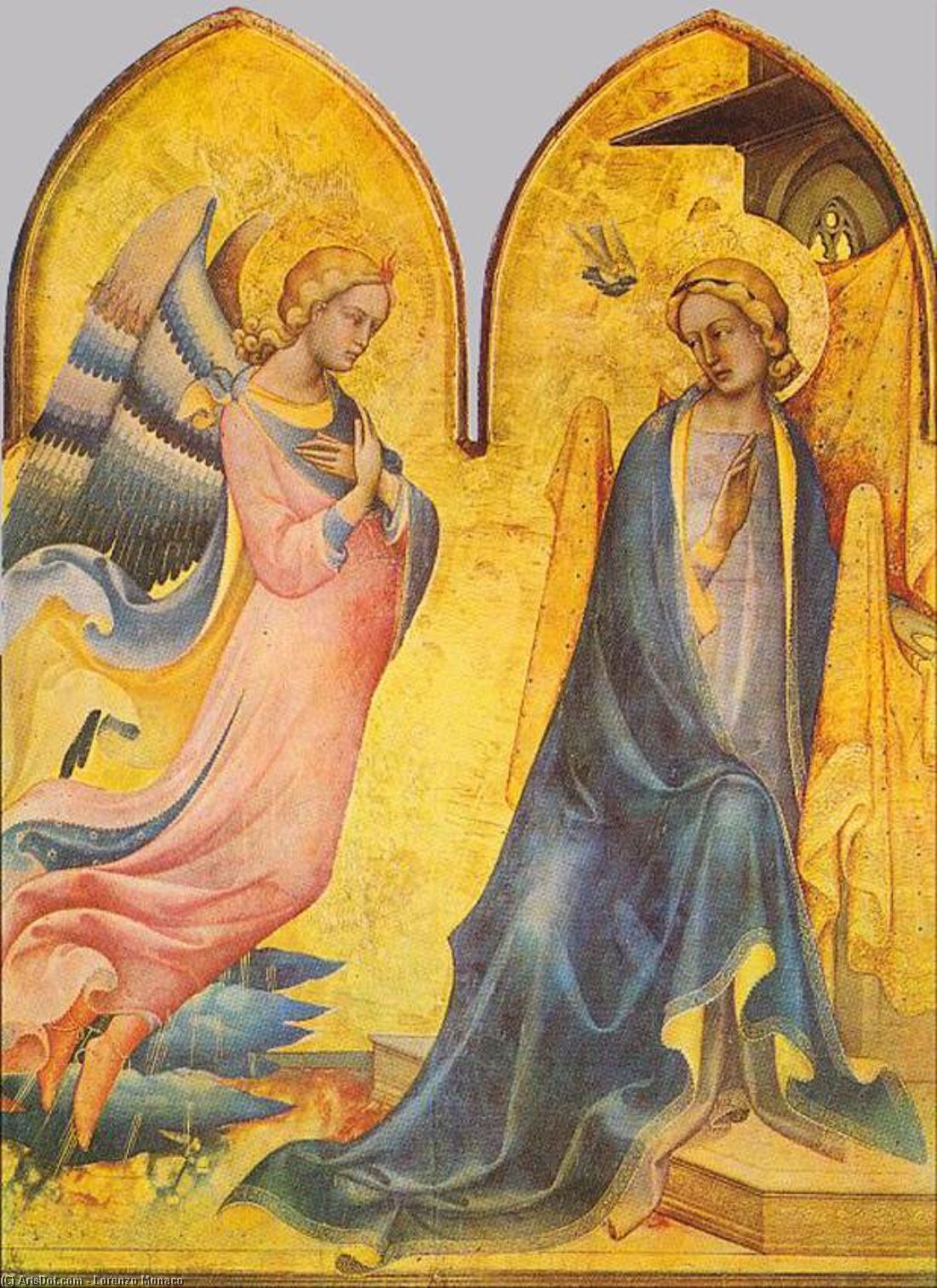
In the quiet sanctity of the Galleria dell'Accademia in Florence, there exists a moment frozen in time, a celestial intersection between heaven and earth captured by the hand of Lorenzo Monaco. His The Annunciation, painted around 1410, is far more than a mere religious illustration; it is a profound meditation on the arrival of divine grace. As one gazes upon this masterpiece, the viewer is transported to the dawn of the Italian Renaissance, a period where the ethereal elegance of the Gothic tradition began to breathe with the burgeoning realism of a new era. The scene depicts the pivotal instant when the Archangel Gabriel descends to deliver his transformative message to the Virgin Mary, an event rendered with such spiritual intensity that it feels as though the air around the panel is still vibrating with the weight of the divine word.
The composition is a masterclass in balanced tension and sacred geometry. On one side, the Angel Gabriel appears in dynamic motion, his wings spread wide to suggest a sudden, celestial arrival. His presence is marked by a serene focus, embodying the gravity of his mission. Opposite him, the Virgin Mary kneels in a posture of profound humility and contemplative prayer, her hands clasped in reverence. This symmetry is framed by an architectural backdrop—a Gothic archway that evokes the hallowed halls of Florentine churches—which provides a sense of structural depth and anchors the supernatural event within a recognizable, sacred space. The use of tempera on panel allows for an exquisite level of detail, from the delicate folds of Mary’s drapery to the intricate patterns that dance across her garments, inviting the eye to linger on the meticulous craftsmanship of the monk-artist.
The Radiance of Symbolism and Light
Lorenzo Monaco, often remembered as “Lawrence the Monk” due to his devotion to the Camaldolese order, infused this work with a unique spiritual luminosity. The color palette is dominated by warm, radiant hues—vibrant yellows and deep reds—that seem to emanate from Mary herself. This chromatic choice is deeply symbolic, representing the divine light of grace descending upon the earthly realm. High above the central figures, a dove descends, a subtle yet powerful emblem of the Holy Spirit, signaling that this encounter is orchestrated by the hand of God. Through these symbols, Monaco weaves a narrative that transcends language, speaking directly to the soul through the universal vocabulary of light and color.
For the discerning collector or interior designer, The Annunciation offers an unparalleled opportunity to introduce a sense of historical depth and spiritual tranquility into a space. The painting’s dramatic use of light and shadow—a precursor to the more intense chiaroscuro of later centuries—creates a focal point that commands attention without overwhelming its surroundings. Whether placed in a curated gallery setting or as a centerpiece in a sophisticated study, a high-quality reproduction of this work brings with it the prestige of Florentine heritage and the timeless beauty of the Gothic spirit. It is an invitation to contemplate the intersection of human devotion and divine mystery, making it a profound addition to any collection dedicated to the enduring power of fine art.