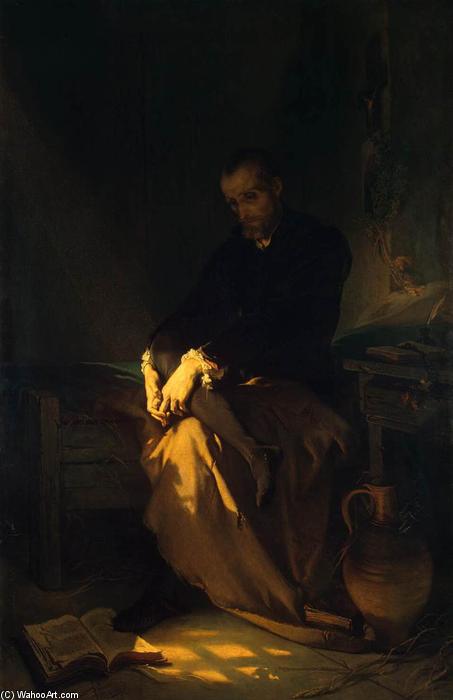
Tasso in Prison: A Renaissance Reflection on Suffering and Resilience
The painting “Tasso in the Prison” by Louis Gallait transports us back to 1853, capturing a poignant moment of introspection amidst confinement—a scene meticulously rendered with realism and imbued with symbolic depth. Fleury François Richard’s masterful depiction delves into the psychological landscape of Torquato Tasso, renowned poet and dramatist imprisoned for his controversial verses, offering viewers a glimpse into the artist's inner turmoil and unwavering spirit.
- Subject Matter: The artwork portrays Torquato Tasso seated on the floor, illuminated by diffused light filtering through a window, surrounded by books and papers—symbols of intellectual pursuit and creative contemplation.
- Style & Technique: Gallait’s style exemplifies the revival of history painting championed in Belgium during his era. Employing oil paint on panel, he achieves remarkable textural detail, capturing the aged appearance of the room walls and conveying a palpable sense of atmosphere. The artist skillfully utilizes chiaroscuro—the dramatic interplay of light and shadow—to sculpt form and heighten emotional impact.
- Historical Context: Richard’s painting reflects the broader artistic trends of the mid-19th century, where artists sought to revisit classical themes and narratives as a response to Romanticism's emphasis on emotion and imagination. Gallait’s work aligns with this movement's commitment to portraying human experience with psychological acuity.
- Symbolism: The books scattered around Tasso represent knowledge, wisdom, and the enduring power of artistic expression even in adversity. The muted color palette contributes to the painting’s solemn mood, emphasizing the protagonist’s solitude and confronting his inner demons.
- Emotional Impact: “Tasso in Prison” evokes a profound sense of empathy for the imprisoned poet—a figure embodying resilience, intellectual integrity, and unwavering devotion to artistic ideals. The painting invites contemplation on themes of suffering, perseverance, and the transformative potential of introspection.
Detailed Examination of Composition & Light
Gallait’s compositional choices are deliberate and contribute significantly to the artwork's narrative power. The central figure dominates the frame, positioned diagonally across the canvas—a technique that draws the viewer’s eye inward and reinforces Tasso’s isolation. The placement of the window on the left side casts soft shadows onto the right, creating a visual rhythm that mirrors the protagonist’s mental state—a balance between darkness and illumination symbolizing both despair and hope. Careful attention to detail ensures that every element serves to amplify the painting's expressive qualities.
Gallait’s Legacy: A Beacon of Realism in Belgian Art
Louis Gallait’s contribution to Belgian art history is undeniable, marking a pivotal moment in the nation’s artistic revival. Recognized for his unwavering dedication to realism and masterful execution—as evidenced by “Tasso in Prison”—he established himself as one of the foremost painters of his time. His work continues to inspire admiration for its psychological depth and technical brilliance, cementing Gallait's place among Belgium’s most celebrated artists.
Exploring Similar Artistic Expressions: Mary Magdalene Revisited
Consider Giampietrino’s “Repentant Mary Magdalene,” another evocative depiction of human emotion—a painting that similarly explores themes of remorse and spiritual transformation through masterful realism and nuanced color palettes. Like Gallait's masterpiece, this artwork invites viewers to contemplate profound questions about faith, redemption, and the complexities of human experience.