The painting
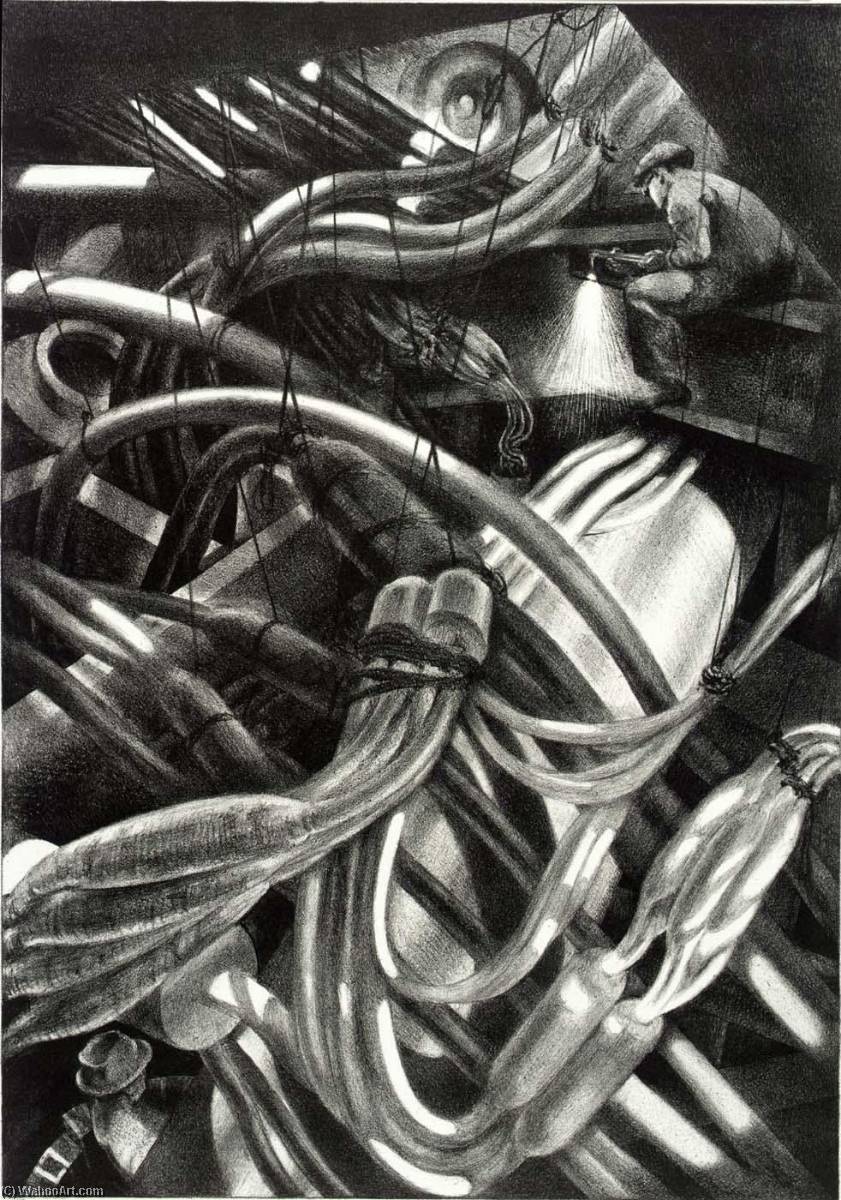
Guts of Manhattan by
Louis Lozowick is a fascinating example of urban landscape art. Created in 1939, this paper artwork measures 34 x 24 cm and is currently housed at the
Smithsonian American Art Museum. The image depicts a close-up view of various mechanical parts, including pipes and wires, arranged in an abstract manner.
Artistic Style and Technique
Louis Lozowick's unique style and technique are evident in
Guts of Manhattan. The artist's use of light and shadow creates depth and texture in the image, drawing the viewer's eye into the complex network of pipes and cables. This artwork is a prime example of
urban landscape art, which focuses on the built environment and the ways in which it shapes our experiences.
The
Smithsonian American Art Museum houses several other notable works by
Louis Lozowick, including Vacation and Swans. These artworks showcase the artist's range and versatility, from peaceful landscapes to intricate urban scenes. For more information on
Louis Lozowick's artwork, visit
ArtsDot.com.
Key Features of the Painting
Some key features of
Guts of Manhattan include:
- The use of abstract shapes and forms to depict mechanical parts
- The emphasis on light and shadow to create depth and texture
- The focus on the built environment and urban landscape
These features demonstrate
Louis Lozowick's unique perspective on the urban experience and his ability to find beauty in the intricate networks of pipes and cables that underlie our cities. To learn more about
Louis Lozowick and his artwork, visit
ArtsDot.com.