A Portrait of Dignified Wisdom: Louise Élisabeth Vigée Le Brun’s Joseph Vernet
Louise Élisabeth Vigée Le Brun's portrait of Joseph Vernet, a celebrated landscape and marine painter, is more than simply a likeness; it’s a carefully constructed tableau of artistic identity and the quiet confidence of a seasoned professional. Completed in 1778, this remarkable work offers a rare glimpse into the world of a prominent 18th-century artist, revealing not only Vernet's physical presence but also his intellectual pursuits and the very essence of his craft. The painting’s enduring appeal lies in its masterful blend of classical restraint and subtle dynamism, reflecting both the formal elegance of the Rococo era and the burgeoning influence of Neoclassicism.
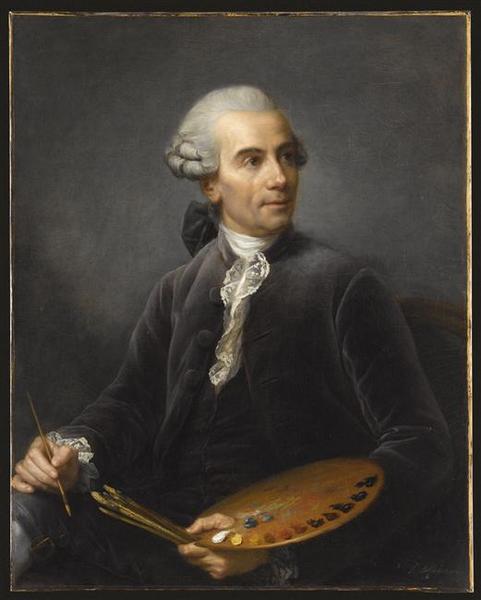
The composition immediately draws the viewer's eye to Vernet’s face – a study in weathered dignity. His gaze is direct yet contemplative, hinting at years spent observing nature’s grand spectacle. Vigée Le Brun skillfully employs chiaroscuro, dramatically illuminating his upper body and face while casting deep shadows across his attire, emphasizing the textures of his coat and the folds of his clothing. This interplay of light and dark isn't merely a stylistic choice; it serves to imbue the portrait with a sense of gravitas and timelessness. The geometric shapes – the oval of his face, the rectangular form of his coat, and the circular palette – are rendered with meticulous detail, showcasing Vigée Le Brun’s technical prowess and her understanding of classical proportions.
The Palette as Symbol
Central to the painting's symbolic richness is Vernet’s palette. It isn’t simply a tool for his art; it becomes a potent emblem of his profession and creative process. The scattered pigments, brushes, and tools suggest an ongoing engagement with nature and the act of translating observation into visual form. This deliberate inclusion elevates the portrait beyond a simple representation of a man to a meditation on the very nature of artistic creation – a tangible manifestation of Vernet’s dedication to capturing the beauty and power of the natural world.
Furthermore, the background, rendered in muted tones, serves as a subtle counterpoint to the vibrant colors of the palette. It's deliberately neutral, allowing Vernet’s figure to command attention without distraction. The linear perspective, carefully constructed, creates a sense of depth and space, anchoring the subject within his studio environment. This meticulous attention to detail speaks volumes about Vigée Le Brun’s commitment to realism and her ability to capture not just appearance but also atmosphere and spatial relationships.
A Window into an Era
To fully appreciate this portrait, it's crucial to understand the context in which it was created. Louise Élisabeth Vigée Le Brun was a prominent figure in 18th-century French society, renowned for her portraits of royalty and aristocracy. Her work reflected the elegance and refinement of the Rococo period, while subtly incorporating elements of Neoclassicism – a style that emphasized clarity, order, and restraint. Vernet himself was a significant artist of his time, celebrated for his dramatic seascapes and marine paintings. His inclusion in Vigée Le Brun’s oeuvre highlights the interconnectedness of the artistic community during this era.
The portrait offers a valuable insight into the lives of artists during the late 18th century – their dedication to their craft, their engagement with patrons, and their pursuit of recognition within the art world. It's a testament to Vigée Le Brun’s skill as a portraitist and her ability to capture not only the outward appearance but also the inner character of her subjects. The painting remains a captivating example of classical portraiture, imbued with both technical brilliance and profound symbolic meaning.
Bringing this Masterpiece Home
ArtsDot is proud to offer meticulously hand-painted reproductions of Louise Élisabeth Vigée Le Brun’s “Portrait of Joseph Vernet.” Each reproduction captures the original's dramatic lighting, rich textures, and subtle nuances with unparalleled accuracy. Whether you are an art collector, interior designer, or simply a lover of fine art, this stunning reproduction provides a beautiful and authentic way to experience the timeless elegance of this iconic portrait. Explore our collection today and bring a piece of art history into your home.