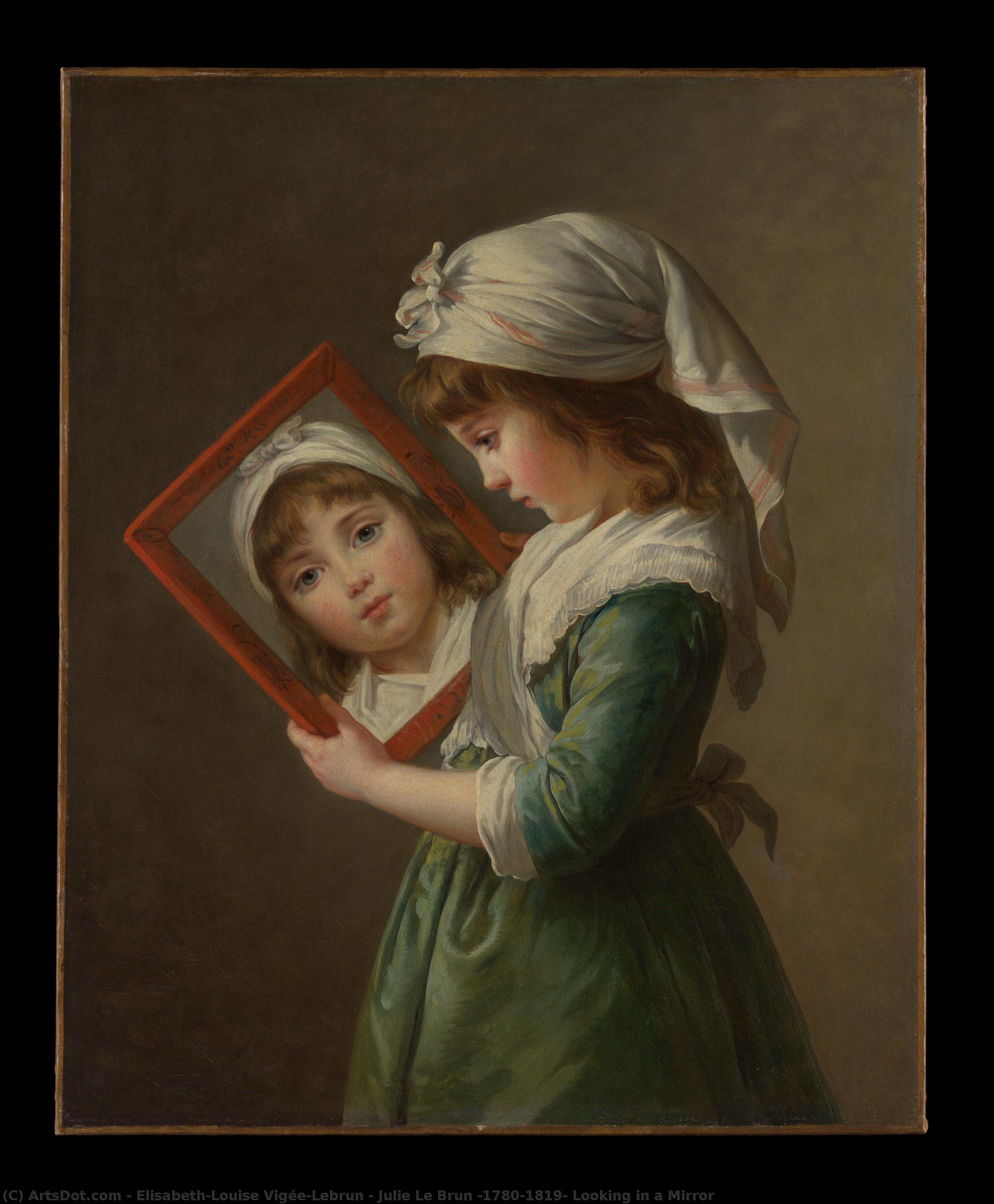
Louise Élisabeth Vigée Le Brun’s captivating portrait of Julie Le Brun embodies Rococo elegance and Neoclassical introspection. This serene depiction captures a young girl gazing into her reflection—a masterful study of femininity and artistic self-awareness, inviting you to explore this timeless masterpiece.
Élisabeth Vigée Le Brun was a celebrated 18th-century French portraitist renowned for her elegant depictions of royalty and aristocracy, capturing both likeness and personality with refined Rococo-Neoclassical style.
Explore The Metropolitan Museum of Art: 5,000 years of art from around the world! Discover masterpieces, ancient artifacts & immersive exhibitions – a global art destination awaits.
A Window Into Elegance: Examining Louise Élisabeth Vigée Le Brun’s “Julie Le Brun (1780–1819)”
Louise Élisabeth Vigée Le Brun's "Julie Le Brun (1780–1819)" isn’t merely a portrait; it’s a meticulously crafted distillation of the Belle Époque spirit—a moment in French history defined by opulent grandeur and artistic innovation. Painted in 1787, this canvas offers more than just a visual representation of Julie Le Brun, Vigée Le Brun's daughter, but delves into themes of femininity, self-perception, and the artist’s own strategic positioning within the cultural landscape.
The Artist’s Vision: Rococo Roots with Neoclassical Refinement
Vigée Le Brun’s artistic lineage is fascinating. Trained initially in the delicate traditions of Rococo—characterized by flowing lines, pastel hues, and an emphasis on decorative embellishment—she skillfully transitioned into the more structured aesthetic championed by Neoclassicism. This duality reflects her astute understanding of prevailing tastes and allowed her to produce works that resonated deeply with both audiences. Her ability to blend these styles resulted in a visual language imbued with grace and intellectual depth, as evidenced throughout her oeuvre. The influence of artists like Boucher and Watteau is palpable, yet Vigée Le Brun’s distinctive approach—particularly her masterful use of light—elevates her paintings beyond mere imitation.
A Composition Steeped in Symbolism
The painting's composition itself speaks volumes about its intent. Julie stands before a mirror, an instantly recognizable motif that transcends time and culture. Mirrors have long served as symbols of introspection and self-awareness, representing the duality of identity—the idealized image presented to the world versus the inner reality. Vigée Le Brun deliberately places the mirror slightly above center, directing the viewer’s gaze upwards, subtly reinforcing this concept of looking inward. Furthermore, the vase positioned near Julie's feet adds a decorative element that simultaneously anchors the scene and contributes to its overall sense of harmony. The pink bow adorning Julie’s hair is another carefully chosen detail—a symbol of femininity and youthful beauty, aligning perfectly with Vigée Le Brun’s desire to portray her daughter as an embodiment of virtue and grace.
Technique and Texture: Oil Paintsmanship at Its Finest
Executed in oil paint on canvas, “Julie Le Brun (1780–1819)” showcases Vigée Le Brun's exceptional technical skill. The artist employed a layering technique—building up translucent glazes over underpaintings—to achieve remarkable luminosity and depth. This meticulous process allowed her to capture the subtle nuances of skin tone and fabric texture with astonishing accuracy. Observe how light dances across Julie’s face, illuminating her features and conveying an impression of warmth and vitality. The artist's attention to detail extends beyond mere representation; it aims to evoke emotion—a quiet contemplation punctuated by a hint of curiosity as Julie examines her reflection.
Historical Context: Asserting Artistic Independence
The painting’s significance isn’t solely aesthetic; it resides within the broader context of its time. Vigée Le Brun undertook the ambitious project of presenting three portraits of her daughter to the Salon in 1787—a bold move that challenged conventions surrounding female artists and their roles in society. By demonstrating her artistic prowess and securing royal patronage, she asserted herself as a figure of considerable influence within the intellectual circles of Paris. “Julie Le Brun (1780–1819)” stands as a testament to Vigée Le Brun’s determination to carve out space for women's creativity in an era dominated by male artists—a legacy that continues to inspire admiration and scholarly study today.