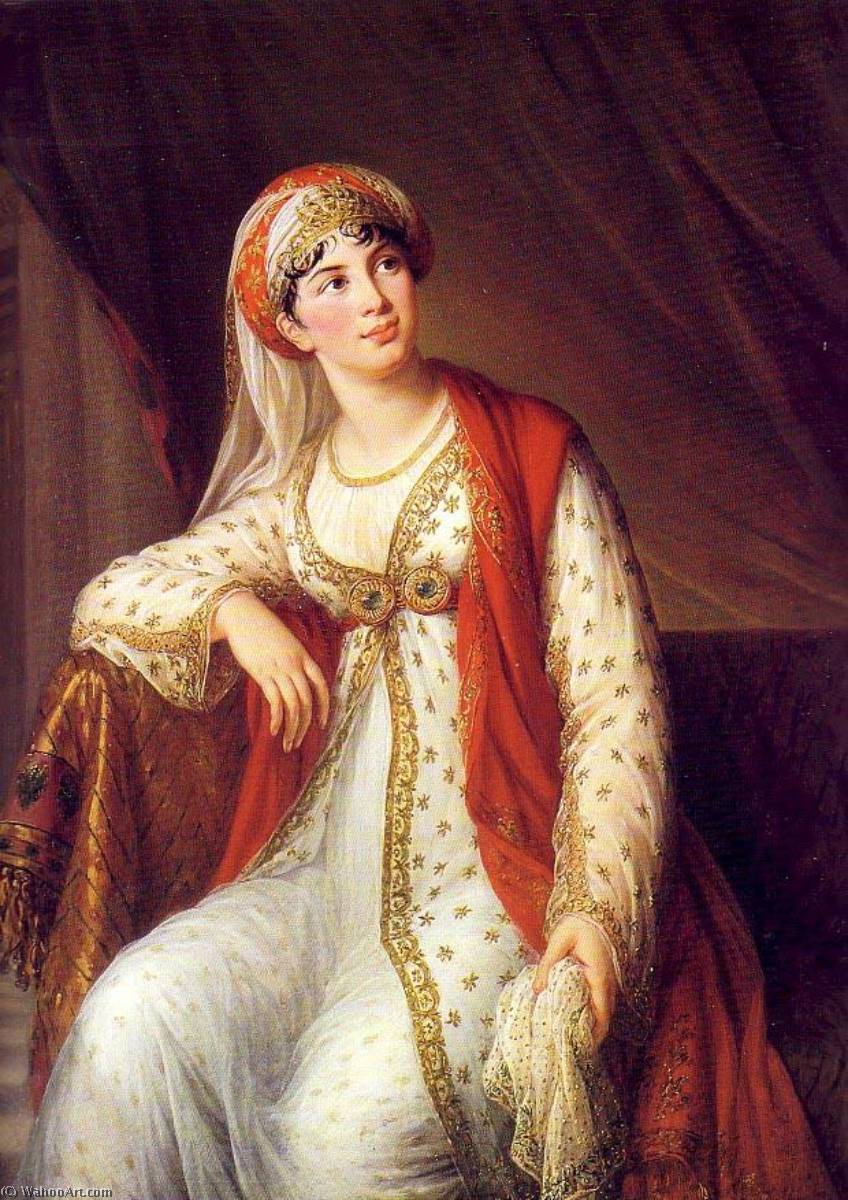
Madame Grassini in the Role of Zaire: A Portrait Steeped in Elegance
Louise Élisabeth Vigée Le Brun’s “Madame Grassini in the Role of Zaire” transcends mere representation; it embodies the spirit of its subject and the artistic sensibilities of the Rococo-infused Neoclassical era. Painted in 1805, this portrait captures Marie Joséphine Grassini, a prominent Parisian actress known for her captivating performances at Théâtre Italien, not simply as she appeared onstage but as Vigée Le Brun envisioned her – imbued with regal dignity and intellectual grace. The painting’s allure lies in its masterful execution and subtle symbolism, reflecting the artist's profound understanding of both visual artistry and psychological portraiture.
- Style & Technique: Vigée Le Brun skillfully blends Rococo ornamentation—characteristic of her earlier works—with elements of Neoclassical restraint. The delicate pastel medium lends itself beautifully to capturing nuanced tonal variations, creating a luminous surface that emphasizes the contours of Grassini’s face and attire. Brushstrokes are meticulously blended, achieving an unparalleled smoothness that contributes to the painting's ethereal quality.
- Composition & Lighting: The portrait is framed against a dark background, strategically designed to isolate Grassini and draw the viewer’s eye directly to her figure. Soft, diffused lighting illuminates her face from above, highlighting her expressive gaze and conveying an aura of serenity and contemplation. This deliberate use of light underscores Vigée Le Brun's commitment to portraying not just physical appearance but also inner character.
The subject matter itself speaks volumes about the cultural landscape of Napoleonic France. Grassini’s role as Zaire—the Queen of Bohemia—was a celebrated theatrical triumph, symbolizing both artistic ambition and political intrigue. Vigée Le Brun deftly captures this duality, portraying Grassini with an aristocratic composure that reflects her status as a respected performer within Parisian society.
- Symbolism: The white gown worn by Grassini symbolizes purity and nobility—values highly esteemed during the period. The gold embroidery adorning it signifies wealth and prestige, mirroring the opulent tastes of the French aristocracy. Furthermore, the red shawl draped over her shoulder introduces a vibrant hue that contrasts with the muted tones of the background, injecting energy into the composition and subtly hinting at passion.
More than just a likeness, “Madame Grassini in the Role of Zaire” is an emotional portrait. Vigée Le Brun’s meticulous attention to detail—from the delicate folds of Grassini's dress to the subtle expression on her face—reveals a deep understanding of human psychology. The painting evokes feelings of grace, intelligence, and quiet confidence, cementing Vigée Le Brun’s legacy as one of the foremost portraitists of her time.
Provenance & Significance: Signed “VIGÉE LEBRUN” in the lower right corner, this artwork resides within a distinguished collection and serves as an exceptional example of Neoclassical elegance. Its enduring appeal stems from Vigée Le Brun’s ability to transform a theatrical performer into an embodiment of aristocratic ideals—a testament to her artistic genius and a captivating glimpse into the vibrant cultural milieu of Napoleonic France.