A Vision of Celestial Glory
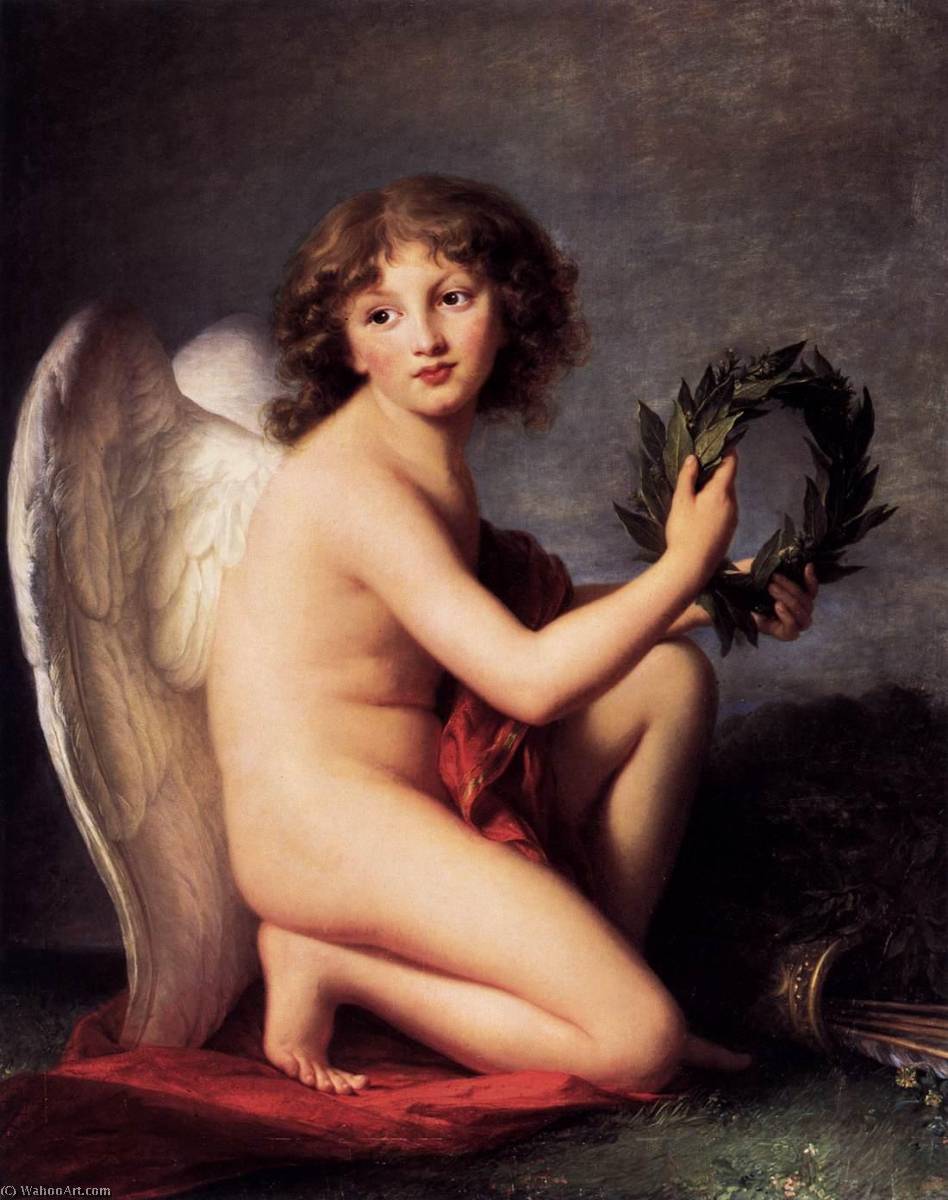
In the luminous masterpiece Prince Heinrich Lubomirski as the Genius of Fame, the legendary Louise Élisabeth Vigée Le Brun transcends the boundaries of traditional portraiture to invite the viewer into a realm of myth and ethereal splendor. Painted in 1789, at the twilight of the Ancien Régime, this work serves as a breathtaking encounter with the divine. The composition centers upon a celestial figure—an angel or perhaps a personification of Fame herself—whose presence commands the canvas with an almost palpable radiance. Draped in a gown of deep, passionate red, she sits gracefully upon the earth, her form framed by the expansive, atmospheric sky that stretches behind her like a dreamscape. The delicate inclusion of a wreath held within her hands suggests a moment of coronation or eternal remembrance, grounding the supernatural subject in a tangible sense of triumph and honor.
The artistry of Vigée Le Brun is on full display through her masterful command of light and texture. As a chronicler of elegance, she employs a technique that breathes life into the fabric of the figure's attire, allowing the viewer to sense the weight and luster of the crimson silk. The soft, diffused light characteristic of her late 18th-century style illuminates the skin of the central figure with a porcelain-like perfection, creating a bridge between the mortal and the immortal. While the main subject radiates a singular importance, the subtle presence of secondary figures in the periphery adds a layer of narrative complexity, suggesting a larger, unfolding drama within this heavenly assembly. This interplay of light and shadow creates a sense of depth that draws the eye inward, making the painting feel less like a static image and more like a window into another dimension.
Symbolism and the Spirit of an Era
Beyond its visual splendor, the painting is rich with the symbolic language of the Enlightenment. The concept of the Genius of Fame speaks to the era's preoccupation with legacy, virtue, and the enduring nature of greatness. By portraying a noble figure through such a mythological lens, Vigée Le Brun elevates the subject matter from mere biography to universal allegory. The crown atop the central figure’s head and the wreath in her grasp are potent emblems of victory and the immortality of the soul. For the discerning collector or interior designer, this piece offers more than just decoration; it provides a profound emotional resonance. It is a work that evokes feelings of aspiration, nobility, and the timeless pursuit of glory.
Integrating such a magnificent reproduction into a curated space allows for a sophisticated dialogue between history and modern luxury. Whether placed in a grand salon to serve as a focal point or used to add a touch of classical grace to a contemporary study, the painting’s vibrant palette and dramatic composition command attention. It serves as an exquisite conversation piece, inviting guests to contemplate the intersection of human achievement and divine inspiration. To possess a hand-painted tribute to this work is to hold a fragment of French history, capturing the very essence of an age defined by grace, refinement, and an unyielding passion for beauty.