A Moment Frozen in Time: “A Foregone Conclusion” by Lawrence Alma-Tadema
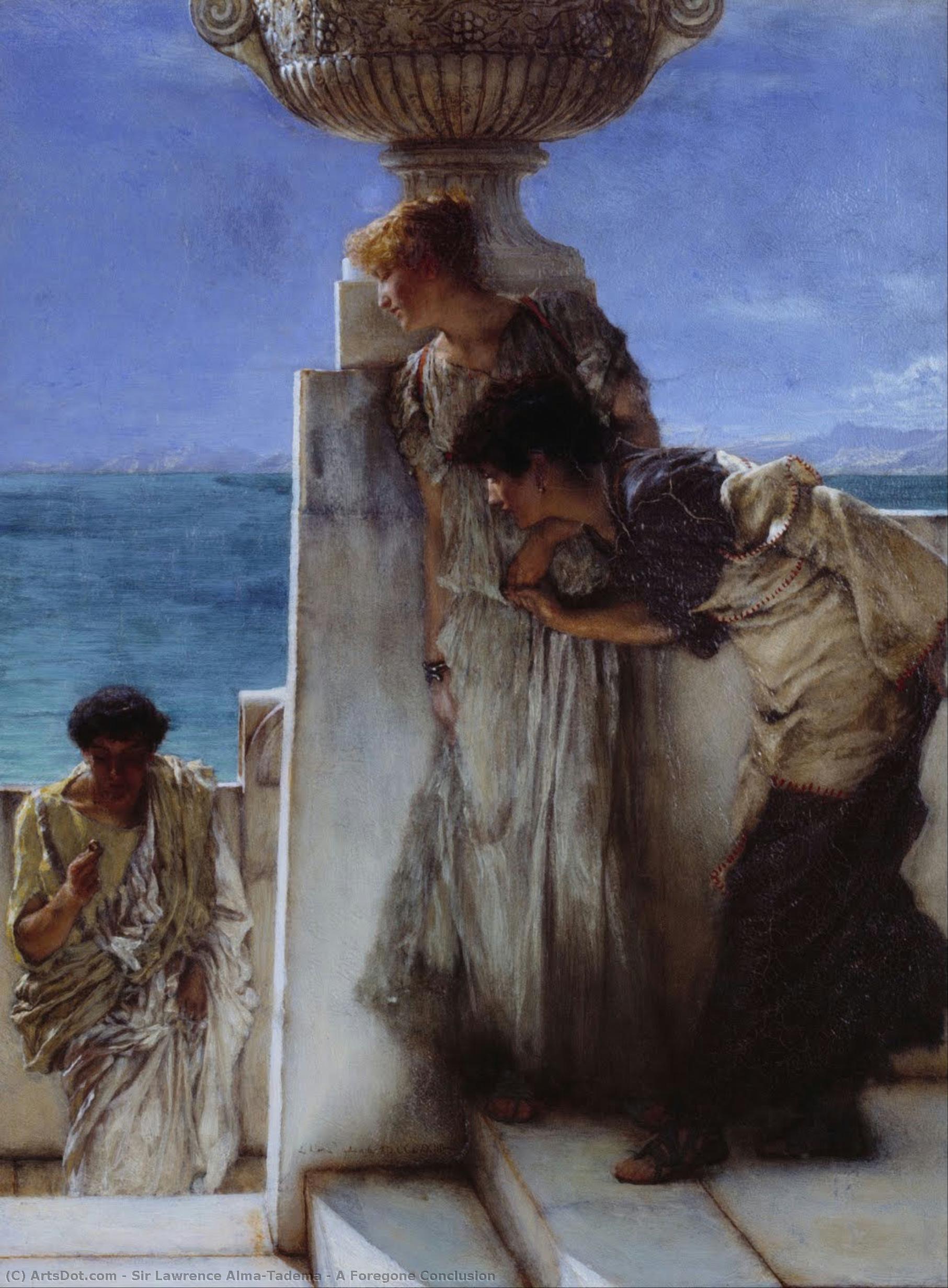
Lawrence Alma-Tadema’s “A Foregone Conclusion,” painted in 1885, isn't merely a depiction of a proposal; it’s a carefully constructed tableau brimming with Victorian sensibilities and profound emotional resonance. The scene unfolds on a balcony overlooking the shimmering expanse of the sea – a classic setting for contemplation and romance, instantly transporting us to a bygone era. At its heart lies a young woman, bathed in soft, diffused light, her posture conveying a mixture of sorrow and quiet anticipation as she receives an engagement ring from a man below. Two figures stand beside her: one, clearly concerned, leans towards her with gentle support; the other, perhaps a friend or relative, observes the scene with a wistful expression. The backdrop – a grand urn adorned with classical motifs – subtly anchors the narrative within an ancient Roman or Greek context, hinting at themes of fate and enduring beauty.
Academic Realism and Pre-Raphaelite Echoes
Tadema was a master of Academic realism, meticulously rendering every detail with painstaking precision. The painting’s strength lies in its ability to evoke a sense of palpable atmosphere – the cool sea breeze, the texture of the drapery, the smooth sheen of the marble urn. Yet, beneath this surface realism, we detect subtle influences from the Pre-Raphaelite movement. Like his Pre-Raphaelite counterparts, Tadema prioritized emotional depth and narrative storytelling over mere representation. The figures are not simply portraits; they embody a complex interplay of feelings – regret, hope, uncertainty—that draws the viewer into their private world. Notice the delicate rendering of hands, the subtle shifts in expression, and the way light plays across surfaces to create an illusion of three-dimensionality.
Color, Light, and Symbolism
The painting’s color palette is deliberately restrained, dominated by muted tones of beige, grey, and white, punctuated by touches of brown and gold. This subdued range contributes to the overall mood of melancholy and quiet contemplation. Tadema's masterful use of light is particularly noteworthy; it’s soft, diffused, and casts long shadows, creating a sense of depth and atmosphere. The urn itself holds symbolic weight – representing both the passage of time and the enduring legacy of classical art and culture. The sea, stretching out to the horizon, symbolizes the vastness of life and the unknown future that lies ahead for the young woman. The gesture of offering the ring is a potent symbol of commitment and the promise of a shared destiny.
A Window into Victorian Sentimentality
“A Foregone Conclusion” offers a poignant glimpse into the emotional landscape of Victorian society. It’s a scene steeped in sentimentality, reflecting a fascination with romantic ideals, historical grandeur, and the complexities of human relationships. Tadema expertly captures the delicate balance between hope and despair, joy and sorrow—emotions that were frequently explored in Victorian art and literature. The painting's enduring appeal lies not only in its technical brilliance but also in its ability to resonate with viewers on a deeply emotional level, prompting reflection on themes of love, loss, and the passage of time. It’s a beautiful reminder of a world where formality and grace were highly valued, and where even a simple proposal could be imbued with profound significance.