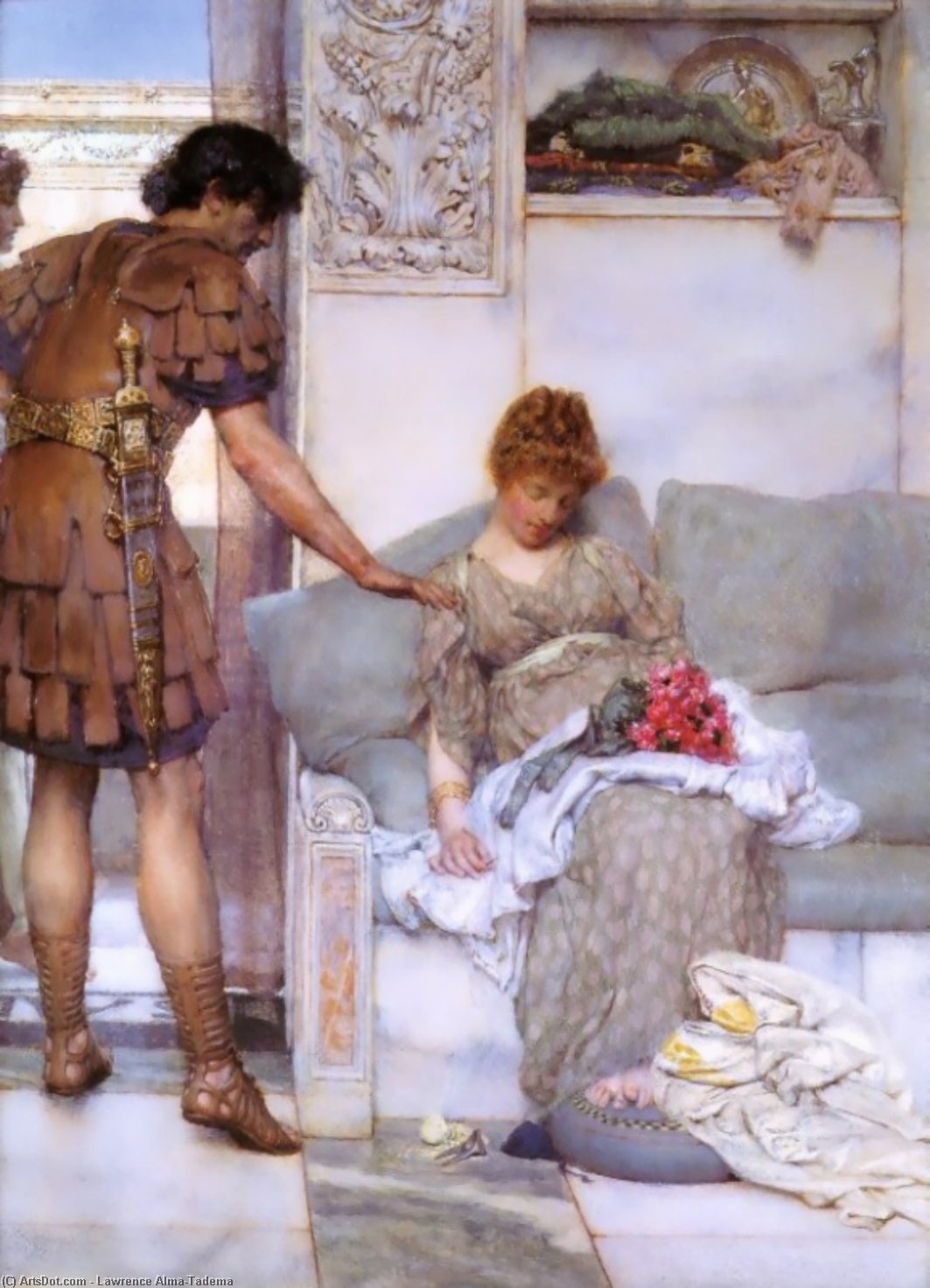
A Silent Greeting: An Intimate Portrait of Victorian Life
“A Silent Greeting,” painted in 1889 by Sir Lawrence Alma-Tadema, is more than just a depiction of a domestic scene; it’s a meticulously crafted window into the quiet elegance and unspoken emotions of late Victorian England. The painting captures a moment of serene intimacy within a richly furnished parlor – a tableau vivant that speaks volumes about social conventions, burgeoning domesticity, and the subtle language of courtship. Tate Britain houses this exquisite work, allowing viewers to step back in time and witness a slice of life frozen in oil paint.
Alma-Tadema’s signature style is immediately apparent: an almost hyperrealist approach combined with a deliberate romanticism. He wasn't interested in dramatic action or sweeping narratives; instead, he focused on capturing the languid pace and refined details of everyday life. The scene unfolds within a room bathed in soft, diffused light – a technique that was revolutionary for its time, creating an atmosphere of luxurious stillness. The artist’s mastery of color is particularly striking; the deep reds and browns of the furniture contrast beautifully with the pale blues and greens of the fabrics, adding depth and richness to the composition.
The Figures: Gesture and Subtext
At the heart of “A Silent Greeting” are a man and a woman seated together. The man, formally dressed in a dark suit, leans slightly towards his companion, while she sits gracefully on a plush couch, her hand resting lightly on his arm. Their postures suggest a comfortable familiarity, a shared understanding that transcends mere physical contact. However, the painting deliberately avoids overt displays of affection. There’s no passionate embrace or lingering gaze; rather, their interaction is characterized by quiet observation and subtle gestures – a gentle touch, a slight turn of the head. This restraint is key to the work's emotional power, inviting viewers to interpret the unspoken feelings between them.
Notice the details: the woman’s elaborate gown, adorned with lace and ribbons; the man’s carefully groomed mustache; the delicate porcelain teacup resting on a nearby table. These elements are not merely decorative; they represent social status, wealth, and the prevailing values of Victorian society. Alma-Tadema meticulously rendered these objects to convey a sense of opulence and refinement – a visual testament to the comforts and privileges enjoyed by the upper classes.
Symbolism and Context
“A Silent Greeting” was painted during a period of significant social change in Britain. The Victorian era, known for its strict moral codes and rigid social hierarchies, was also witnessing the rise of the middle class and a growing emphasis on domesticity. Alma-Tadema’s work reflects this shift by portraying a scene of quiet domesticity – a world where courtship rituals were conducted with subtlety and discretion. The presence of the bird perched atop a table adds another layer of symbolism, perhaps representing hope, tranquility, or even a fleeting moment of beauty within an otherwise ordered existence.
Furthermore, Alma-Tadema’s meticulous attention to detail—the way light falls on the fabrics, the texture of the furniture, the expressions on the figures' faces—was influenced by his study of classical art and architecture. He sought to recreate the idealized beauty of antiquity in his paintings, imbuing them with a sense of timelessness and elegance. His research into Roman interiors, particularly those depicting leisure activities, provided inspiration for this scene, which subtly evokes the atmosphere of a wealthy Roman villa.
A Legacy of Quiet Beauty
“A Silent Greeting” remains one of Alma-Tadema’s most celebrated works, admired for its exquisite detail, evocative atmosphere, and subtle emotional depth. It's a painting that rewards careful observation, inviting viewers to linger over its intricate details and contemplate the unspoken emotions at play within its frame. Today, reproductions of this masterpiece continue to captivate audiences, offering a glimpse into a bygone era—a testament to the enduring power of quiet beauty and the timeless appeal of Victorian domesticity.