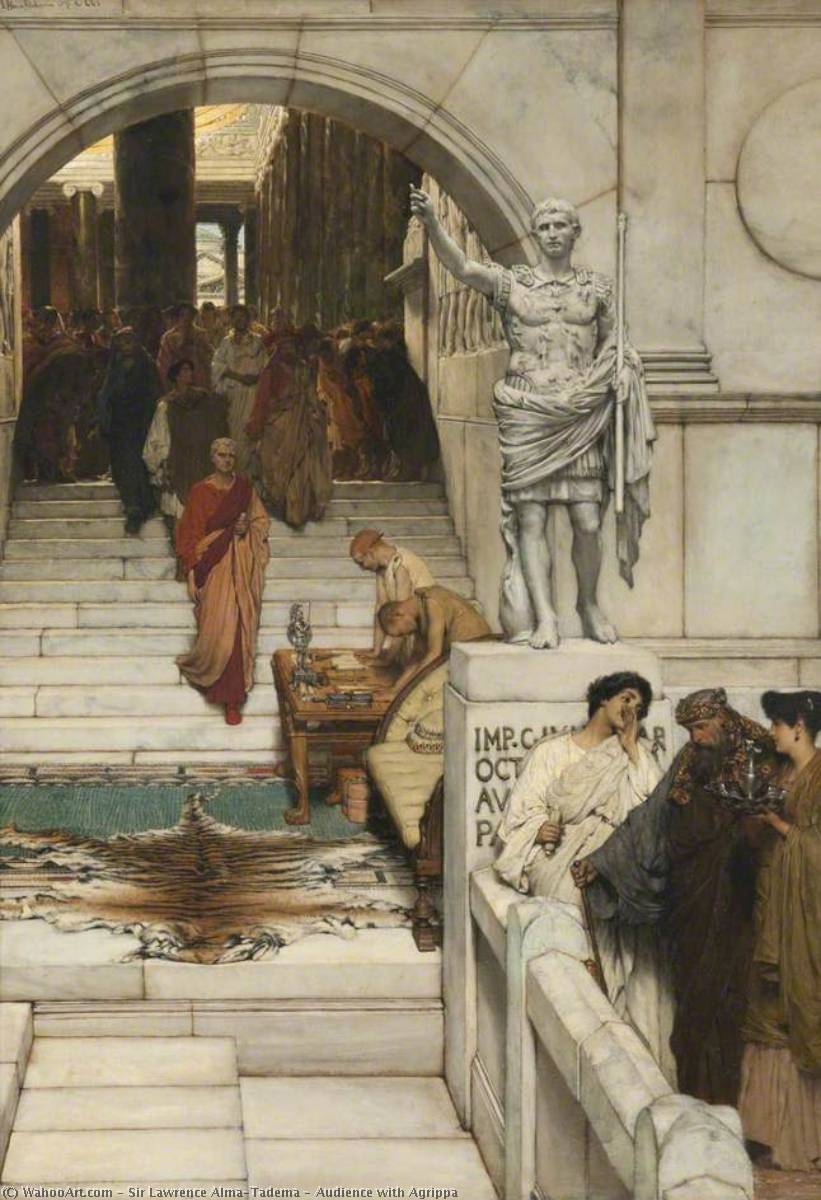
Experience the grandeur of Alma-Tadema’s ‘Audience with Agrippa.’ A meticulously detailed oil painting depicting Roman opulence & authority. Academic style, classical subject matter.
Discover Sir Lawrence Alma-Tadema (1836–1912), the Dutch Victorian painter famed for opulent Roman interiors & meticulous classical detail—a master of light & atmosphere! Explore his legacy.
Discover The Dick Institute in Kilmarnock! Explore diverse collections of art, social history & natural sciences. Featuring temporary exhibitions, a library & family activities. A 4-star attraction with over 120,000 visitors annually.
A Window into Roman Dignity: Examining Alma Tadema’s ‘Audience with Agrippa’
Lourens Alma Tadema, later Lawrence Alma Tadema (1836–1912), stands as a titan of Victorian academic painting—a master craftsman dedicated to meticulously recreating the grandeur and formality of antiquity. His masterpiece, “Audience with Agrippa,” completed in 1876, exemplifies this commitment, transporting viewers back to the Roman Republic and capturing a moment of intellectual discourse amidst opulent surroundings. Currently housed at The Dick Institute in Kilmarnock, Scotland, this painting offers more than just visual splendor; it’s an invitation into a carefully constructed narrative steeped in historical allusion and artistic innovation.
The Scene: A Dialogue Amidst Marble
The composition depicts a distinguished gathering around a table laden with documents—a tableau strikingly reminiscent of Roman imperial audiences. Figures engaged in animated conversation dominate the central space, suggesting a weighty discussion concerning matters of state or philosophical debate. Tadema’s masterful use of perspective draws the eye upwards towards a towering archway adorned with Corinthian columns, establishing an imposing architectural backdrop that reinforces the scene's solemn character. The muted palette—primarily earthy tones of ochre, umber, and Sienna—contributes to the painting’s atmosphere of timelessness and scholarly contemplation. Notably, Tadema skillfully employs chiaroscuro – dramatic contrasts between light and shadow – to sculpt the forms of his subjects and illuminate key details within the composition.
Style and Technique: The Pursuit of Authenticity
Alma Tadema's approach aligns perfectly with the tenets of academic painting—a movement obsessed with achieving visual realism through painstaking observation and meticulous execution. He painstakingly researched Roman architecture, clothing, and decorative arts, striving to reproduce them with unwavering accuracy. Layers upon layers of thin glazes applied over a preparatory underpainting create an illusionistic surface that captures the subtle textures of marble, drapery, and skin—a testament to Tadema’s technical prowess. The artist's meticulous attention to detail extends beyond mere representation; he aims to evoke the emotional resonance of the period, conveying both intellectual seriousness and aristocratic refinement.
Symbolism: Power, Discourse, and Classical Ideals
“Audience with Agrippa” is laden with symbolic significance reflecting the values of Roman civilization. Agrippa I—Marcus Agrippa Augustus—was a prominent Roman statesman, military commander, and architect who served under Emperor Augustus. His presence underscores the importance of political leadership and intellectual inquiry within the Roman Republic. The figures surrounding the table represent individuals engaged in reasoned debate – mirroring the humanist ideals prevalent during Tadema’s time. Furthermore, the grandeur of the architectural setting symbolizes imperial authority and reinforces the painting's overarching message about the pursuit of excellence and the preservation of classical traditions.
Emotional Impact: A Moment Frozen in Time
Ultimately, Alma Tadema succeeds in transporting viewers to a bygone era—capturing not just a visual likeness but also an emotional essence. The serene lighting and muted colors foster a contemplative mood, inviting contemplation on themes of power, intellect, and artistic achievement. “Audience with Agrippa” remains a compelling reminder of the Victorian fascination with classical antiquity and Tadema’s enduring legacy as one of Britain's foremost painters—a testament to his ability to transform historical observation into breathtaking artistic expression.