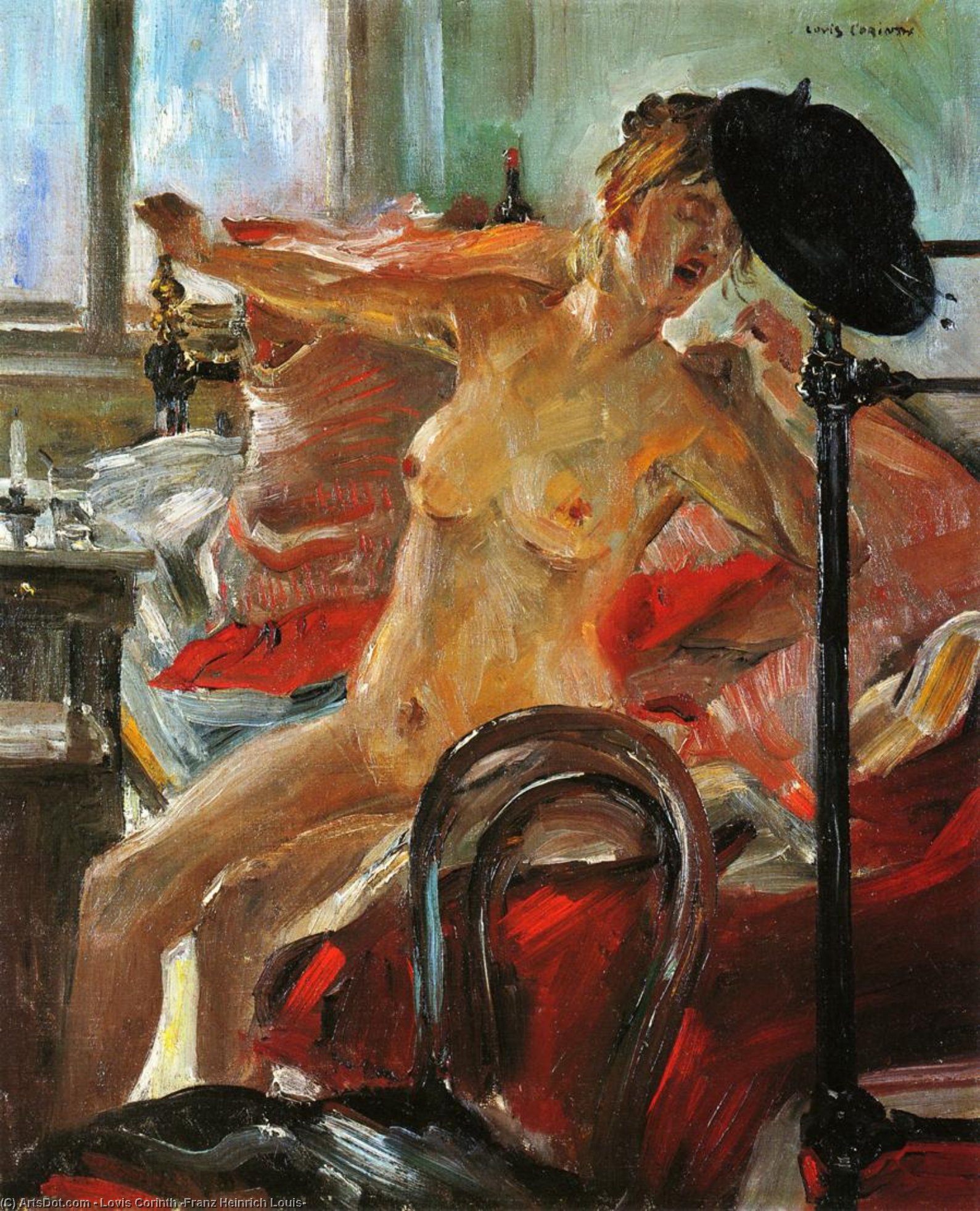
A Raw Encounter with Intimacy: Lovis Corinth’s Morning
In the quiet, heavy atmosphere of 1900, Lovis Corinth captured a moment that transcends mere observation, inviting the viewer into a deeply private sanctuary. Morning is not simply a depiction of a waking hour; it is an evocative exploration of human vulnerability and the raw, unvarnating beauty of the flesh. The painting presents a nude woman seated upon a bed, her posture open and unguarded, suggesting a lingering residue of passion or perhaps the profound stillness that follows a night of intense emotion. Through his masterful command of light and shadow, Corinth transforms a domestic scene into a psychological landscape, where the boundaries between the physical body and the surrounding environment seem to blur in the soft, early light.
The composition is anchored by a sense of lived-in reality. The presence of a chair nearby, the subtle placement of bottles on either side of the bed, and a solitary cup resting on a surface all serve as silent witnesses to the life unfolding within this room. These objects are not merely props; they are symbols of the mundane rituals that ground our most intimate experiences. There is a palpable weight to the atmosphere, a sense of heavy air that carries the scent of sleep and the warmth of skin. For the collector or interior designer, this piece offers more than just visual interest; it provides a focal point of profound human connection, making it an ideal centerpiece for spaces designed for contemplation and emotional depth.
The Mastery of Impressionistic Expressionism
Technically, Morning stands as a testament to Corinth’s unique position in art history, acting as a bridge between the fleeting light of Impressionism and the visceral, emotive power of Expressionism. His brushwork is far from delicate; it is tactile, energetic, and unapologetically bold. One can almost feel the movement of the bristles across the canvas as they define the soft curves of the subject's form and the textured fabrics of the bedding. This vigorous technique allows the light to dance across the scene, not as a static glow, but as a living force that interacts with the textures of wood, glass, and skin.
The color palette is masterfully restrained, utilizing earthy tones and subtle highlights to create a sense of three-dimensional depth. This controlled use of color prevents the scene from becoming overly dramatic, instead maintaining a sense of quiet authenticity. For those seeking a high-quality reproduction, it is this specific interplay of texture and light that makes the artwork so captivating. A hand-painted version of this masterpiece preserves the impasto qualities and the soulful nuances of Corinth’s original vision, allowing the raw, emotive spirit of the turn of the century to breathe life into a modern interior.
A Legacy of Unfiltered Truth
To understand Morning, one must understand the spirit of Lovis Corinth himself. A man whose life was forged in the transition from the rigid traditions of the 19th century to the turbulent freedoms of the 20th, Corinth never shied away from the "unvarnished" truth. His work often delved into the grit and glory of existence, from the visceral scenes of slaughterhouses to the tender, sometimes provocative, depictions of human intimacy. In this painting, he achieves a rare balance: he captures a moment of profound physical exposure while maintaining a deep, respectful reverence for the subject's humanity.
For the discerning art lover, owning a piece like Morning is an invitation to engage with history’s most courageous observers. It is a work that challenges the viewer to look closely—not just at the anatomy of the figure, but at the emotional truth of the moment. Whether placed in a sophisticated gallery setting or as a soulful addition to a private study, this artwork serves as a timeless reminder of the beauty found in our most private, unscripted moments.