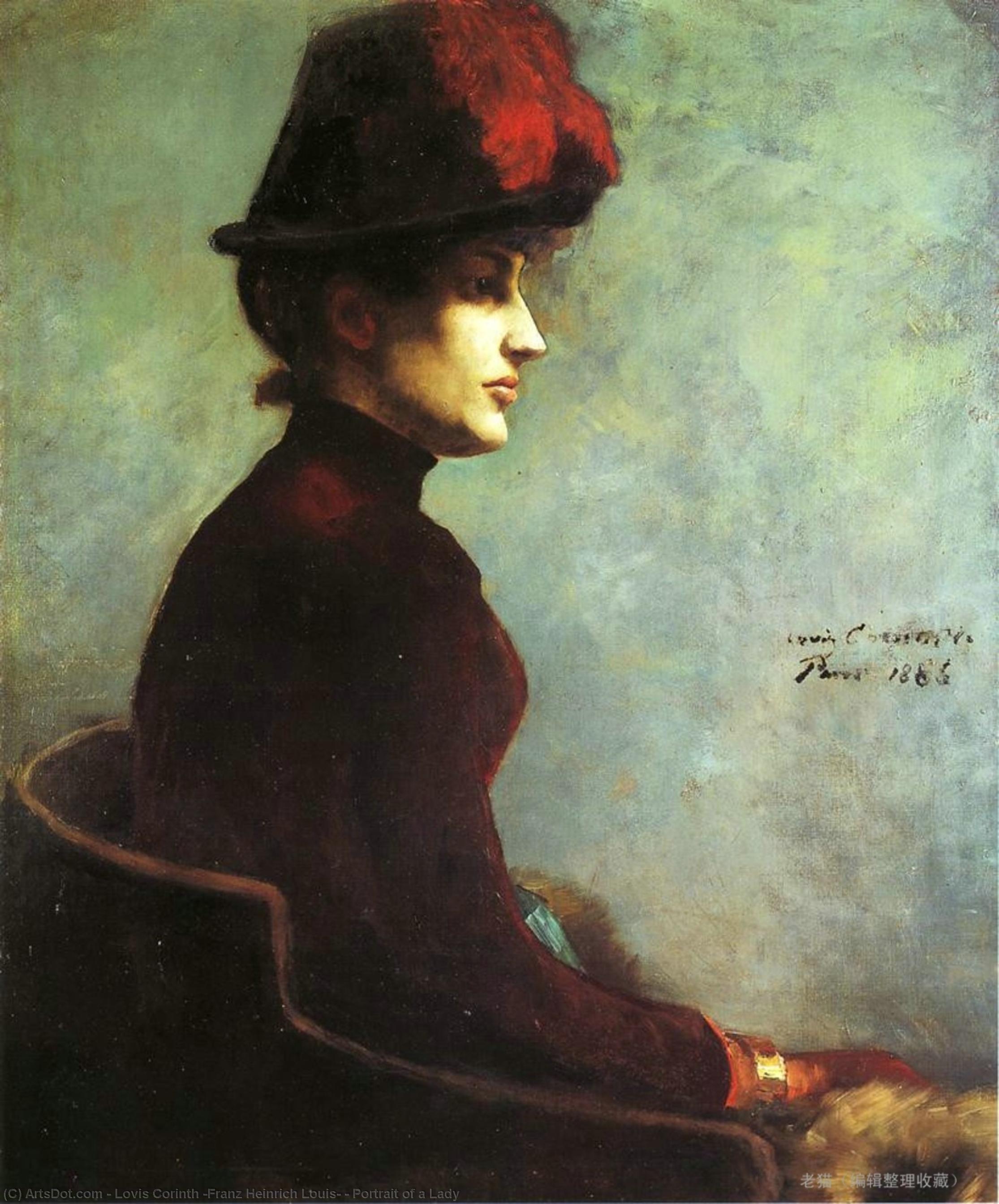
Portrait of a Lady

Lovis Corinth’s haunting portrait captures a woman's solemn gaze amidst a richly textured background—a masterful blend of realism and expressive emotion emblematic of Symbolism. Explore this evocative masterpiece and bring Lovis Corinth’s vision home.


Lovis Corinth (1858 - 1925)

Explore the art of Lovis Corinth (1858-1925), a German painter bridging Impressionism & Expressionism. Known for portraits, landscapes, and raw depictions of life – including 'In the Slaughter House'. Discover his legacy as a Berlin Secession preside

Niedersächsisches Landesmuseum (Hanover, Germany)

Explore art, archaeology & natural history at the Niedersächsisches Landesmuseum Hannover! Discover German masterpieces, ancient artifacts & diverse cultures within its stunning Neo-Renaissance building.

A Portrait Steeped in Emotion: Lovis Corinth’s Lady in Red

  • Subject Matter & Composition The painting depicts a woman seated gracefully in a chair, dominating the lower portion of the canvas. Her gaze is direct and unwavering as she confronts the viewer—a posture that speaks volumes about confidence and introspection. Surrounding her are two figures positioned subtly in the background, adding depth to the scene and hinting at an unspoken narrative. A handbag rests prominently in the foreground, grounding the composition and providing a visual counterpoint to the woman’s central presence.
  • Style & Technique Lovis Corinth's distinctive style is characterized by its unflinching realism combined with expressive brushwork—a hallmark of Symbolism. He eschewed idealized beauty, opting instead for portraying human emotion with palpable honesty. Corinth meticulously rendered textures and tonal variations using oil paints on canvas, achieving a remarkable level of detail that captures the nuances of light and shadow. The artist’s deliberate use of color contributes significantly to the painting's emotional impact, particularly the striking crimson hue of the woman’s hat.
  • Historical Context Painted in 1886, “Portrait of a Lady” emerged during Corinth’s formative years as an artist. This period coincided with the burgeoning Symbolist movement, which rejected academic conventions and sought to convey inner psychological states rather than merely representing external appearances. Corinth's work reflects the broader anxieties and aspirations of his time—a fascination with mortality, coupled with a yearning for spiritual transcendence.
  • Symbolism & Interpretation The red hat serves as a potent symbol of passion and vitality, juxtaposed against the woman’s serious expression. This duality suggests a contemplation on themes of desire, vulnerability, and perhaps even repression. Corinth's masterful depiction captures not just a likeness but also an essence—a glimpse into the soul of his subject.
  • Emotional Impact “Portrait of a Lady” transcends mere visual representation; it evokes profound feelings of melancholy and contemplation. The artist’s skillful handling of light and color creates an atmosphere of intimacy, inviting viewers to engage in a dialogue with the woman's inner world. It remains a compelling testament to Corinth’s ability to translate psychological complexity into enduring artistic beauty.