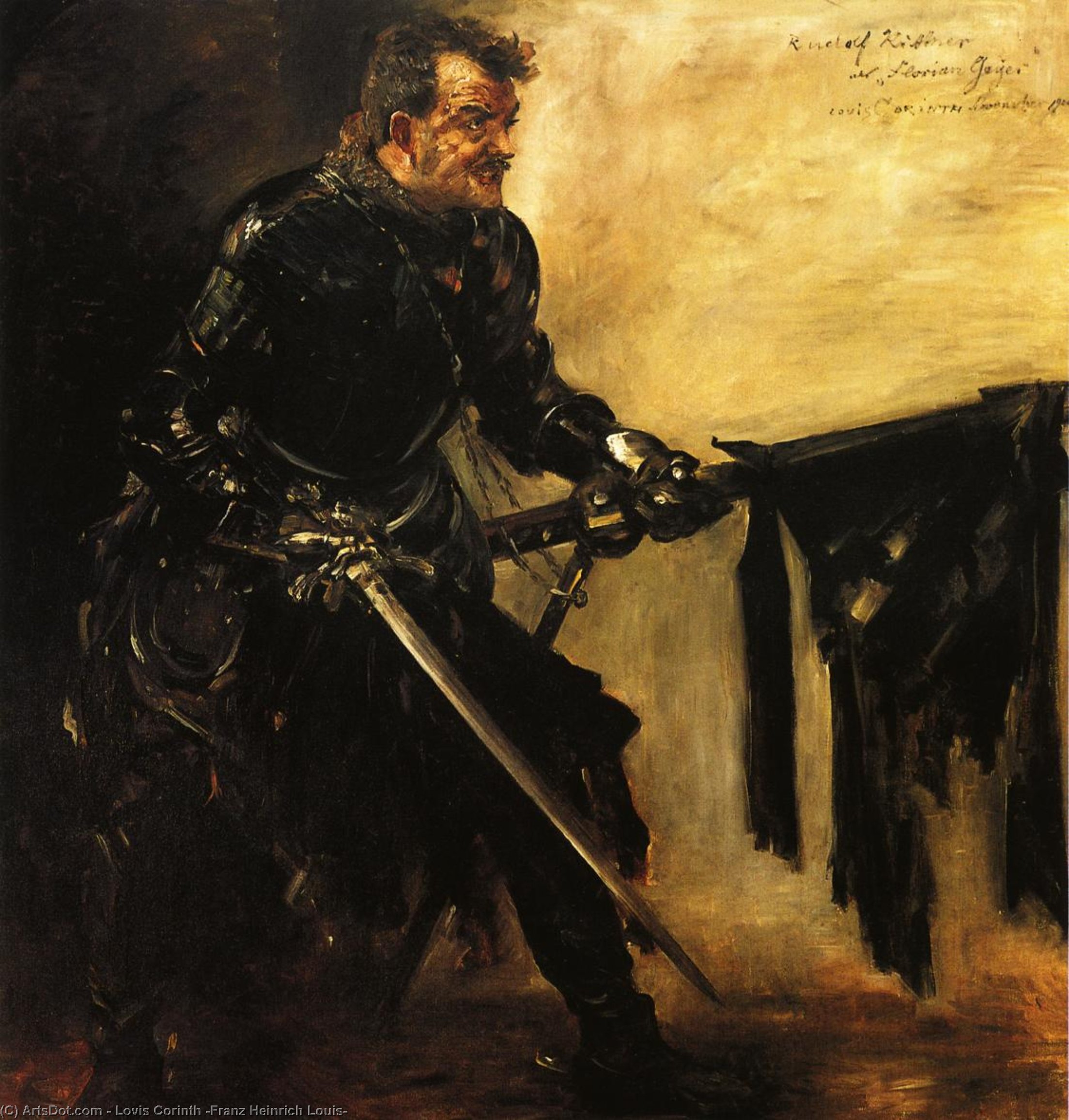
Rudolph Rittner as Florian Geyer, First Version – A Portrait of Warrior Spirit
Lovis Corinth’s “Rudolph Rittner as Florian Geyer, First Version” (1906) is more than a simple portrait; it's a visceral embodiment of masculine strength and the simmering tension inherent in a world poised on the brink of dramatic change. Painted during a pivotal period in Corinth’s artistic development, this oil-on-canvas work reveals his burgeoning mastery of color and form, coupled with an increasingly expressive approach to depicting human character. The subject, Rudolph Rittner himself, embodies the role of Florian Geyer from Goethe's "Faust," instantly evoking images of heroic struggle and moral conflict.
- Subject & Narrative: The painting’s central figure is presented as a warrior – a knight or soldier – radiating an intense gaze and gripping a sword with unwavering resolve. This immediately connects Rittner to the iconic character of Florian Geyer, a figure known for his bravery and ultimately, his tragic fate within Goethe's philosophical drama. Corinth doesn’t simply depict a man in armor; he captures the *spirit* of the warrior archetype.
- Style & Technique: Corinth’s style at this time is characterized by bold brushstrokes, vibrant color palettes, and a deliberate rejection of academic realism. Notice the impasto – thick application of paint – particularly evident in the textures of the armor and the folds of the cloth. This technique adds a remarkable tactile quality to the image, drawing the viewer into the scene with an almost palpable sense of physicality.
- Historical Context: Created in 1906, this painting reflects the broader artistic currents of the early 20th century. Corinth was deeply influenced by Symbolism and Post-Impressionism, movements that prioritized emotional expression and subjective interpretation over strict adherence to traditional representational norms. The anxieties and uncertainties of a rapidly industrializing Europe are subtly present in the figure’s intense gaze – a reflection of the era's questioning spirit.
The Power of Color and Composition
Corinth’s masterful use of color is immediately striking. Deep reds, browns, and blacks dominate the palette, conveying a sense of weight, power, and perhaps even impending doom. These dark hues are punctuated by flashes of brighter colors – primarily in the cloth and the subject's clothing – which draw the eye and emphasize key elements within the composition. The background, featuring a hanging cloth and indistinct writings, serves not as mere decoration but as an integral part of the narrative, adding layers of complexity and suggesting a hidden story or perhaps a symbolic representation of the warrior’s journey.
- Compositional Dynamics: The dynamic composition – with the figure positioned slightly off-center and facing directly at the viewer – creates a powerful sense of engagement. Corinth skillfully uses diagonal lines to generate movement and tension, further enhancing the painting's dramatic impact.
- Symbolic Elements: The sword itself is a potent symbol of power, courage, and conflict. The armor represents protection, duty, and perhaps even constraint. The background writings, though obscured, likely held symbolic significance within Corinth’s artistic vocabulary – potentially referencing themes of fate, heroism, or the consequences of ambition.
A Window into Corinth's Vision
"Rudolph Rittner as Florian Geyer, First Version" offers a compelling glimpse into Lovis Corinth’s evolving artistic vision. It showcases his ability to translate complex literary and philosophical ideas into a powerfully expressive visual form. This painting is not just a portrait; it’s an exploration of human nature, heroism, and the enduring struggle between good and evil. Its raw energy and emotional intensity continue to resonate with viewers today.
- Emotional Impact: The painting evokes a strong sense of drama and urgency, inviting contemplation on themes of courage, sacrifice, and the burdens of responsibility.
- Investment Value: As a significant work from one of the Netherlands’ most important artists, this piece represents a valuable addition to any serious art collection.