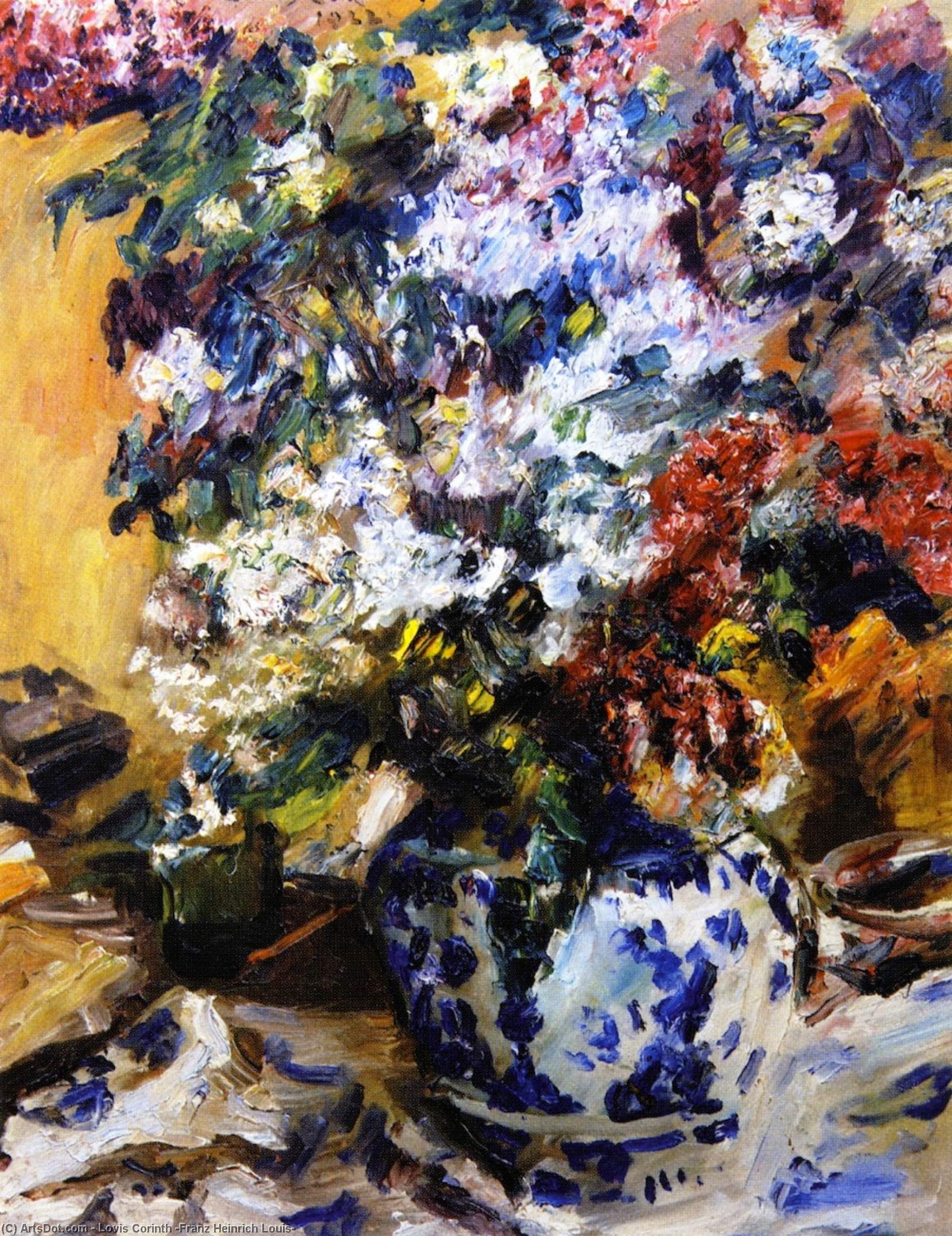
Still Life with Lilacs by Lovis Corinth: A Celebration of Nature's Beauty
Lovis Corinth’s "Still Life with Lilacs," painted in 1922, is a captivating example of his mature style, blending Impressionistic and Expressionistic elements. This oil on canvas (measuring 100 x 80 cm) showcases the artist's remarkable ability to capture the vibrancy and fleeting beauty of nature through a dynamic composition and expressive brushwork.
Composition and Artistic Style
The painting centers around a large, ornate blue and white porcelain vase overflowing with an abundance of flowers. Corinth masterfully arranges at least twelve distinct flower types within the vase, creating a visually rich and layered scene. The background is intentionally blurred, drawing focus to the vibrant blossoms and the intricate details of the vase. Corinth’s technique employs loose, broken brushstrokes that build texture and movement, characteristic of Impressionism. However, his bold use of color and energetic application of paint reveal Expressionistic influences, lending a sense of emotional intensity to the still life.
Historical Context and Influences
Created in 1922, "Still Life with Lilacs" reflects a period of artistic transition following World War I. Corinth, having been a prominent figure in the Berlin Secession, was exploring new avenues of expression while drawing inspiration from earlier masters. He admired artists like Vincent Van Gogh, whose influence can be seen in the painting's dynamic brushwork and vibrant color palette. The artwork demonstrates a departure from strict academic traditions, embracing a more subjective and emotionally driven approach to art.
Symbolism and Emotional Impact
Beyond its aesthetic appeal, "Still Life with Lilacs" evokes feelings of abundance, beauty, and the ephemeral nature of life. Lilacs themselves often symbolize renewal, hope, and first love. The vibrant colors and dynamic composition create a sense of joy and vitality, while the blurred background suggests a fleeting moment captured in time. The painting invites viewers to appreciate the simple pleasures of nature and find solace in its enduring beauty.
Materials and Technique
Corinth utilized oil paints on canvas to achieve the rich textures and vibrant colors seen in "Still Life with Lilacs." The impasto technique, characterized by thick layers of paint applied with visible brushstrokes, adds depth and dimension to the artwork. This tactile quality enhances the painting's visual impact and invites closer inspection. The materials used contribute significantly to the overall impression of energy and vitality that defines Corinth’s style.