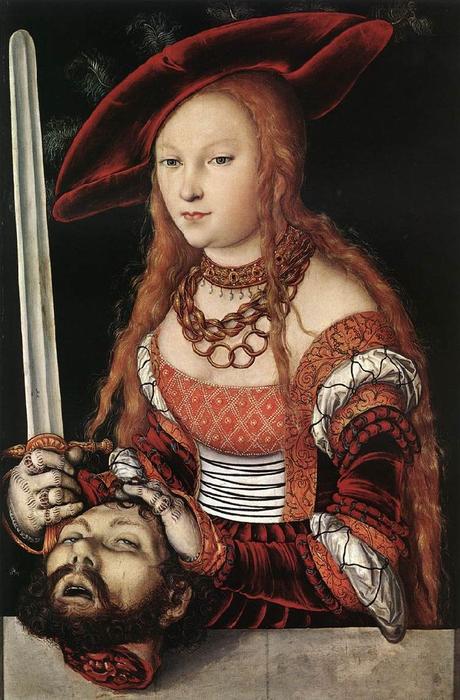
A Testament to Courage and Faith: Exploring Cranach’s *Judith with the Head of Holofernes*
Lucas Cranach the Elder's depiction of *Judith with the Head of Holofernes* is a powerful and psychologically complex work, far exceeding a simple illustration of a biblical narrative. This painting invites viewers to contemplate themes of bravery, sacrifice, divine justice, and the evolving role of women during the Renaissance – all rendered with the meticulous detail characteristic of the Northern Renaissance style.
The Narrative Unveiled: A Heroine’s Resolve
The artwork portrays the dramatic climax of the story of Judith, a Jewish widow who saved her people from the Assyrian army by seducing and beheading their general, Holofernes. However, Cranach presents a unique interpretation. Judith isn't depicted in triumphant rage, but with a chilling composure as she holds aloft Holofernes’ severed head. This stark contrast – serenity versus brutality – creates a compelling tension that draws the viewer into the psychological depths of the scene. It is not a celebration of violence, but an exploration of the difficult choices and burdens borne by those who act in defense of their faith and community.
Masterful Technique: The Northern Renaissance at its Finest
- Precision and Detail: Cranach’s mastery is evident in the precise lines defining forms and the delicate brushstrokes used to render Judith's features.
- Texture and Color: The artist employs oil paint in thin, translucent glazes, building rich colors and creating a remarkable sense of depth. Note the contrast between the smooth texture of Judith’s skin and the rougher rendering of Holofernes’ head, emphasizing the grim reality of her deed.
- Compositional Strength: The vertical composition reinforces Judith's dominance, positioning her above the defeated Holofernes. This arrangement visually underscores her victory and authority.
Historical Resonance: Reformation Germany
Created around 1530, this painting is deeply rooted in the religious and political turmoil of the Reformation era. Cranach was not only a celebrated artist but also a close friend and staunch supporter of Martin Luther. The depiction of Judith as a courageous heroine resonates with themes of resistance against tyranny and divine intervention – central tenets of the Protestant Reformation. Cranach frequently used his art to explore complex moral and religious questions, making this piece a significant example of Renaissance art engaging with both spiritual and secular concerns.
Symbolism and Interpretation: Layers of Meaning
- Red Hair: Judith’s flowing red hair symbolizes passion, courage, and perhaps even the fiery spirit required to undertake such a perilous act.
- The Severed Head: Holofernes' head represents the defeat of evil and oppression.
- The Sword: The sword serves as an emblem of divine justice and retribution, wielded by Judith as an instrument of God’s will.
- Weibermacht: Beyond these direct symbols, the artwork speaks to the broader Renaissance theme of *Weibermacht* (“Power of Women”), exploring how women could exert influence – even through unconventional means – challenging traditional gender roles.
Emotional Impact and Aesthetic Appeal: A Lasting Impression
This artwork evokes a complex range of emotions. Admiration for Judith’s bravery is mingled with revulsion at the brutality of her act. The somber color palette – dominated by reds, oranges, browns, and grays – enhances the dramatic effect and contributes to the painting's lasting emotional impact. It compels viewers to confront difficult questions about morality, justice, and the nature of good and evil.
Display Recommendations: Enhancing Your Space
A high-quality reproduction of this masterpiece is an exceptional addition to any art collection. Its dramatic composition and rich symbolism make it a captivating focal point in various settings. The artwork’s somber yet compelling aesthetic lends itself well to both traditional and contemporary interior design styles, adding depth and sophistication to living spaces, libraries, studies, or dining rooms. Consider pairing it with dark wood furniture and muted tones to enhance its dramatic impact.
Dimensions: 87 x 56 cm
Date: 1530