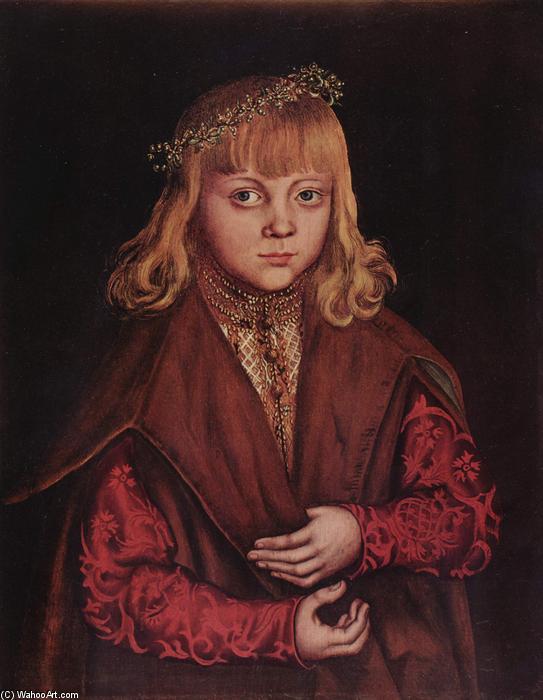
The
Portrait of a Saxon Prince is a captivating oil painting created by
Lucas Cranach the Elder in 1520. This Northern Renaissance masterpiece showcases the artist's skill in capturing the essence of his subject, a young prince from Saxony. The painting measures 43 x 34 cm and is a prime example of Cranach's portraiture work.
The Artist and His Style
Lucas Cranach the Elder was a renowned German painter, printmaker, and draughtsman who lived from 1472 to 1553. He is known for his contributions to the development of the Northern Renaissance style, as well as his portrayal of religious and mythological subjects. Cranach's work often featured
realistic and detailed representations of his subjects, which was a hallmark of his style.
The Painting's Significance
The
Portrait of a Saxon Prince is significant not only because of its beauty but also due to its historical context. The painting was created during the Protestant Reformation, and
Lucas Cranach the Elder was a prominent figure in this movement. His portraits of princes and leaders of the Reformation, such as
Martin Luther, helped to shape the visual identity of the movement.
- The painting is characterized by its use of color and composition, which creates a sense of depth and intimacy.
- The subject's facial expression is particularly noteworthy, as it conveys a sense of calm and contemplation.
- The painting is also notable for its attention to detail, including the intricate folds of the prince's clothing and the delicate features of his face.
Visit https://ArtsDot.com to learn more about Lucas Cranach the Elder and his works, including the Portrait of a Saxon Prince. You can also find information on other Northern Renaissance artists and their contributions to the movement. For more information on the history of art, visit
Wikipedia's article on the History of Painting.
The
Städelsche Kunstinstitut Und Städtische Galerie in Frankfurt, Germany, is also a great resource for learning about German art and the Northern Renaissance. You can find more information about the museum and its collection on
ArtsDot.com.