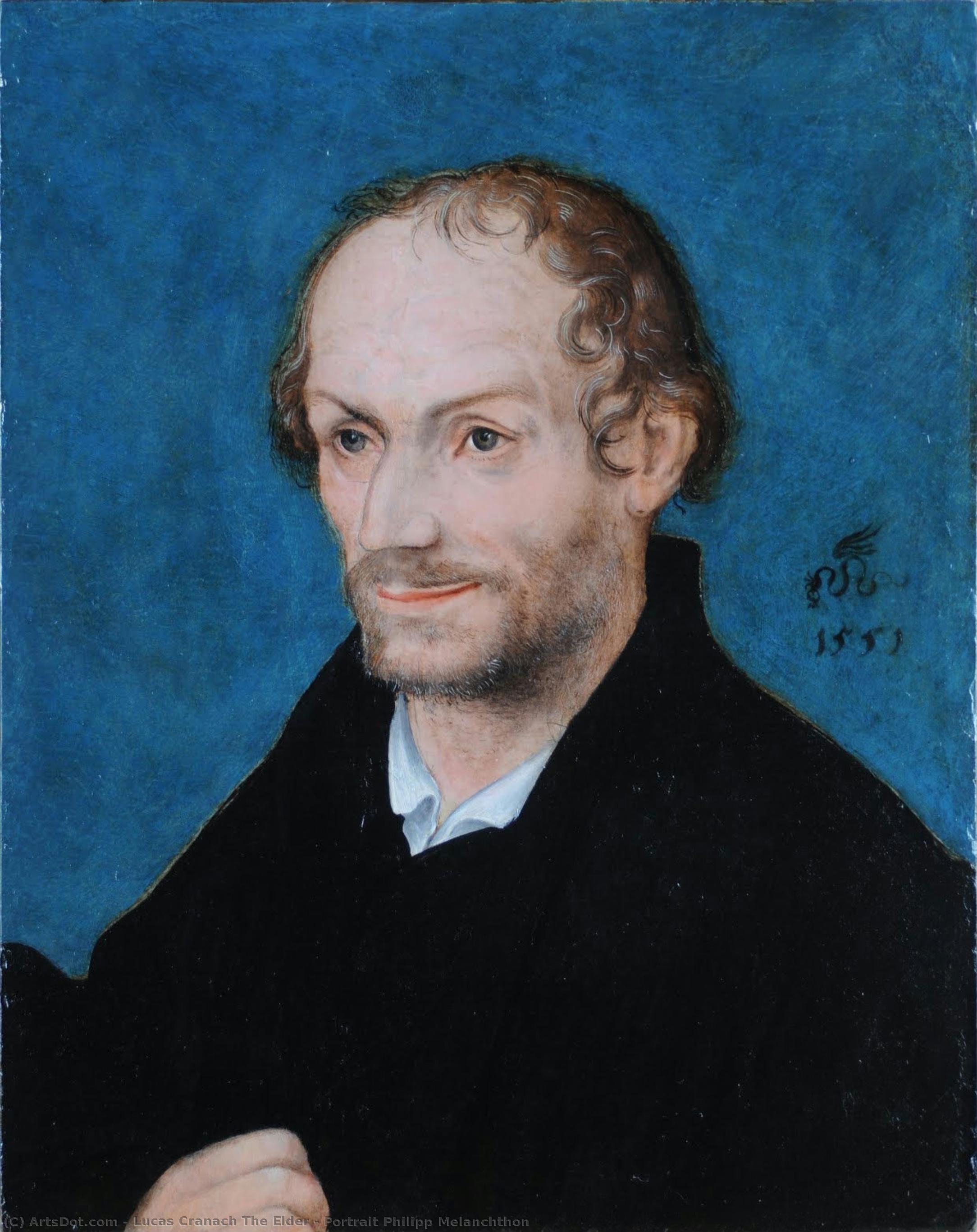
Lucas Cranach the Elder’s captivating Portrait of Philipp Melanchthon showcases the Renaissance master's skill in capturing psychological depth and detail from 1555. This iconic painting, a testament to German artistry, offers a glimpse into the life of a key Reformation figure. Discover or own this remarkable piece.
Portrait Philipp Melanchthon by Lucas Cranach the Elder
Lucas Cranach the Elder’s “Portrait of Philipp Melanchthon” is more than just a likeness; it's a window into the intellectual and spiritual currents of 16th-century Germany. Painted in 1555, during a period of profound religious transformation – the heart of the Protestant Reformation – this portrait captures the essence of a man deeply engaged with the burgeoning ideas reshaping Europe. The subject, Philipp Melanchthon, was a pivotal figure as Cranach’s personal secretary and later, a key theological advisor to Martin Luther. The painting's power resides not just in its representation of Melanchthon but in its embodiment of the era’s anxieties and aspirations.
A Masterful Renaissance Portrait
- Style: Cranach exemplifies the Northern Renaissance style, characterized by a meticulous attention to detail, a realistic portrayal of human anatomy, and a subtle use of color. Unlike the idealized forms often favored in Italian portraiture, Cranach’s figures possess a grounded quality, reflecting the practical concerns and humanist values prevalent in German art at the time.
- Technique: The painting demonstrates Cranach's mastery of oil paint, allowing for nuanced gradations of tone and texture. Note the delicate rendering of Melanchthon’s beard and mustache, achieved through careful layering of brushstrokes – a hallmark of his technique. The use of sfumato, though subtle, adds to the sense of depth and volume, particularly in the folds of the black robe.
Symbolism and Context: Reformation's Reflection
The subject’s attire – a dark, flowing robe – immediately evokes religious imagery, aligning with Melanchthon’s role as a theologian. The subtle smile on his face suggests both intelligence and perhaps a quiet confidence in the new theological direction being championed by Luther. The presence of the two secondary figures, positioned to the left and right, adds another layer of complexity. They may represent students or colleagues, highlighting Melanchthon's influential position within the intellectual circles of Wittenberg. The painting’s creation coincided with a period of intense debate and upheaval, making it a powerful visual statement about the changing religious landscape.
Emotional Impact and Legacy
Cranach’s “Portrait of Philipp Melanchthon” transcends a simple depiction of an individual. It is a testament to the intellectual fervor and spiritual questioning that defined the era. The painting's enduring appeal lies in its ability to capture a moment in time, revealing not only the physical appearance of a key figure but also his character and intellect. This reproduction offers a unique opportunity to own a piece of art history – a tangible connection to one of the most transformative periods in Western civilization. Its rich textures and nuanced details invite contemplation on faith, reason, and the enduring legacy of Lucas Cranach the Elder.