The Dramatic Narrative of Lucas Cranach’s Samson
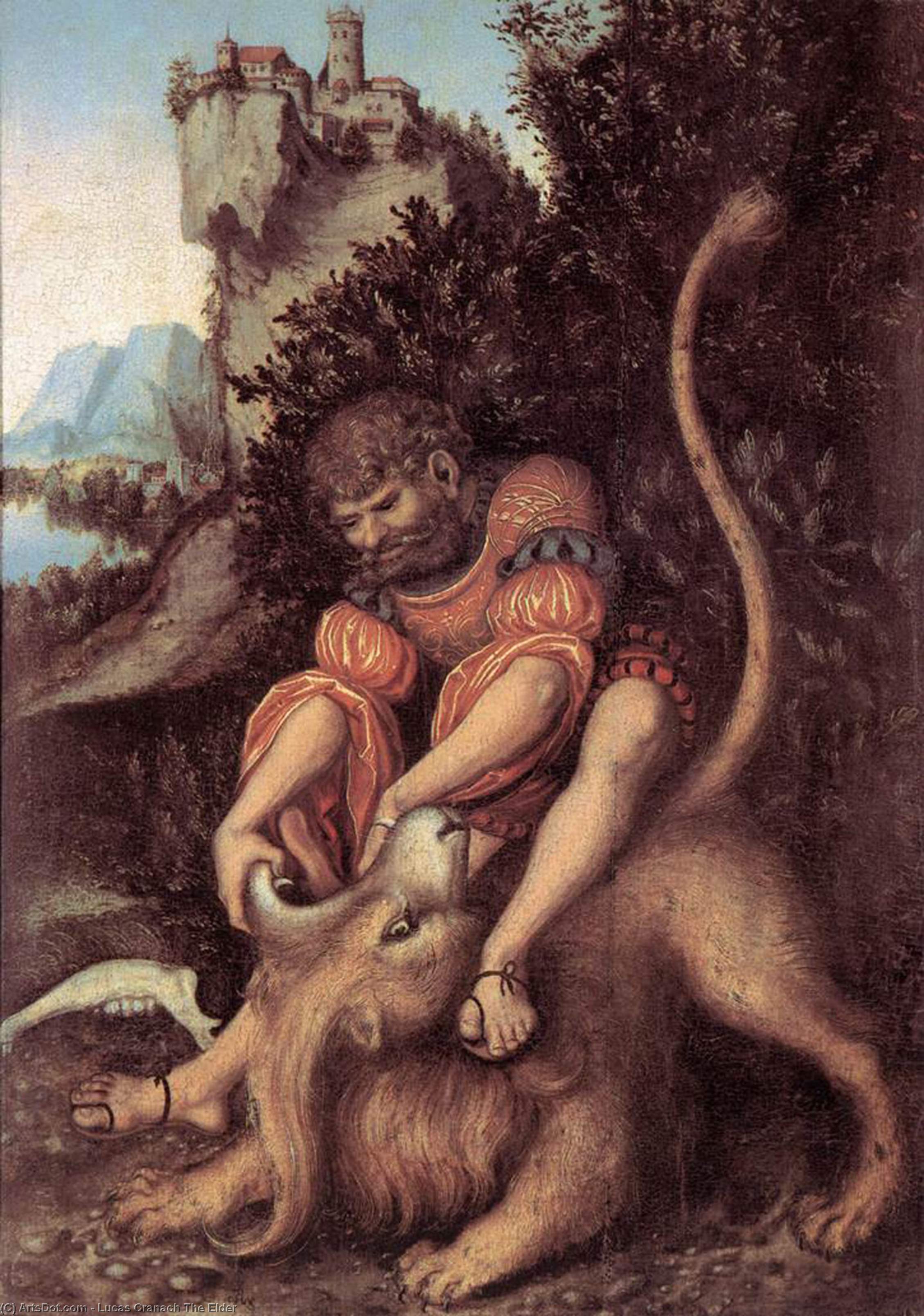
Lucas Cranach the Elder’s “Samson’s Fight with the Lion,” painted in 1525, is more than just a depiction of biblical action; it's a carefully constructed visual sermon, a testament to both raw power and profound spiritual allegory. Born in Kronach, Germany, around 1472, Cranach was deeply embedded within the tumultuous era of the German Reformation, and his art became inextricably linked with the burgeoning Protestant movement. This particular painting, housed at the Kunstsammlungen in Weimar, exemplifies the artist’s remarkable ability to fuse technical mastery with a potent understanding of symbolism – a hallmark of Northern Renaissance artistry.
The scene itself is immediately arresting: Samson, a figure of immense physical presence, dominates the composition. He's not portrayed as a triumphant hero, but rather as a man wrestling with an untamed force, his body straining against the lion’s ferocious grip. The lion, rendered with startling realism – its fur meticulously detailed, its eyes burning with predatory intensity – embodies chaos and temptation, a formidable obstacle to Samson’s spiritual journey. The setting, a rugged landscape punctuated by a distant castle and river, provides a stark contrast to the immediate struggle, suggesting both earthly challenges and the promise of divine salvation.
A Symphony of Technique and Style
Cranach's skill as an artist is immediately apparent in his masterful use of oil on panel. The texture of the paint is rich and layered, creating a sense of depth and volume that draws the viewer into the scene. Notice the subtle gradations of light and shadow – the way they sculpt Samson’s muscles, highlight the lion's mane, and define the contours of the landscape. This attention to detail isn’t merely decorative; it serves to heighten the drama and convey a sense of immediacy. The composition itself is carefully balanced, with Samson positioned centrally, forcing the viewer’s eye to follow his struggle. Cranach’s style aligns perfectly with Northern Renaissance ideals – an emphasis on realism, meticulous observation, and a deep engagement with religious themes.
The painting's color palette is restrained yet effective, dominated by earthy tones—ochres, browns, and greens—that ground the scene in reality. However, flashes of vibrant red in Samson’s garment draw attention to his strength and determination. The use of perspective, though not entirely rigorous by Renaissance standards, creates a convincing sense of space and depth, further immersing the viewer in the drama.
Symbolism and Spiritual Interpretation
Beyond its surface narrative, “Samson’s Fight with the Lion” is laden with symbolic meaning. Traditionally, the story of Samson represents the triumph of faith over temptation, a struggle against overwhelming odds. The lion, in this context, symbolizes the devil or sin – a relentless adversary that threatens to consume the righteous soul. Samson's victory, achieved through sheer strength and divine assistance (often attributed to his uncut hair), signifies God’s power to overcome evil. The castle in the background may represent Jerusalem, symbolizing spiritual refuge and salvation.
Interestingly, Cranach painted this work during a period of significant religious upheaval, aligning himself with the Protestant Reformation. The painting's emphasis on individual strength and reliance on divine grace resonated powerfully with reformers who challenged the authority of the Catholic Church. The scene can be interpreted as an allegory for the Christian struggle against sin – a battle fought not with weapons, but with faith and unwavering devotion.
A Timeless Masterpiece
“Samson’s Fight with the Lion” remains a captivating work of art, offering viewers a glimpse into the artistic and spiritual landscape of 16th-century Germany. Its dramatic composition, masterful technique, and profound symbolism continue to resonate today, making it a timeless masterpiece worthy of admiration and study. Reproductions of this iconic painting offer an exceptional opportunity to bring this powerful narrative into any setting, adding depth and intellectual stimulation to your space.