A Dramatic Tableau of Faith and Doubt: Lucas Cranach’s ‘The Crucifixion with the Converted Centurion’
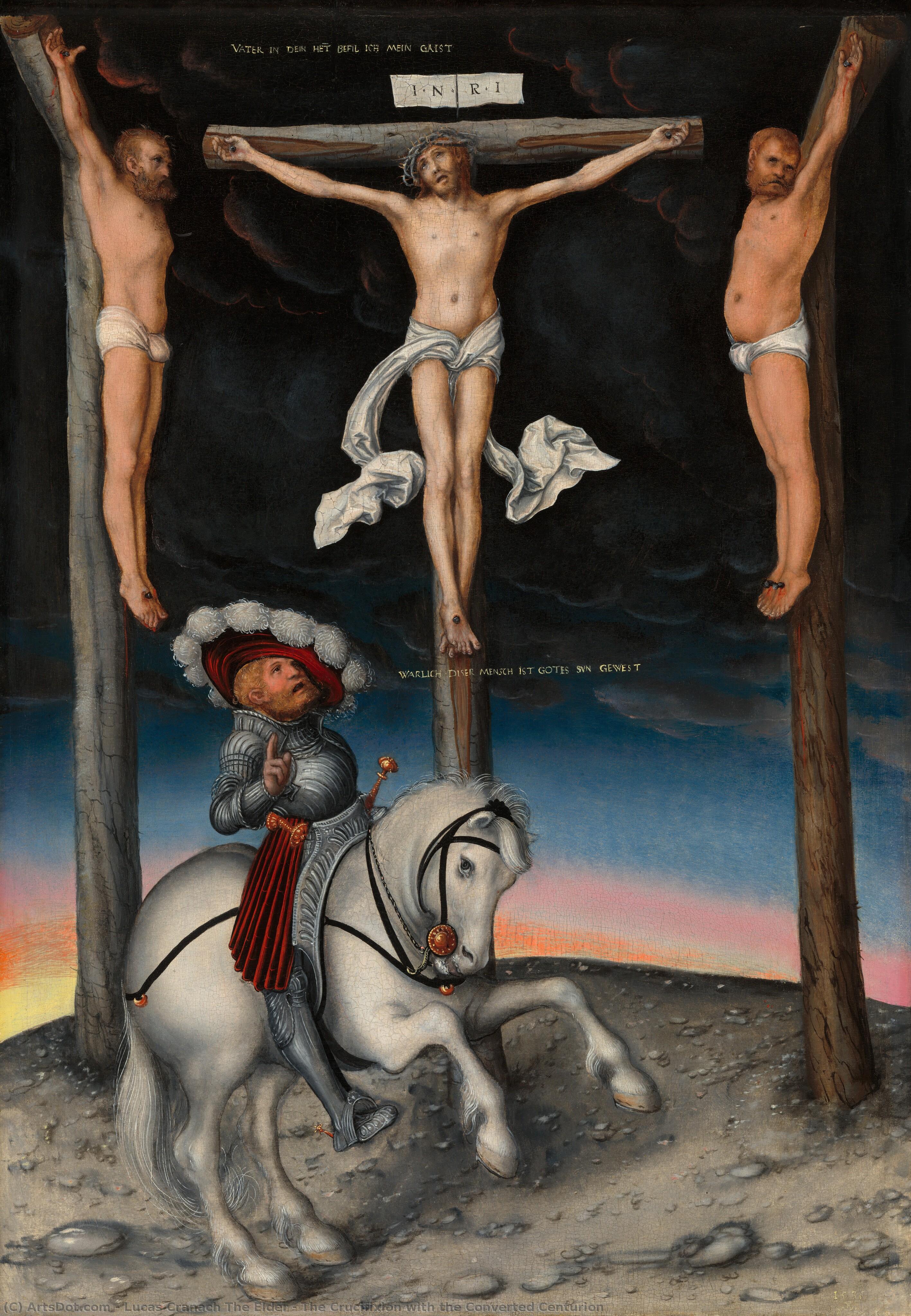
Lucas Cranach the Elder's “The Crucifixion with the Converted Centurion,” painted in 1536, is a profoundly unsettling masterpiece that transcends the conventional iconography of the crucifixion. Executed during a period of intense religious and social transformation – the heart of the German Reformation – this vertical composition confronts viewers with a raw depiction of suffering, doubt, and the agonizing process of conversion. Cranach’s skill lies not merely in his technical mastery but in his ability to imbue the scene with psychological complexity, capturing the emotional turmoil of both the divine figure and those witnessing his sacrifice.
- Subject Matter: The painting depicts a pivotal moment within the Passion narrative – the crucifixion of Christ alongside two other men. However, Cranach introduces a crucial element: a heavily armored centurion, transformed through faith, standing as a witness to the event.
- Composition & Technique: Cranach’s meticulous technique is immediately apparent in the rendering of textures – the rough-hewn wood of the crosses, the gleaming pewter armor, the flowing fabric, and the detailed depiction of skin tones. His use of oil paint allows for subtle gradations of color, particularly in the dramatic sky, which shifts from buttery yellow to deep indigo, mirroring the emotional intensity of the scene.
- Color Palette: The painting’s palette is deliberately somber, dominated by earthy browns, grays, and whites, punctuated by flashes of crimson – the hat of the rider, the fabric draped over his hip, and the thorns in Christ's crown. These vibrant hues serve to draw attention to key elements and heighten the emotional impact.
Symbolism and Religious Context
“The Converted Centurion” is rich with symbolic meaning, reflecting the anxieties and theological debates of the Reformation era. The centurion’s armor represents his former status as a soldier of Rome, a symbol of earthly power and violence. His conversion signifies a rejection of this worldliness and an acceptance of Christ's sacrifice. The inscription “WARLICH DISER MENSCH IST GOT” (This man is God) etched onto the horseman’s garment underscores this pivotal moment of faith. The inclusion of three crosses, rather than the traditional single cross, may allude to the broader theological debates surrounding salvation and the nature of Christ's suffering.
- The Rider: The armored rider, with his raised hand and open mouth, embodies both awe and despair. His posture suggests a profound emotional response to witnessing the crucifixion – a mixture of reverence and anguish.
- Jesus’s Figure: Cranach's depiction of Christ is deliberately unflinching. The slumped figure, the tilted head, and the intense gaze convey the physical agony of his ordeal while simultaneously projecting an aura of serene acceptance.
Historical Significance & Artistic Legacy
Painted in 1536, “The Crucifixion with the Converted Centurion” stands as a testament to Lucas Cranach the Elder’s artistic prowess and his engagement with the turbulent religious landscape of his time. Cranach was one of the most important artists of the German Renaissance, known for his portraits of prominent figures like Martin Luther and Philip Melanchthon. This painting exemplifies his ability to blend religious subject matter with psychological realism, creating a work that continues to resonate with viewers centuries later. The piece’s dramatic composition, masterful technique, and profound symbolism ensure its place as a cornerstone of Northern Renaissance art.
This meticulously crafted reproduction captures the essence of Cranach's original vision, offering an exceptional opportunity to own a stunning artwork that embodies both historical significance and enduring artistic beauty. Its dimensions (68 x 52 cm) make it suitable for a variety of interior spaces, while its evocative imagery will undoubtedly serve as a powerful focal point within any setting.