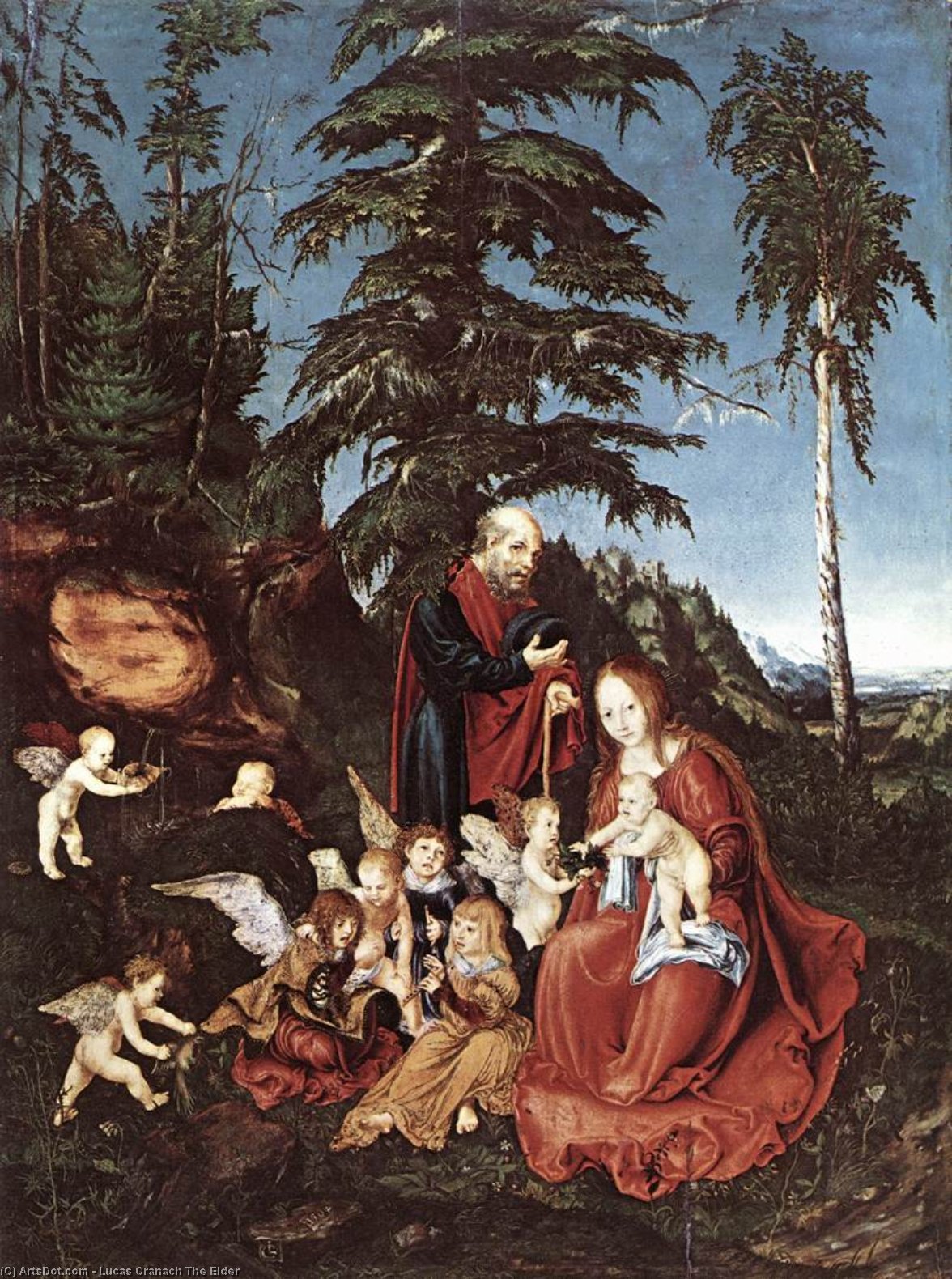
Lucas Cranach's enchanting 'The Rest on the Flight into Egypt,' painted in 1504, captures a magical fairy-tale atmosphere—a revolutionary landscape approach for its time—celebrating Mary and Jesus amidst angelic musicians. Explore this masterpiece and bring Renaissance beauty home.
Explore the captivating world of Lucas Cranach the Elder, a pivotal German Renaissance master known for his portraits, Reformation art, and mythological scenes. Discover his legacy!
A Pastoral Reverie: Exploring Lucas Cranach’s “The Rest on the Flight into Egypt”
“The Rest on the Flight into Egypt,” painted by Lucas Cranach the Elder in 1504, transcends mere depiction; it embodies a profound meditation on faith, innocence, and the sublime beauty of nature. This monumental oil-on-panel artwork resides within the Staatliche Museen zu Berlin’s collection, offering viewers an unparalleled glimpse into the artistic sensibilities of the High Renaissance period. Cranach's masterful handling of color and composition establishes him as one of Germany’s foremost painters during his time—a testament to his ability to capture both intellectual rigor and emotional resonance.
A Landscape Steeped in Symbolism
The painting’s setting is deliberately chosen – a verdant meadow bordering a shadowy forest – to elevate it beyond a simple narrative scene. This landscape isn't merely decorative; it functions as a conduit for theological symbolism. The meadow represents Edenic purity, mirroring the Virgin Mary’s serene repose and highlighting the sanctity of her maternal role. The encroaching darkness of the forest symbolizes the challenges faced by Christendom during the Reformation, yet simultaneously underscores the enduring presence of divine grace amidst earthly trials. Cranach skillfully employs atmospheric perspective to create a palpable sense of depth and tranquility, immersing the viewer in this idealized vision.
Technique and Artistic Innovation
Cranach’s technique is characterized by meticulous detail combined with an expressive brushstroke—a hallmark of his distinctive style. He achieved remarkable luminosity through glazing techniques, layering thin washes of color to build up rich hues and subtle tonal variations. This approach distinguishes him from many of his contemporaries who favored flatter surfaces, demonstrating a commitment to capturing the nuances of light and shadow. Furthermore, Cranach’s pioneering use of landscape as an integral component of religious iconography represents a significant advancement in European painting—a bold departure from conventional artistic conventions that cemented his legacy as a visionary artist.
Provenance and Artistic Influence
The artwork's journey through history reflects its enduring appeal. Initially housed within the Sciarra collection in Rome, it subsequently passed into the hands of prominent collectors before finding its permanent home at the Berlin Gallery in 1902. This provenance underscores the painting’s significance as a cultural treasure and confirms its continued admiration across generations. Cranach's influence extended far beyond his immediate circle, inspiring subsequent artists to explore similar themes and stylistic approaches—a testament to the enduring power of his artistic vision.
Emotional Resonance: A Moment of Maternal Grace
Ultimately, “The Rest on the Flight into Egypt” speaks to a deep human yearning for peace and spiritual contemplation. The tender depiction of Mary cradling Jesus amidst angelic guardianship evokes feelings of compassion, serenity, and unwavering faith. Cranach’s ability to convey such profound emotion through visual imagery underscores his mastery as an artist—a skill that continues to captivate audiences today. It remains a stunning example of Renaissance art, inviting viewers to contemplate the beauty of divine grace and the sanctity of maternal love.