A Renaissance Encounter: The Allure of Venus and Cupid
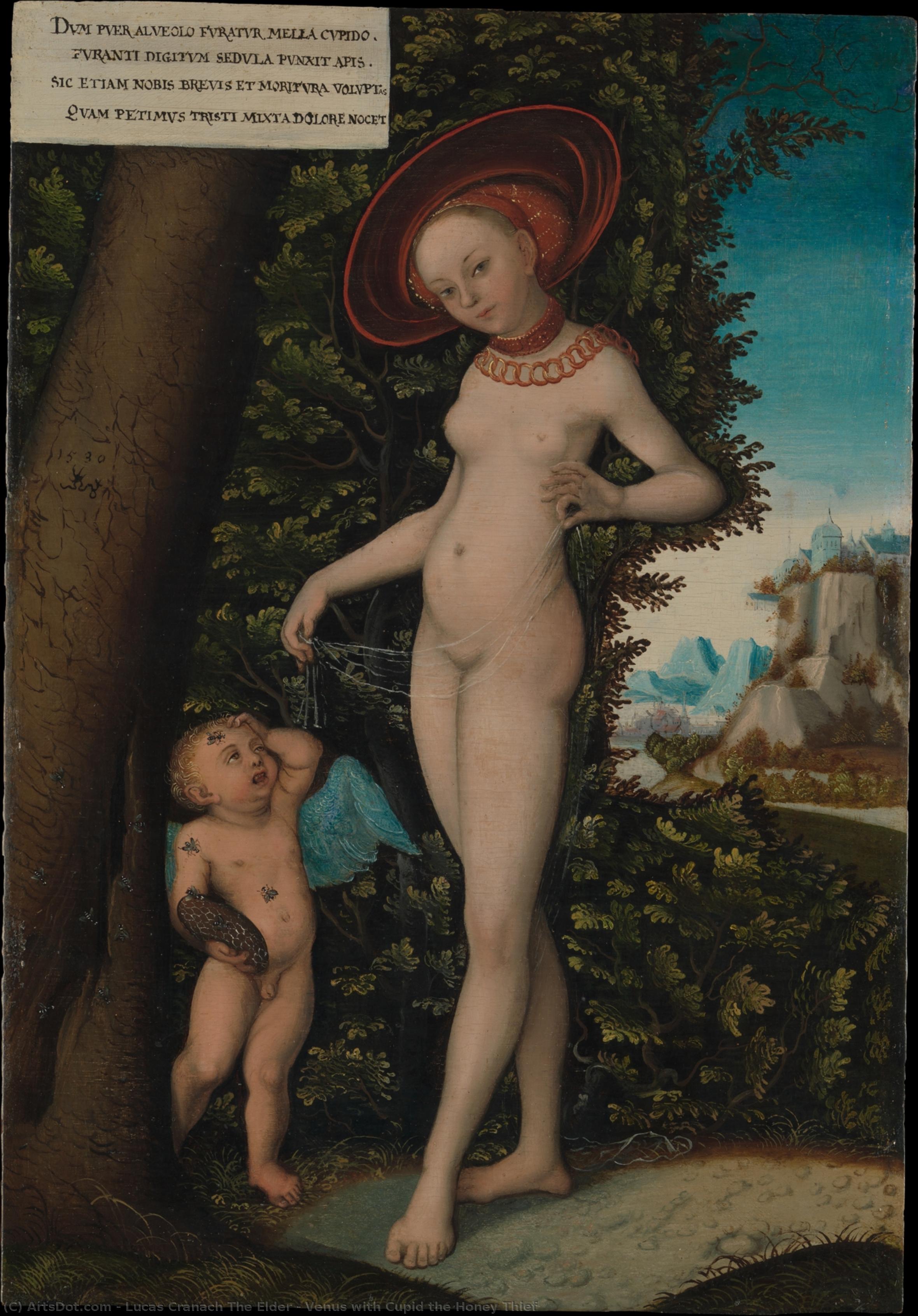
In the delicate dance of light and shadow captured within Lucas Cranach the Elder’s Venus with Cupid the Honey Thief, we find a moment suspended in the amber of the German Renaissance. This evocative masterpiece, dating to approximately 1620, invites the viewer into a lush, verdant sanctuary where the boundaries between the divine and the earthly blur. The painting presents the Roman goddess Venus, a figure of unparalleled grace, seated amidst a primordial landscape. Beside her, the youthful Cupid engages in a playful yet perilous endeavor, attempting to pilfer honey from a tree trunk, only to be met with the stinging reality of a swarm of bees. It is a scene that breathes with life, capturing a fleeting interaction that feels both intimate and eternal.
The composition is a masterclass in narrative tension and classical beauty. Venus serves as the painting's emotional anchor; her serene composure and regal posture—adorned in an opulent crimson hat and gold-embroidered attire—project an aura of dignified strength. Her gaze, directed toward the viewer or perhaps lost in quiet contemplation, creates a profound psychological connection that transcends the centuries. In stark contrast, the dynamic energy of Cupid provides a sense of movement and vulnerability. The struggle between the small, industrious bees and the mischievous child introduces a layer of drama, transforming a pastoral setting into a stage for mythological storytelling.
Symbolism and the Spirit of the Reformation
Beyond its surface beauty, this work is steeped in the complex intellectual currents of the 16th and early 17th centuries. During Cranach’s era, the religious and political landscapes of Saxony were undergoing seismic shifts due to the Protestant Reformation. The interplay between Venus—representing desire and physical beauty—and the stinging bees serves as a poignant allegory for the tension between temptation and consequence, or faith and earthly impulse. The honey, a symbol of sweetness and divine reward, is sought after through theft, suggesting the inherent risks found in pursuing worldly pleasures.
For the discerning collector or interior designer, this painting offers more than mere decoration; it provides a window into the humanist thought of the Renaissance. The ancient oak tree and the thicket surrounding the figures represent the enduring power of nature, while the meticulous detail in the golden jewelry and diaphanous veils speaks to the era's fascination with material splendor and anatomical precision. It is an artwork that rewards deep looking, revealing new layers of meaning with every encounter.
A Masterpiece for the Modern Interior
The technical brilliance of Cranach’s style—characterized by a sophisticated use of chiaroscuro and a rich, saturated palette—makes this piece an extraordinary candidate for high-quality reproduction. The striking contrast between the deep reds of Venus's hat and the verdant greens of the background creates a visual focal point that can anchor any room. Whether placed in a sunlit gallery or a moody, sophisticated study, the painting brings a sense of historical weight and classical elegance to its surroundings.
Integrating such a profound work into a contemporary space allows for a dialogue between history and modernity. For those seeking to curate an environment of intellectual depth and aesthetic harmony, Venus with Cupid the Honey Thief stands as a testament to the enduring power of the human spirit and the timeless allure of mythological beauty. It is not merely a painting, but an invitation to experience the sublime artistry of a German master.